





Abstract
This article aims to provide an analysis of the moral, social, and legal reasoning behind why the National Labour Commission (NLC) may not be able to prevent Organised Labour from carrying out their intended strike action in response to the government's inaction on illegal mining, or galamsey, in Ghana. The discussion will delve into the fundamental rights of workers, the need for social justice, and the legal framework governing industrial actions to justify the legitimacy of the strike despite the NLC's authority.
Introduction
The right to strike is a fundamental aspect of labor rights recognized internationally and enshrined in various conventions and treaties to protect the interests and welfare of workers. The International Labour Organization (ILO) upholds the right to strike as a means for workers to peacefully advocate for better working conditions, fair wages, and social justice. In the context of Ghana, Organised Labour is justified in their decision to embark on a strike action to address the government's failure to combat illegal mining activities that pose environmental and social threats.
From a moral perspective, the decision of Organised Labour to strike can be viewed as a demonstration of their commitment to environmental sustainability and social responsibility. The impact of illegal mining on communities, water bodies, and forest reserves is undeniable, with severe consequences for the livelihoods and well-being of individuals. By taking a stand against galamsey through a nationwide strike, Organised Labour is acting in the best interests of society as a whole, seeking to uphold moral values of environmental protection and community welfare.
The social justification for the intended strike action lies in the need to address the escalating illegal mining activities that have fueled environmental degradation, water pollution, and social unrest in affected communities. Organised Labour represents the collective voice of workers who are directly or indirectly impacted by the negative consequences of galamsey. By resorting to a strike, they are leveraging their power as a unified force to demand meaningful action from the government and raise awareness on the urgency of tackling the illegal mining canker for the greater good of society.
Legally, the right to strike is recognized in Ghanaian law under the Labour Act, 2003 (Act 651), which provides for the protection of workers' rights to participate in industrial actions. While the NLC has the mandate to regulate and arbitrate in labor disputes, it must also respect the autonomy and independence of trade unions and workers' associations to engage in collective bargaining and strike actions as warranted. The Supreme Court of Ghana has affirmed that the right to strike is a constitutional right under Article 24 of the 1992 Constitution, subject to certain limitations such as the protection of public order, national security, and public health.
In conclusion, the moral, social, and legal justifications presented in this article underscore the validity of Organised Labour's decision to embark on the intended strike action against galamsey, despite the intervention of the National Labour Commission. The strike serves as a moral imperative to protect the environment, a social necessity to address the effects of illegal mining on communities, and a legally sanctioned means for workers to assert their rights and demand accountability from the government. As the NLC convenes to address the impending strike, it is crucial to recognize and uphold the fundamental principles of labor rights and social justice that underpin the actions of Organised Labour in advocating for a sustainable and responsible approach to addressing the illegal mining menace in Ghana.
By Evans Mawunyo Tsikata


 Mysterious illness leaves children struggling to walk, hear in Mafi Kope
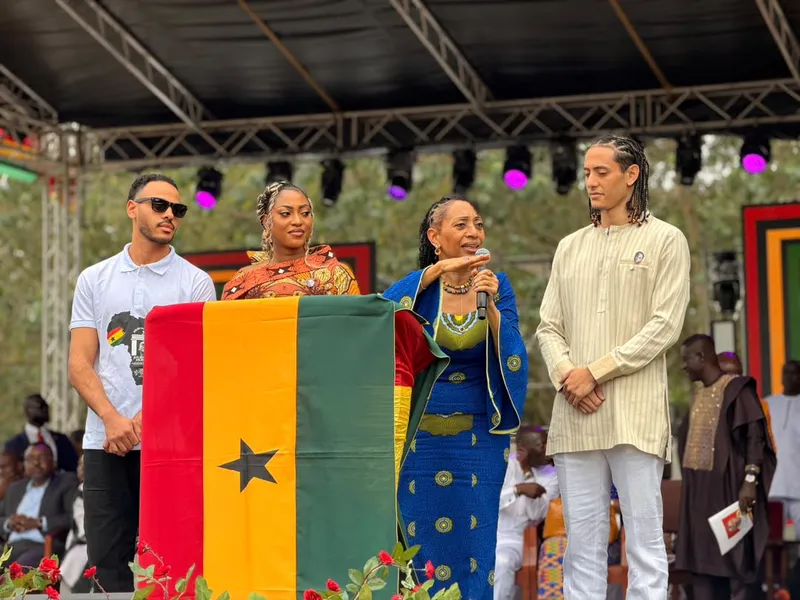 ‘We’ve come back to make sure our father's ideas never die’ – Nkrumah family
 Ghana Jollof: Akosua Manu appeals to Naana Jane to use her influence to free Sal...
 Yellow fever confirmed in Sissala East after 21 mysterious deaths
 Kenyasi man allegedly attacked by prison officers and inmates over yam theft cla...
 Germany’s far-right AfD makes strong gains in two state elections
 Savannah Regional Minister, IGP Yohuno visit Gbindabuor following lynching of po...
 Jehovah's Witnesses make blood component decisions a matter of personal conscien...
 Road contractors fed on contracts for years without completing projects – Alhass...
 Ghana Jollof saga: ‘She has no right to do what she’s doing’ – Inusah Fuseini


