




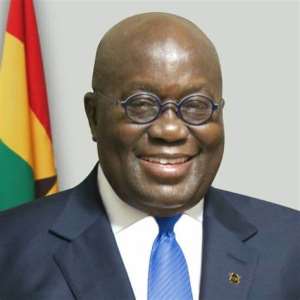
In Part II of "Ghana in Focus," we delve into the multifaceted legacy of President Nana Akufo-Addo, analyzing his administration's impact on housing, healthcare, mining, debt restructuring and the power crisis in Ghana. The episode offers a comprehensive look at the achievements and shortcomings of Akufo-Addo’s presidency.
Housing - Under Akufo-Addo's administration, the government failed to provide affordable housing, leaving many Ghanaians without the ability to afford decent housing. The housing deficit is estimated to be between four and five million units.
The government's efforts to address this crisis have been insufficient, with many of the newly built properties priced far beyond the reach of the average Ghanaian. Affordable housing remains a contentious issue, with most properties marketed as "affordable" being anything but for the majority of citizens.
Healthcare- another critical area where Akufo-Addo's administration failed miserably. The National Health Insurance Scheme (NHIS), designed to provide accessible healthcare to all Ghanaians, has fallen short of its goals. The scheme fails to cover severe illnesses such as cancer and kidney diseases, forcing many to pay exorbitant out-of-pocket expenses for treatments. Lack of investment of medical equipment and up-to-date facilities, has led to the disturbing trend of healthcare professionals leaving Ghana seeking better opportunities abroad, further straining the healthcare system.
Even the much touted agenda 111, where the president said that he wants to build 111 state of the art hospitals to enhance healthcare delivery in Ghana has not lived up to expectations with only a third of these hospitals been built.
illegal small-scale mining, known locally as Galamsey, continues to devastate Ghana's environment despite the president's pledges to combat this menace.
The episode explores the complicity of local politicians and Chinese nationals in perpetuating these activities, which has resulted in severe pollution of major water bodies and land erosion resulting in new born babies with severe abnormalities.
For a president who promised to put his presidency on the line in order to tackle this dangerous menace, Akufo Addo has FAILED disgracefully in this endeavour that threatens the security of the country.
Ghana's power crisis, often referred to as "Dumsor," has been a persistent issue, particularly in the last year. Frequent power outages have plagued the nation, affecting both ordinary citizens and businesses. Outdated infrastructure, substantial debt owed by the Electricity Company of Ghana (ECG), and unpaid dues to the West African Gas Pipeline are major contributors to the power crisis. The lack of investment in new technologies and failure to upgrade the country's electrical distribution system have exacerbated the problem. Despite recent improvements, the situation remains problematic, impacting economic stability and growth.
Debt restructuring - As a result of callous and reckless borrowing and mismanagement of the economy, Ghana entered into an agreement with the IMF which has as its core Ghana's ability to reduce its huge debt ,much of which has been created under Nana Akufo Addo's government. This debt restructuring program that the government has bought into will have far reaching consequences for ALL Ghanaians for the next 10-15 years.
What many Ghanaians are not aware of is that their savings, investments, salaries and pensions WILL be used to pay back Ghana ;s debt as highlighted by the new government bonds such as DISCO.
One notable achievement of Akufo-Addo's presidency is the "Year of Return" initiative, launched in 2019. This initiative aimed to strengthen cultural and economic ties with the African diaspora, inviting descendants of enslaved Africans to return to Ghana. The campaign and subsequent beyond the return has attracted millions of visitors, bolstering tourism and fostering a sense of unity and cultural pride. The "Year of Return" has been a significant success, drawing global attention and promoting Ghana as a hub for African heritage and investment opportunities.
As Akufo-Addo prepares to leave office, the episode provides a balanced reflection on his impact on Ghana's socio-economic landscape. While his administration made commendable efforts in some areas, such as the "Year of Return," it also faced substantial challenges and criticisms. The housing crisis, healthcare deficiencies, illegal mining, economic mismanagement, and power outages are critical issues that future administrations will need to resolvde dn resolve robustly.
In closing, for a president who promised so much delivered very little and has left Ghana in far worse position than what he inherited in 2017. In actual fact if we are being brutally candid he is by far the worst president of the 4th Republic (1992-2024) and Ghana 's worst EVER president. The statistics prove this
- Nepotism and corruption at unprecedented levels.
- The biggest erosion of land and pollution of water bodies ever due to failure to stop Galamsey (illegal gold mining)
- Squandered more than 100 Billion USD in income receipts and this from just Gold alone with next to little to show for it.
- More than quintupled the national debt from 120 Billion Ghana Cedis to over 700 Billion Ghana Cedis in less than 8 years.
- Highest interest rates ever at some 40%
- Highest inflation rates ever peaking at 52.4% in 2022
- The highest depreciation of thg local currrency the cedi

 South Africa evacuation expenditure: Ablakwa harassing Foreign Ministry staff ov...
 Bawumia engages health professionals on sector challenges
 'Backbone of the web': What is PHP and how has it raised AI hacking fears?
 Russian missiles hit Kyiv as Moscow signals readiness for peace talks
 Meta fined $25 billion in New Mexico over Cambridge Analytica scandal
 Health Ministry assures Ghanaians of readiness to manage Ebola cases
 FDA shuts down Arcan Bitters factory again over illegal production in Ashanti Re...
 PAC chair praises NPA CEO Edudzi Tameklo’s performance at committee hearing
 Ghanaian jailed nine months in US for using relative’s social security number to...
 Ukraine war: I'm going to Russia to convince President Putin to ceasefire — Maha...


