




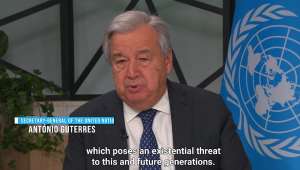
The world is going through an unprecedented environmental emergency which poses an existential threat to this and future generations.
People need to know about this – and journalists and media workers have a key role in informing and educating them.
Local, national and global media outlets can highlight stories about the climate crisis, biodiversity loss, and environmental injustice.
Through their work, people come to understand the plight of our planet, and are mobilized and empowered to take action for change.
Media workers also document environmental degradation. And they provide evidence of environmental vandalism that helps to hold those responsible to account.
It is no surprise that some powerful people, companies and institutions will stop at nothing to prevent environmental journalists from doing their jobs.
Media freedom is under siege. And environmental journalism is an increasingly dangerous profession.
Dozens of journalists covering illegal mining, logging, poaching and other environmental issues have been killed in recent decades.
In the vast majority of cases, no one has been held to account.
UNESCO reports that in the past fifteen years, there have been some 750 attacks on journalists and news outlets reporting on environmental issues. And the frequency of such attacks is rising.
Legal processes are also misused to censor, silence, detain and harass environmental reporters, while a new era of climate disinformation focuses on undermining proven solutions, including renewable energy.
But environmental journalists are not the only ones at risk.
Around the world, media workers are risking their lives trying to bring us news on everything from war to democracy.
The United Nations recognizes the invaluable work of journalists and media professionals to ensure that the public is informed and engaged.
Without facts, we cannot fight mis- and disinformation. Without accountability, we will not have strong policies in place.
Without press freedom, we won't have any freedom.
A free press is not a choice, but a necessity.
Our World Press Freedom Day is very important. And so, I call on governments, the private sector and civil society to join us in reaffirming our commitment to safeguarding press freedom and the rights of journalists and media professionals around the world.

 CDD‑Ghana: EC Deputy Chair Should Step Down Now
 Family Announces October 23 Memorial Mass for Nana Konadu Agyeman-Rawlings
 Eduwatch Urges Nationwide Audit of Sexual Misconduct in Secondary Schools
 Obuasi SHTS alleged sexual abuse: Kwasi Kwarteng criticises Education Minister o...
 ECOWAS’ $250,000 flood relief donation arrives in Ghana – Ablakwa
 Kennedy Agyapong has not resigned from NPP – Kwasi Kwarteng
 State failure, not GoldBod, driving galamsey – Daryl Bosu
 A Rocha Ghana raises alarm over human rights abuses in mining communities
 ECOWAS, AfDB discuss ways to advance West Africa’s development priorities
 October 16: Cedi gains against dollar, sells at GHS12.25 on forex market, GHS11....


