




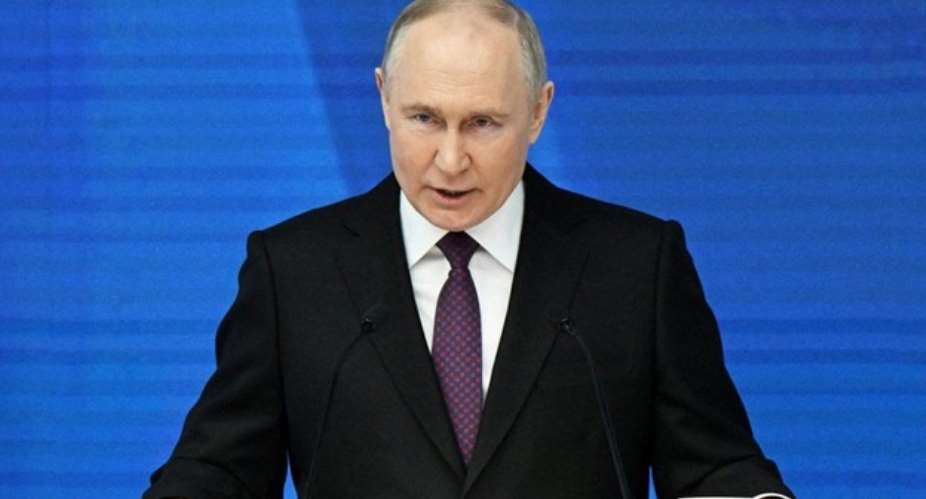
In a recent development, Russian President Vladimir Putin has issued a stern warning against the deployment of Western troops to Ukraine, emphasizing the potential “tragic” consequences such a move could entail. Despite Western nations distancing themselves from the idea, Putin remains apprehensive about the possibility, citing concerns about an arms race and alleging Western provocation in the ongoing conflict.
During his annual state of the nation address on February 29, 2024, President Putin accused the West of attempting to draw Russia into an arms race. He stressed the need for Russia to fortify its defenses along its western border, especially with Sweden and Finland joining NATO. Putin also accused the West of deliberately provoking the conflict in Ukraine and spreading misinformation about Russia’s intentions.
The conflicting statements from Putin regarding the troop buildup near Ukraine’s borders and the denial of any intention to invade raise questions about the underlying motives behind his recent warnings against Western intervention.
Geopolitical analysts express uncertainty about predicting the future course of events. However, they caution that the deployment of Western troops in Ukraine could escalate the conflict, potentially leading to a direct military confrontation between NATO forces and Russian troops, with severe humanitarian consequences.
The potential scenarios that could unfold if Western troops are sent to Ukraine include:
Proxy Warfare: Instead of direct involvement, Western powers might choose to support Ukraine through proxies, resulting in a prolonged conflict with external actors supporting both sides.
Diplomatic Isolation of Russia: The presence of Western troops could lead to increased diplomatic and economic isolation of Russia, with the West imposing sanctions and limiting diplomatic ties to pressure Russia into de-escalation.
Nuclear Concerns: The involvement of Western troops may heighten nuclear tensions, prompting Russia to intensify its nuclear posture, raising the risk of a nuclear conflict. Diplomacy and crisis management are crucial to avoid catastrophic outcomes.
Humanitarian Crisis: Direct military intervention may lead to a significant humanitarian crisis, with civilian casualties and mass displacement. The West may need to manage the consequences by establishing safe zones, providing humanitarian aid and addressing long-term fallout.
Political Fallout: Western countries sending troops to Ukraine might face domestic political challenges, with public opinion divided. Internationally, it could strain relations between NATO and Russia, potentially leading to a new Cold War-like era.
It is essential to emphasize that these scenarios are speculative, and the actual outcome would depend on numerous unpredictable factors. Diplomacy, international cooperation, and conflict resolution efforts will be essential to navigate the complexities and mitigate the risks associated with any potential military intervention in Ukraine.


 INTERPOL orders deletion of Ken Ofori-Atta’s records from its databases
 Akufo-Addo’s presidential jet critics were driven by hatred, crude — Kennedy Ose...
 Govt launches probe into viral video of Ghanaian woman allegedly assaulted by bo...
 Coat of Arms designer’s son questions omission of father’s legacy from new cedi ...
 Mahama visits Akufo-Addo at Nima residence for talks on national, international ...
 NDC clears 98 aspirants for december 19 national executive elections
 Mahama to commission DNA testing and vaccine development laboratories at Noguchi...
 Canadian police arrest 12, including eight Nigerians, over $4.5m stolen vehicle ...
 Current economic conditions do not make presidential jets purchase a misplaced p...
 Ghana is my second home, one-quarter of my family was born here – Dangote reveal...



Comments
Your publication are very educative. God bless you sir