




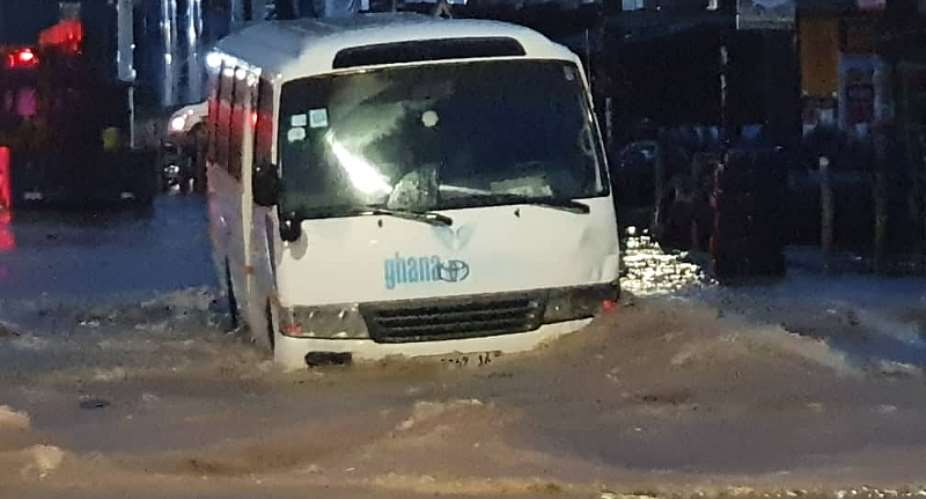
The issue of flooding in urban areas, particularly in Accra, Ghana, persists unabated, causing extensive damage to the environment and posing a significant challenge. The causes of this recurring problem are multifaceted and the resulting consequences are severe.
One prominent factor contributing to the problem is inadequate planning in the capital city. The haphazard arrangement of buildings and structures lacks proper organization and spacing, disrupting the smooth flow of water during intense rainfall due to the disorderly layout.
Compounding the issue is the insufficiency of drainage systems in Accra. The construction of drains has been subpar, failing to accommodate the substantial volume of water. Consequently, even areas that are typically arid experience water overflow during heavy downpours.
Improper waste disposal practices also play a substantial role in exacerbating the flooding problem. Both individuals and businesses frequently dispose of solid waste, including garbage and plastics, in inappropriate locations such as gutters, streets, and drains. This improper disposal obstructs the natural flow of water and contributes to flooding in affected communities.
Another significant factor is the obstruction of drains caused by silting and debris. The improper disposal of waste leads to the accumulation of rubbish in drains and gutters, impeding the smooth flow of water. As a result, heavy rainfall causes flooding in areas where water cannot escape freely.
Poor architectural practices further contribute to the recurrent floods in Accra. In some instances, buildings are constructed in unsuitable locations, such as watercourses, obstructing water pathways. Consequently, water overflows and floods occur during periods of intense rainfall.
Additionally, the inadequate enforcement of building construction and sanitation laws exacerbates the problem. Authorities often fail to rigorously enforce these regulations, allowing individuals to construct buildings without adhering to proper guidelines. This lack of enforcement contributes to the disorderly development of Accra, intensifying flooding issues.
The flat topography of Accra also exacerbates the flooding problem. Low-lying areas below sea level are particularly susceptible to submersion during periods of heavy rainfall. Furthermore, drains filled with silt and debris worsen flooding in these areas.
The environmental effects of flooding are far-reaching and destructive. Loss of life and extensive property damage are frequent outcomes of these events. Buildings and vehicles are destroyed, leaving many people displaced and homeless. The loss of livestock and other animals further compounds the devastation caused by floods.
Crop destruction and damage to agricultural lands are additional consequences of flooding. The swift water flow uproots plants and carries them away, leading to diminished agricultural productivity and food scarcity. As a result, food prices skyrocket, and concerns regarding food security emerge.
Furthermore, flooding cannot be discussed without acknowledging the significant impact of soil erosion. The forceful flow of water removes the nutrient-rich topsoil essential for plant growth, resulting in infertile soil. Soil erosion weakens buildings and gives rise to channels and gullies on streets and roads, rendering them impassable and causing additional infrastructure damage.
In conclusion, addressing the root causes of flooding is imperative for sustainable development in Accra and the well-being of affected communities. While the implementation of effective strategies requires robust commitment, adequate funding, and collaborative efforts, the Accra Metropolitan Assembly (AMA) and the government must prioritize the following actions:
- Enhance urban planning and zoning, allocating sufficient space for proper waterways.
- Upgrade drainage systems and ensure regular maintenance to improve their capacity.
- Establish green spaces and implement green infrastructure to absorb excess rainfall.
- Enforce building regulations and preserve natural floodplains.
- Raise public awareness and educate communities on proper waste disposal practices and adaptation to changing weather patterns.
- Establish early warning systems to provide timely flood risk information.
- Foster collaboration among stakeholders and strengthen governance structures to effectively address the issue.
By diligently implementing these measures, Accra can mitigate the persistent flooding problem, promote resilience, and pave the way for a safer and more sustainable future.
Top of Form
BY :
Emmanuel Kwame Appiah
Teacher, AAK JHS-Nsein,
Axim.


 Mahama receives Governor of Wisconsin State to deepen trade, investment cooperat...
 Parliament approves US$300 million loan to expand SHS, end double-track system
 'I have been defamed and maligned; my wife has even packed her bags' – Miracles ...
 MP, Greater Accra Kusasi Chief lead calls for GCB Bank branch in Garu
 Achimota Forest Reserve must not be sacrificed for private development – Mahama
 Ghana's President receives procurement report to begin Green Digital City feasib...
 Six arrested, GH¢300,000 recovered after robbery attack on Bono East highway
 'Don’t sell lands on waterways, wetlands and buffer zones' – Mahama to chiefs
 Ghana's public debt rises by GH¢46.7 billion in three months
 Govt reclaims public lands, plans new law on state asset disposal — Mahama

