




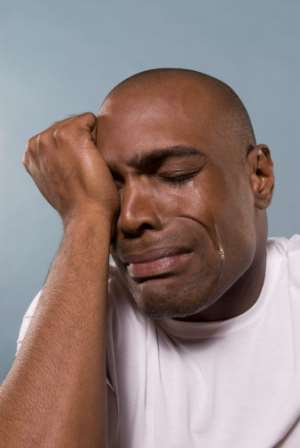
One of the accepted views in our society post 1994 under the ANC led government is that women are victims of men. Hence, Gender Based Violence campaigns are assumed on that premise; that men abuse and kill women arbitrarily because they are engaged in a war against women. Then the dominant perspective is that the criminal justice system must simply arrest and jail them.
Although this maybe true on one part, there is an important element or dimension missing in all of this. As a liberation movement we need to be careful in importing ideas that were conceived in other countries without fully appreciating our specific contexts and circumstances. The risk in doing this is that we could be overburdening our men with crimes and misdeeds against the African people that were committed over many centuries. We could also be shifting responsibility as a nation as a result of our failures to carry out the historical mission of fighting for a more socially just society.
In addressing the present problems, we seem to overlook the historical and systematic attack on the black family unit that has led to the total breakdown of black communities and family structure. In other words, that our approach to abuse against women and children, deals with the effects, not the cause. And, until such time we face and deal with the cause, this exercise of positioning men as simply violators will remain as pointless as it has been for many years.
And here is why.
The annual crime statistics from the South African Police service for 2021/2022 calendar year is out and as usual it paints a horrific yet consistent picture; that both victims and perpetrators of crime have a racial and class dimension. This grim picture points to an even bigger problem: that poor black men die in their thousands and this is normalised in our society.
President Ramaphosa, through a virtual Presidential Imbizo held on the 15th of July 2020, was at pains to explain why violent crimes should be explored in all areas they happen even though organisations like Afriforum wanted him to specifically focus on farm killings and in a space where organisations like the Democratic Alliance have made him apologise for his remarks on farm murders.
He was correct but I presume the current owners of the economy and the land will not want such a meaningful engagement that looks at cause and effect of our social-ills, because it will expose the historical impact of their apartheid and colonial laws and policies on black families and the black community.
Or the reality that, of the 21 325 murders that were recorded by the South African Police Service in the country, only 49 were farm murders, 2695 were mostly black women and 18 630 of the murdered were mostly black men and boy children.
There is a genocide taking place in the country. By simply being born black; violence, abuse, murder, poverty, inequality, exclusion, debt, landlessness and humiliation will characterise your life. Whether you are a black woman, black gay man, black business or black lesbian, the colour of your skin will define your socioeconomic condition and wellbeing.
We can never defeat the abuse of women under these hostile economic conditions, which on one hand creates the elite of the future and on another creates criminals, domestic workers and gardeners whose life is characterised by constant humiliation of being called “lova”, “girl” and “boy” by the same elite who then turn around and speak on their behalf about Gender Based Violence and femicide in total ignorance of the realities on the ground.
In gang infested Mitchells Plain and other places of squalor, black boys are idling. They are either unemployed or unemployable, but only to find themselves in the hands of drug-lords and hospitable groups that seem to restore his dignity and poor image. In the end, they become alcoholics, abusers and nyaope addicts. This is nothing else but human waste.
Our society has simply failed the black African males in a belief that they are just able to get by. Society insists that “Men mustn’t cry” (indoda ayi khali, monna ke nku o swela ka fa gare). Black men and boy children find themselves in a society which has not allocated them status of emotional beings but just mere wage earners who have to play a particular, well defined role, for example “providers”, and or “leaders”. And, when they are unable to live up to the expectation, they are lambasted as nature’s worst creations.
Motseki Mabuya, one of the many black men who have chosen to speak out said the following, “We are a broken society and as black men in society we owe it to ourselves to find our corners to cry and speak out. Most of us are broken, empty, angry and sad but we have managed all these years to mask everything. Yet daily we detach from our human core.
#MenTooAreHurting #MenTooNeedAShoulder
#MenTooAreWeak".
Ayabulela Ngcelwane simply said, "I'm truly and deeply sorry brothers, I can’t be a man but human this season. Allow me to cry out like a child".
Black men are crying out for help and no one is listening.
As individuals, black men have done well for themselves but the everyday reality of a typical black male is one who has surrendered his body and soul to alcohol, drugs and violence whilst killing time in the street corners ravaged by depression, anger, drugs, abusing his peers, women and girl children. It is black males in the majority who are illiterate, who are school and university dropouts, committing violence against each other, abusing their partners, alcohol and drugs and continue to fill the prison numbers.
It is black men who fill up numbers of the humiliating lines of the R350 Covid-19
grant because the system deliberately excludes them.
This cannot be normal in a supposedly free and democratic society. This implies that as the ANC we have let down our men, women and children.
Existing in parallel with the GBV narrative is a fallacy that black men control patriarchy and the economy of the country. As alluded above, the black men are in a disparate state of poverty and are considered surplus in an economy that continues to treat them as cheap inputs and less human. These men are found in street corners, taxi ranks, hostels and low-paying jobs as security guards, mineworkers, and construction workers. Unfortunately, policy-makers in government and capital use these distortions in order to deliberately exclude ordinary black men and boy children as recipients of restorative socio-economic justice.
Dr Marcus Bright describes this tragedy facing black males as "a secret depression that is rooted in economics that many Black men battle with, hidden underneath an assortment of layers including an exaggerated bravado, drug and alcohol abuse, misdirected anger, and other forms of destructive behaviour.”
A male in Switzerland, Norway or a typical White or Indian male in South Africa does not face the same male problems that afflicts black males. A (black) male in the African context generally faces the worst economic conditions and societal treatment.
For example, in communities where male circumcision is prevalent, boys are prepared to be “men” (amadoda). The reality is that society and its functioning have changed a lot in recent years to accommodate these men. In this regard, the “man” leaves the rural side to the urban area to search for a better life and to become a “man” who can take his respectable place in the family and his community. But what shocks him is that he is at the bottom of the South African social class since he is without education or employment. The black male then becomes conflicted, desperate, violent and a menace to society.
And it is in such communities such as the Eastern Cape, Kwa Zulu Natal and Limpopo Provinces where men are given a sense of false superiority (indoda/monna), while the same society humiliates him by denying his basic rights to education, work and dignity.
How can an ill-behaved monster who is humiliated on a daily basis be expected to take his place in society and family? He is told he has no place in a matriarchal household. He is expected to be gender-neutral but when it comes to raising boys there is pressure for him to produce well-mannered men, when he is said to badly behave himself.
It is time that the ANC invests energy and resources in addressing the everyday reality of a broken and defeated men. Instead of simply setting police and soldiers on them let us apply and deploy new measures in Cofimvaba, Galeshewe or Msinga where black people are killed indiscriminately. If we do not act now to arrest the situation, a tragedy will continue to play itself out in this country, and will soon blow on our faces.
In 2013, Branson, N. Hofmeyr, C. Lam, D, (2013)1conducted research which sought to understand the relationship between progress through school, cumulative socioeconomic disadvantage, household income and parental support in correlation to school drop-outs states. They established that “male learners are to a greater degree the first to feel and react to household credit constraints, by leaving school and looking for work and the probability among females to dropout is not intrinsically related to household income or school fees.”
Also, a Higher Education South Africa report (2013-2017)2 on the state of higher education stipulated that females make up the total body of students registered in higher education as well as 56% which graduates and 66% which attains a bachelor’s degree. This finding was supported by yet another study in 2015 by the South African Department of Basic Education on the national education annual assessment which indicated that boys are behind girls in reading, writing and mathematics.
It appears we have a serious problem in our hands and it has been there for years yet little or nothing has been done to ameliorate the challenges facing this important section of our society. The root cause for the problematic behaviour of men is known; empirical evidence is available but government and social sectors somehow pretend that all is normal. At worst, no comprehensive programmes have been devised in the past 26 years to support men in their daily struggles.
Firstly, a comprehensive survey was undertaken by the National Department of Health of South Africa, in 2012 to evaluate the health risk behaviour in adolescents and young people between 2002 and 2008. The research was conducted amongst boys and girls who were in high school and the findings were as follows:
● VIOLENCE - Measures of violent behaviours indicated a high prevalence of violence in the country, about a fifth of the students surveyed indicated to have carried a weapon in/or outside school in the month preceding the survey, on all of the violence measures the numbers were significantly higher for boys than for girls.
● SUBSTANCE ABUSE - The national prevalence rates for smoking, alcohol use and marijuana use, and lifetime use of illegal drugs were respectively high, on all measures boys scored significantly higher than girls.
● UNSAFE SEX - Of the boys and girls surveyed who had sexual encounters, 64% of the participants reported to have had at least unsafe sex once in their lifetime with boys scoring higher than girls.
Secondly, Professor Bozalek from the University of the Western Cape (2010) concluded that the level of unemployment and wage inequalities experienced by black males is the least appreciated and acknowledged phenomenon in South Africa.
Not even equity surveys of the Department of Employment and Labour care to study this occurrence with the view of designing appropriate interventions to save black males from slave jobs. At the same time, these males are heads of families that they are supposed to provide for.
Motape Motokwe who is a community and trade unionist takes Professor Bozalek’s findings even further by arguing that “once a black African man is 35 years, there are no defined opportunities for him, even though he may have benefited from all the set interventions while he was youth. As the interventions are mostly biased and continue to be mostly biased and exclusionary beyond that point. And it is actually at this age that their needs grow exponentially as they may likely have children, extended families and/or families of their own.”
Unorganised as black men are, excluded from gender empowerment policies and without any formal government structure that advocates for their issues, a black man in South Africa has survived and continues to survive against all odds. It is indeed a great mystery and this deserves to be studied in-depth to gain a better understanding of how black men have adapted in this highly adversarial environment.
More than four hundred centuries of exploitation, segregation and dispossession has inflicted immeasurable damage on the sanctity and sanity of black African men in South Africa. And we have all turned a blind eye.
With all the research done on the crisis facing black males and the annual crime statistics that have a race and class dimension, why are we using western binary definitions which perpetuate antagonisms between black men and women in particular?
Over and above the systematic exclusion of African males, there are consistent distortions, myths and fallacies that have mostly gone unchallenged. Whilst black men may benefit from patriarchy to a lesser degree, they definitely don’t control it.
Edward Mitole writes in his own personal capacity.


 WASSCE: School officials helped students cheat for years, but we now see the tru...
 Probe alleged military killing of lecturer in Bawku – Kusaug Youth demands
 ‘If we all pay GH¢1,000 each, we should be able to construct National Cathedral’...
 Mahama inspects proposed site for Upper West Regional Airport
 Mahama reiterates government's commitment to end double-track SHS system
 Police interdict officer over death of 23-year-old Ivan Baidoo on Tema Motorway
 NDC gov't ‘scored own goals’ with new SHS placement policy — Dr. Bempah Tandoh
 Five-year presidency will give governments more time to deliver — Kofi Bentil
 Improved invigilation is exposing true performance of Ghanaian students — Mahama...
 There's no policy to introduce Arabic, Chinese in all public schools — Mahama


