




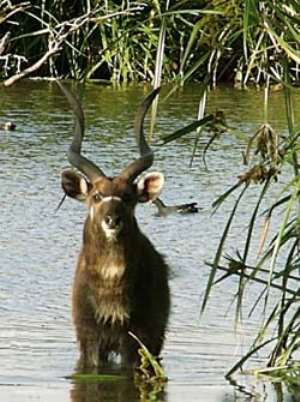
It has been established that Sitatunga, an endangered animal species, thought to have gone extinct in West Africa is in the Avu Lagoon.
The lagoon is located between Akatsi and Keta in the Volta region and according to DCE Edward Ahiabor said a multi-purpose project called the Avu Lagoon Sitatunga Conservation Initiative to preserve the animal and its habitat, covering about hundred acres, would take off next year.
Sitatunga, which belongs to the antelope family, is the world's only known amphibious antelope, but much bigger. It is said to be about the size of a cow and has the ability to walk marshy vegetation and escape under water.
Addressing the chiefs and people of Hatorgodo and satellite communities at their maiden "fofonza", sugarcane festival Mr. Ahiabor said the project is expected be an international eco-tourism centre, which could generate revenue for the locals and the nation.
Mr. Ahiabor, who appealed to the people around the lagoon to stop hunting the sitatunga, said Nature Conservation Research Centre (NCRC) and the International Union Conservation of Nature (IUCN) would handle the project.
He said the project would give the communities around the Avu lagoon a healthier wetland environment, wider range of economic activities, accessibility to potable water, better roads and electricity, among others.
Mr. Ahiabor said the capacity of the people would be developed to co-manage the project in the five-year initial term of the scheme.
Sitatunga Fact Sheet
Sitatunga inhabits the swamps of Africa and lives on their own rather than in groups. When alarmed, they hide underwater, leaving only the tips of their noses showing. Their elongated hooves and flexible joints make them perfectly adapted to living in boggy areas.
The best time to spot the sitatunga is between sunrise and 10am and also from 5pm to sunset. They emerge from the swamps at darkness or when undisturbed. Sitatungas normally sleep on platforms of dry vegetation, which they trample and circle to condense. Each animal makes its own platform which may be used several times.
Ecology
Diet: leaves, buds shoots, fruit, reeds and grass
Sitatunga are both grazers and browsers; they have a prehensile tongue that allows them to grab long reeds and flowering plants. At night they are known to emerge from their protected habitat to dry land to graze on grass and continue into the forest to browse on foliage. Sitatungas tend to stay in one feeding area for several days and then suddenly shift to a new area. The males can break tree branches with their horns to get the bark and vegetation. They have been reported also to be able to reach higher vegetation by rearing on their hindquarters.
Reproduction and calving
Although mating occurs throughout the year, most births are reported during the dry season. The calves are born on a dry trampled platform in the swamp. The gestation period is 7.5 months and they only give birth to a single calf. Females reproduce at yearly intervals
The calf is well hidden and remains secluded on the platform for several weeks only with short visits from its mother for suckling. Although nursed for 4-6 months, it is more independent of its mother than most antelopes. The ties between mother and young do not last long, as sub-adult sitatunga are often found on their own.
The calf's initial movements are awkward; sometimes they even fall into the water. However, they will soon learn how to move slowly thought the swamp to avoid being seen.
More sitatunga facts
Sitatungas have a long shaggy coat. The hair is thin, oily and water repellent. The male has faint stripes and the female has 6-8 vertical stripes that are more defined. Other markings include white spots on the cheeks, highs, throat and face.
Another adaptation is the extremely narrow hoof (up to 10 cm - 4 inches in length) that enables the sitatunga to move easily throughout the swamp.
Male Female
Average height
(Measured from the shoulders) 100 cm or 39 inches 82 cm or 32 inches
Average weight 100kg or 220 pounds 53 kg or 117 pounds
Tail 20-25 cm or 8-9 inches 20-25 cm or 8-9 inches
Horns (average length)
(Male horns twists about 2 times and are ivory tipped) 66 cm or 25 inches No horns
Colouration* Gray-chocolate brown Red to bright chestnut
*Research has found that maturity levels and geographical locations have modified the appearances in coloration, pelage and markings. A calf is generally more reddish with obvious stripes and spots.

 Websites go dark as AI exposes critical security flaws worldwide
 Ghana remains friends to all and enemies to none — Mahama
 October 22: Cedi sells at GHS12.25 on forex market, GHS11.66 on BoG interbank
 Western Region: Seven missing fishermen rescued in Benin territorial waters – Po...
 Sammi Awuku calls for strict enforcement of child protection policies amid risin...
 Foreign Affairs Ministry denies Minority’s claim of harassing staff over South A...
 Nigerian police rescue 11 Ghanaians allegedly held hostage in Ogun State
 Mahama urges AES countries to open up to international support in fight against ...
 Websites shut down worldwide as critical cyber-security update issued
 South Africa evacuation expenditure: Ablakwa harassing Foreign Ministry staff ov...


