




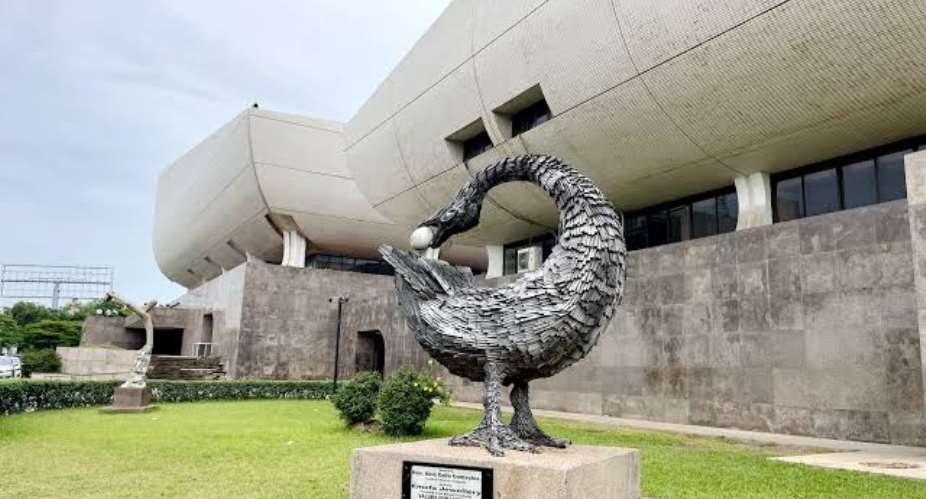
Long before proscenium arches or written scripts existed in West Africa, drama was woven into everyday life. Traditional Ghanaian performance grew out of oral storytelling traditions and other traditional meeting places. Central to this heritage was Anansesɛm. Performed under the moonlight or by the fireside, these sessions reinforced community values.
During the early twentieth century under British rule, two distinct forms of theatrical performance began to take shape. In 1915, lawyer and nationalist Kobina Sekyi wrote The Blinkards, recognized as the first literary play written by a Ghanaian. Performed in Cape Coast, it examined Western-educated Africans who blindly copied British customs and discarded their own heritage. Parallel to literary drama was the rise of the Concert Party movement in the 1920s. Created by itinerant performers, these traveling troupes moved across towns and villages in trucks, bringing relatable, entertaining drama, Highlife music, and valuable lessons to audiences.
With Ghana gaining independence in 1957, President Dr. Kwame Nkrumah recognized theatre as a fundamental driver of national unity and Pan-African pride. This sparked the National Theatre Movement, an official cultural initiative designed to construct a distinctively African performance aesthetic. Pioneering dramatists such as Efua Sutherland, Joe de Graft, Ama Ata Aidoo, and Saka Acquaye transformed the stage. Sutherland founded the Ghana Drama Studio and developed Anansegro, a modern dramatic form derived from traditional spider-tale techniques. Simultaneously, Acquaye developed Ghanaian folk opera, and playwrights like Aidoo used the stage to explore Ghanaian society.
In 1992, Ghanaian theatre gained a permanent modern home with the opening of the National Theatre of Ghana in Accra. The landmark venue housed resident performance bodies, including the Abibigroma theatre company, the National Dance Company, and the National Symphony Orchestra. In recent decades, contemporary Ghanaian theatre has continued to flourish through urban stage comedies, modern musicals, and Theatre for Development projects that use performance to tackle pressing social and public health issues. From village storytelling circles to modern national monuments, the history of Ghanaian theatre reflects an ongoing dedication to preserving heritage and portraying the African experience on stage.


 October 29: Cedi sells at GHS12.25 on forex market, GHS11.63 on BoG interbank
 Ghana’s mineral wealth must not come at environmental cost – Zanetor
 NPP's SC suit to counter pending suits backing Mahama’s third-term eligibility –...
 No constitutional dispute has arisen to warrant NPP’s suit on presidential term ...
 'NPP has become group of flip-floppers' – Edem Agbana on South Africa evacuation...
 Kufuor explains why his government opted for HIPC despite concerns over Ghana’s ...
 Policewoman who attempted 120-hour painting marathon dies after short illness
 I entered politics in my 20s but became president at 62 – Kufuor
 Accra-Tema Motorway project reaches 53% completion despite delays
 Prisons Service to publish findings on alleged plot to poison Chairman Wontumi


