




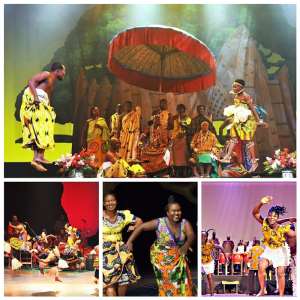
When Ghana claimed independence from British rule in 1957, the newly formed sovereign nation inherited the complex task of uniting diverse regional ethnicities into a single, cohesive identity. Amid political restructuring, cultural policy emerged as a primary instrument for nation-building. Spearheading this movement was the Ghana Dance Ensemble, founded in 1962 as a landmark collaboration between the Ghanaian government under President Dr. Kwame Nkrumah and the Institute of African Studies at the University of Ghana, Legon. Nkrumah’s vision was rooted in Pan-African cultural nationalism, seeking to rehabilitate performance traditions that had been marginalized during colonial rule and elevate them into elevated symbols of national pride.
To build a truly representative national company, the ensemble's founding directors, musicologist Professor J.H. Kwabena Nketia and artistic director Professor Albert Mawere Opoku, initiated extensive academic fieldwork. Researchers traveled to rural communities across every region of Ghana to document, record, and learn directly from master practitioners. Professor Mawere Opoku developed a groundbreaking theatrical methodology termed analytic simplification and synthetic coordination, which involved isolating the core structural and rhythmic components of regional ceremonial arts and reassembling them for presentation on modern proscenium stages. Crucially, performers were required to master artistic traditions outside their own native ethnic background, transforming the company into an operational model of cross-cultural integration.
The institution underwent a major conceptual transformation in 1976 when Professor Francis Nii Yartey assumed artistic leadership. While the ensemble’s early decades were dedicated to heritage preservation and historical staging, Nii Yartey expanded the repertoire toward contemporary expression and theatrical drama. He began integrating modern movement techniques, narrative plotlines, and philosophical themes.
In 1992, the organizational structure expanded to meet growing national and international demands. The performing unit birthed the National Dance Company, housed at the newly constructed National Theatre in Accra, while the original Ghana Dance Ensemble retained its academic, research, and experimental focus at the University of Ghana, Legon. Today, the legacy of the ensemble serves as the backbone of modern Ghanaian performing arts, influencing street culture, contemporary theater, and university arts curricula globally through generations of alumni who continue to lead cultural programs worldwide.


 October 29: Cedi sells at GHS12.25 on forex market, GHS11.63 on BoG interbank
 Ghana’s mineral wealth must not come at environmental cost – Zanetor
 NPP's SC suit to counter pending suits backing Mahama’s third-term eligibility –...
 No constitutional dispute has arisen to warrant NPP’s suit on presidential term ...
 'NPP has become group of flip-floppers' – Edem Agbana on South Africa evacuation...
 Kufuor explains why his government opted for HIPC despite concerns over Ghana’s ...
 Policewoman who attempted 120-hour painting marathon dies after short illness
 I entered politics in my 20s but became president at 62 – Kufuor
 Accra-Tema Motorway project reaches 53% completion despite delays
 Prisons Service to publish findings on alleged plot to poison Chairman Wontumi


