




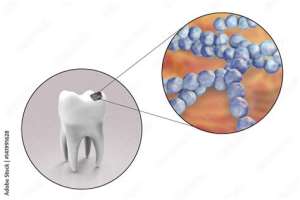
Tooth decay is one of the world’s most common diseases, and most cavities trace back to a single microorganism. Understanding how it damages teeth is key to preventing and treating it.
Tooth decay remains one of the most widespread health problems globally, and at the centre of it sits a single microorganism: Streptococcus mutans, a bacterium that lives in the human mouth and is considered the main cause of dental caries.
S. mutans belongs to the Streptococcus family, the most abundant group of bacteria in the mouth. What sets it apart from the many harmless microbes around it are three traits: it produces acid, it tolerates acid, and it adheres firmly to surfaces. Together, these traits allow it to damage teeth in a specific, step‑by‑step way.
The process begins with adhesion. S. mutans uses an enzyme called glucosyltransferase to convert the sugars in food into a sticky substance. This allows the bacteria to attach to teeth and to one another, forming the film known as plaque.
Once established in plaque, the bacterium converts the carbohydrates you eat into acid. This acid gradually dissolves the enamel, the hard outer layer of the tooth. Over time, the damage creates a cavity.
Its tolerance of acid is significant. S. mutans can survive in the acidic environment it creates, allowing it to continue damaging the tooth even as conditions become hostile to other bacteria. When left untreated, decay tends to progress. Early detection is the single most important step.
Cavities are largely avoidable, because each stage of the process can be interrupted. Limiting sugar intake reduces the carbohydrates the bacterium needs to produce acid and adhere to teeth. Regular brushing and flossing remove plaque and the bacteria it contains. Brushing twice daily with a fluoride toothpaste is recommended. Fluoride strengthens enamel and increases its resistance to acid. Regular dental examinations allow decay to be detected at an early stage. Good oral hygiene and routine dental check‑ups are key measures against the effects of S. mutans.
Once a cavity has formed, it will not heal by itself. Treatment depends on how far the decay has advanced. Early‑detected decay may be treated with fluoride varnish or sealants, allowing the enamel to re‑harden. Where the cavity has penetrated the enamel, the dentist removes the decayed tissue and fills the space, halting further damage. In advanced cases, a crown may be required, and if the decay reaches the inner pulp, a root canal may be necessary to save the tooth. The earlier decay is detected, the simpler the treatment. Delaying oral care allows the damage to spread.
S. mutans is a well‑understood cause of tooth decay. Its ability to stick to teeth, produce acid, and tolerate acid explains how cavities form, and it points directly to the measures that prevent them: limiting sugar, maintaining good oral hygiene, using fluoride, and attending regular dental check‑ups. Adopting these habits is sufficient to protect the teeth.

 National Service personnel to demonstrate over delayed refunds, unpaid allowance...
 Even a dog would win Karaga seat from Dr. Amin Adam for NDC in 2028 — Former MP
 UK stranded Barosky to receive psychological, financial support after his repatr...
 Highlife Musician Barosky repatriated to Ghana after homelessness in Manchester
 Mahama dragged to Supreme Court over Council of State vacancy
 Contractors risk blacklisting over delayed projects — Works Minister
 Ghana to introduce biometric SIM verification before end of 2026 — Sam George
 Gomoa Chiefs to collect revenue in disputed areas in Effutu after clash
 Houthi attacks disrupt Saudi oil facilities and wound more than 70
 Place all 54,985 affected BECE candidates in schools and publish final outcome —...

