




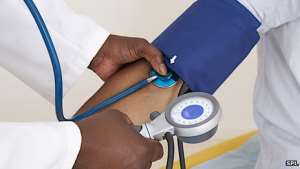
There is something uniquely strange about high blood pressure: you cannot feel it. There is no fever, no cough, and usually no pain at all. Yet, right now, millions of people are walking around with a slow-motion crisis playing out inside their arteries. This invisible threat is exactly why high blood pressure has earned the chilling nickname of "the silent killer." By the time it finally announces itself, it has often already done serious damage. To truly understand why it is so dangerous and what you can actually do to protect yourself we have to look past the doctor's blood pressure cuff and see what is happening deep inside your body.
It is easy to picture our blood vessels as simple, rigid pipes, but they are actually far more complex. They are living, flexible, and highly responsive tissues. Lining the inside of every blood vessel is a paper-thin layer of cells whose main job is to keep your blood flowing smoothly, with as little friction as possible. Now, imagine that delicate lining under constant, pounding pressure, day after day, year after year. Eventually, the sheer force of the blood starts to cause microscopic tears. You can think of it like fast-moving floodwater slowly eating away at a soft riverbank. The damage is gradual, but it adds up over time. Once this inner lining is hurt, the blood vessel loses its ability to relax and stretch the way it is supposed to, setting off a dangerous chain reaction.
Whenever your body gets injured, it immediately sends in a repair crew, and your blood vessels are no exception. Immune cells, cholesterol, and calcium rush to the tiny tears in your arteries to patch things up. Under normal circumstances, this is a perfect system. However, under the relentless, ongoing stress of high blood pressure, the damage never stops, so the repair crew never leaves. The patching materials keep piling up and eventually harden into a thick substance called plaque. As this plaque builds up along the walls, the inside of the artery gets narrower and narrower. This creates a terrible, vicious cycle: because the artery is narrower, the heart has to pump even harder to force blood through the shrinking space. This raises your blood pressure even more, which causes more tears, which creates even more plaque. Left unchecked, this loop can completely block the vessel or cause a rupture, leading to a life-threatening blood clot.
Fortunately, the human body is incredibly resilient and responds quickly to the right changes. One of the fastest ways to ease this hidden pressure starts with what is on your plate. Salt plays a major role in controlling how much fluid stays in your bloodstream. When you eat too much salt, it acts like a sponge, pulling extra water into your blood. More fluid squeezed into the same enclosed space naturally means more pressure pushing against the vessel walls. By simply cutting back on salty foods, your kidneys are able to flush out that extra water, almost immediately relieving the physical strain on your arteries.
If eating less salt is one great way to help your body, regular exercise is the other and it is practically free medicine. When you engage in activities that get your heart rate up, like brisk walking, cycling, or swimming, you are actually giving your heart muscle a workout. A stronger heart can pump more blood with much less effort. Beyond that, exercise does something almost magical to your blood vessels. It triggers the healthy parts of your arteries to release a natural chemical that tells the vessel walls to relax and open up wider. Wider vessels mean the blood can flow with less resistance, ensuring your heart does not have to fight an uphill battle every single time it beats.
Ultimately, high blood pressure thrives by staying completely invisible. Because it does not hurt, it is incredibly easy to ignore until the quiet damage it has been causing for years suddenly catches up to you. The biology behind it might seem relentless, but this cycle is entirely stoppable. Getting your blood pressure checked regularly, being mindful of your salt intake, and making time to move your body are not just generic health tips. They are your absolute best tools to intercept and disarm a hidden threat before it ever has the chance to strike.

 Contractors risk blacklisting over delayed projects — Works Minister
 Ghana to introduce biometric SIM verification before end of 2026 — Sam George
 Gomoa Chiefs to collect revenue in disputed areas in Effutu after clash
 S.Africa again seeks to halt US auction of Mandela items
 UAE leader warned Netanyahu of Hamas attack days before October 7, says report
 Houthi attacks disrupt Saudi oil facilities and wound more than 70
 Place all 54,985 affected BECE candidates in schools and publish final outcome —...
 NPP needs honest reflection, better organisation to reconnect with voters — NAPO
 Illegal retail business will not be tolerated — Trade Minister tells foreign inv...
 Vehicle bursts into flames on Accra-Kumasi Highway at Akyem Asafo


Comments
Interesting…a very informative piece