




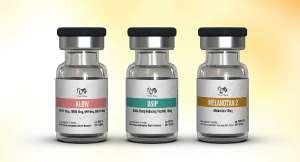
In the modern pursuit of physical excellence, the landscape of performance enhancement has shifted dramatically. Gone are the days when the only options for breaking through a plateau were "grit" or "gear." Today, researchers and fitness enthusiasts alike are navigating a complex world of biochemistry, weighing the rapid gains of traditional pharmacology against the sophisticated signaling of modern science.
When exploring performance optimization, understanding the fundamental differences between Peptides and anabolic steroids is critical before making any decision. While both are often associated with hypertrophy and visible muscle growth, they are not interchangeable. They represent two entirely different philosophies of human biology: one that seeks to override the body's natural systems, and one that seeks to optimize them.
Defining the Contenders: What Are They?
To understand the debate, we must first define the substances. The confusion often stems from the fact that both can be found in similar research circles, but their molecular structures and biological targets couldn't be more different.
What Are Peptides?
Peptides are short chains of amino acids (typically 2 to 50) linked by peptide bonds. They are essentially smaller versions of proteins. In the human body, they act as signaling molecules messengers that tell your cells exactly what to do. Whether it's telling the skin to produce collagen, the gut to heal, or the pituitary gland to release growth hormone, peptides are the "software" of the endocrine system.
In a research context, when scientists look for Peptides for sale, they are usually investigating "Growth Hormone Secretagogues" (GHSs) or recovery-oriented compounds. These substances don't replace your hormones; they prompt your body to produce or utilize its own natural resources more effectively.
What Are Steroids?
Anabolic-Androgenic Steroids (AAS) are synthetic derivatives of testosterone. Unlike peptides, which are amino-acid based, steroids are lipid-soluble cholesterol derivatives. They are designed to mimic the effects of the male sex hormone, testosterone, but often at supraphysiological levels.
Steroids don't "ask" the body to do anything; they bypass the body's regulatory "checks and balances" and directly bind to androgen receptors in the muscle tissue, forcing protein synthesis to occur at an accelerated rate.
The Biological Divide: Signaling vs. Overriding
The main difference between these two categories is their mechanism of action. This is where the safety profiles begin to diverge.
The Peptide Approach: Natural Signaling
Peptides work within the body's existing endocrine framework. For example, a peptide might mimic the hormone Ghrelin to stimulate the release of Growth Hormone. Because the body is still using its own internal hardware (the pituitary gland) to create hormones, the natural feedback loops stay largely intact.
For researchers, this is why the search for a high-quality Research Peptide is so prevalent; it allows for the study of tissue repair, fat metabolism, and muscle preservation without the "scorched earth" policy of traditional hormones.
The Steroid Approach: Systemic Replacement
Steroids operate by a different set of rules. When a person introduces synthetic testosterone or its derivatives into their system, the brain senses the high levels of hormones and essentially says, "We have more than enough." It then shuts down its own natural production to maintain homeostasis.
This is known as HPTA (Hypothalamic-Pituitary-Testicular Axis) suppression. This is why individuals who Buy steroids often find themselves required to undergo "Post-Cycle Therapy" (PCT) to jumpstart their natural hormone production once they stop the external supply.
Muscle Development: Speed vs. Sustainability
When comparing muscle development, the choice often comes down to the researcher's timeline and tolerance for risk.
| Feature | Peptides | Anabolic Steroids |
| Mechanism | Stimulates natural signaling | Direct androgen receptor activation |
| Growth Speed | Gradual, steady, and "clean" | Rapid, massive hypertrophy |
| Water Retention | Minimal (depending on the peptide) | Often significant |
| Muscle Quality | Lean, sustainable tissue | High volume, but prone to loss post-cycle |
| Testosterone | Preserves natural production | Suppresses or shuts down production |
The "Anavar" Comparison
A common point of comparison in clinical discussions is the steroid Oxandrolone (Anavar). While Anavar is considered one of the "milder" Steroids for sale, it is still a C-17 alpha-alkylated oral steroid. This means it carries a level of liver toxicity and lipid strain that peptides simply do not have. While Anavar may produce faster strength gains, peptides offer a way to support lean mass development through IGF-1 signaling without the cardiovascular and hepatic (liver) strain.
Safety and Side Effects: A Closer Look
The risk profile is perhaps the most significant area of contrast. Because steroids are a Schedule III controlled substance in the U.S., the legal risks are just as real as the physical ones.
Steroid Risks:
- Cardiovascular Strain: Steroids often skew the ratio of HDL (good) to LDL (bad) cholesterol, increasing the risk of heart disease.
- Hormonal Shutdown: Infertility and testicular atrophy are common side effects of long-term use.
- Organ Toxicity: Oral steroids must be processed by the liver, which can lead to significant strain or damage.
- Virilization: Women using steroids may experience irreversible masculine traits, such as deepening of the voice.
Peptide Risks:
Peptides are generally considered to have a much higher safety ceiling. Because they are broken down into their constituent amino acids, they do not carry the same liver or kidney toxicity. The most common side effects reported in research settings include:
- Injection site irritation (redness or itching).
- Water retention or slight tingling in the extremities.
- Increased hunger (specifically with GHRPs).
Research Findings and Long-Term Health
Current research into peptides is expanding into the realms of anti-aging and regenerative medicine. For example, while someone might look for Steroids for sale to rapidly bulk up for a competition, a researcher might look for peptides to study how to heal a torn tendon or improve bone density.
Studies on growth hormone-releasing peptides show that they can improve sleep quality, enhance skin elasticity, and promote healthier body composition over time. These "fountain of youth" properties are rarely associated with steroids, which often accelerate the aging process of internal organs and the cardiovascular system.
Why Many Choose Peptides
While steroids deliver fast results, the potential health risks far outweigh the benefits for the average well-conscious individual. Some explore medically supervised peptide therapy as part of a broader strategy for promoting muscle growth and improving recovery without compromising long-term vitality.
By using peptides, you aren't just building a physique; you are supporting your body's natural functions. You are choosing a path of sustainable progress rather than a temporary "loan" of muscle that must be paid back with your health later.
Conclusion: Steady Gains Win the Race
The decision between peptides and steroids isn't just about how fast you want your biceps to grow. It's a decision about how you want your body to function ten years from now.
Steroids are a blunt instrument powerful, effective, but often destructive to the delicate balance of the endocrine system. Peptides are a scalpel precise, signaling-based, and designed to work in harmony with your biology.
Whether you are a researcher looking for the right Research Peptide to study tissue regeneration or an individual looking to optimize your own recovery, the data is clear: peptides offer a sophisticated, safer, and more sustainable route to performance.

 Okoe Boye wins NPP Greater Accra Regional Chairmanship election
 Bagré dam nears spillway threshold as water level rises to 77.35%
 Sunyani Paramount Chief warns chiefs against sale of cemetery lands
 President Mahama announces US$10bn ‘New Economy’ investment programme
 Sustained peace will restore Bawku to its former glory – Mahama
 Plans advanced for University of Science and Technology in Damongo – Haruna Iddr...
 Inmate Peter Kyeremeh escapes from prison
 COKA floors Kokofu to win NPP Ashanti Regional chairmanship
 Abronye retains Bono NPP Chairmanship in Regional Executive Elections
 I accept responsibility for NPP’s poor performance in Greater Accra Region – Out...

