




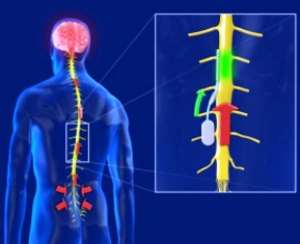
As health care providers, we are part of a revolution in spinal cord injury (SCI) research. For those affected, groundbreaking discoveries are bringing hope as they promise significant improvements in quality of life and potentially the restoration of lost functions. Neural implants are among the most promising technological developments. These state-of-the-art tools serve as links, reestablishing broken brain circuits. They avoid damaged sections of the spinal cord and allow communication between the brain and the body. These implants give people with SCI greater mobility and independence by interpreting brain impulses and sending them to prosthetic limbs or assistive technology.
Moreover, stem cell treatments are opening up new possibilities for regenerative medicine. Because of their extraordinary capacity to develop into numerous cell types, stem cells may be able to replace injured spinal cord cells. In spinal cord injuries, recent studies have demonstrated promising outcomes in terms of improving neuron regeneration and lowering inflammation. Even though these treatments are still in their infancy, they have great potential to help SCI patients regain their function and enhance their general quality of life. Another frontier in the rehabilitation of SCI is the merging of robots and virtual reality. People with SCI can participate in simulated environments through immersive training programs, which help them regain motor skills and increase their coordination. Furthermore, there is potential for improved mobility and autonomy with exoskeletons that are outfitted with sophisticated robots.
Although these discoveries give rise to hope, obstacles still need to be overcome before these inventions may be broadly used. Important considerations that necessitate constant attention and coordinated efforts from the scientific community, healthcare practitioners, and legislators are affordability, long-term efficacy, and regulatory clearances. Stressing the entire approach to SCI care is crucial as we traverse this innovative landscape. In addition to technology improvements, extensive rehabilitation programs, psychological support, and community involvement are essential components of the recovery process for those with spinal cord injuries.
In conclusion, there are a plethora of opportunities for spinal cord injury research. The fusion of stem cell therapies, neural implants, robotics, and rehabilitation techniques portends a time when the crippling effects of spinal cord injury may be lessened, if not completely reversed. Even though there are still obstacles to overcome, our mission to return mobility, dignity, and quality of life to individuals with spinal cord injuries is fueled by the combination of science, compassion, and tenacity.


 YEA deploys over 11,700 youth under Community Police Assistant Model – Basintale
 Parliament’s Human Rights Committee demands swift investigations in Obuasi SHTS ...
 'Let the law take its course' – Veep on Obuasi SHTS sexual abuse allegations
 Obuasi SHTS sex scandal: 'The powerful ride the law to trample the weak' – Kofi ...
 19-year-old remanded over alleged fatal stabbing of boyfriend at Ofankor
 Woes of SHTS Headmaster deepen as he resigns as old students’ chairman
 'NPP has 35 NDC scandals to drop from now till 2028 elections' — Sammi Awuku
 'NDC will pay for Obuasi SHTS sex scandal' – Sammi Awuku warns
 Use of hormonal contraceptives linked to increased breast cancer risks – Doctor ...
 ECOWAS deepens EU cooperation to improve disaster response in West Africa


