




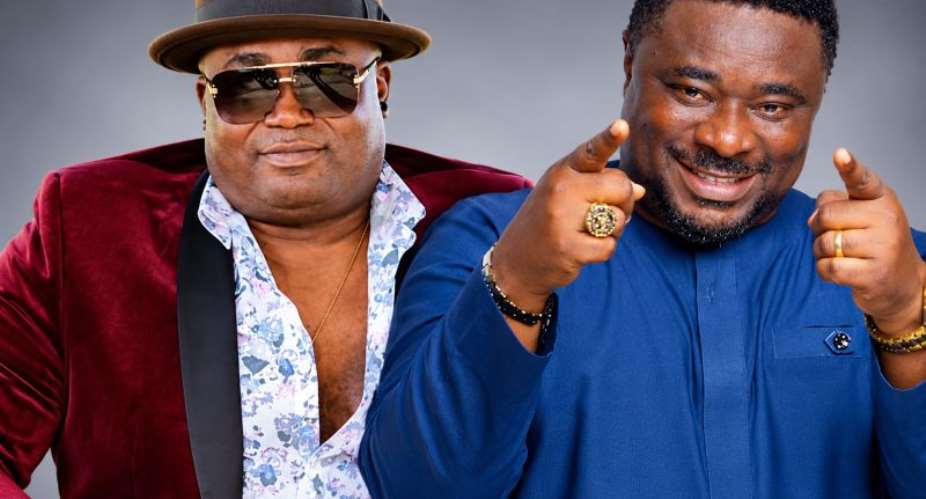
Ghanaian highlife musician Nana Quame has offered fresh insight into the experiences and personalities that influenced his musical journey, revealing how Okyeame Qhophi helped groom him as a highlife artiste, Lord Kenya encouraged him to record in Accra with veteran producer Zap Mallet, and Daasebre Gyamenah's Kokooko inspired his popular song Odo Shock.
The musician made these revelations during an interview with Ghanaian comedian and media personality Ajeezay on his TikTok Focus programme. The conversation explored the relationships, career decisions and creative influences that shaped Nana Quame's development in Ghana's music industry.
Okyeame Qhophi's Influence
Reflecting on his early musical journey, Nana Quame acknowledged Okyeame Qhophi's contribution in helping groom him into a highlife musician.
According to Nana Quame, Qhophi had also expressed an interest in producing him. His account highlights the role Qhophi played in his early development and the encouragement he received as he worked towards establishing himself as a recording artiste.
Okyeame Qhophi, also known as Quophi Okyeame, is recognised for his contribution to Ghanaian music as one half of the celebrated duo Akyeame, alongside Okyeame Kwame. Beyond his work as a performer, he has been involved in music composition, production and broadcasting.
In a 2013 interview with Graphic Showbiz, Quophi Okyeame described highlife as his first love and discussed his return to the genre after years away from the music scene.
Nana Quame's account adds another dimension to Quophi's musical career, highlighting his involvement in mentoring and encouraging emerging talent.
Lord Kenya's Role in a Key Career Decision
Nana Quame also revealed that Lord Kenya influenced a significant decision in his recording career.
He explained that Lord Kenya persuaded him to travel to Accra to record with renowned Ghanaian music producer Zap Mallet.
The decision marked an important stage in his musical journey, bringing him into the working environment of one of Ghana's most respected recording engineers and producers.
It is important to distinguish between the two contributions. Okyeame Qhophi groomed Nana Quame and expressed an interest in producing him, while Lord Kenya influenced his decision to travel to Accra and work with Zap Mallet. The move should not be interpreted as a reflection of Qhophi's production abilities.
Lord Kenya was one of the prominent figures in Ghana's hiplife movement during the late 1990s and early 2000s. His influence was reflected in his commercial success and recognition within the industry.
At the 2002 Ghana Music Awards, he won four awards, including the prestigious Artiste of the Year title, further cementing his position as one of the leading performers of that period.
Zap Mallet's Impact
Zap Mallet is regarded as one of Ghana's most accomplished recording engineers and music producers.
Over a career spanning several decades, he has worked with prominent musicians across highlife, hiplife and other Ghanaian music genres. His production work includes collaborations with artistes such as Kojo Antwi, Daasebre Gyamenah, Lord Kenya, Obrafour and Akyeame.
His contribution to the industry earned him major recognition at the Ghana Music Awards. He won the Best Producer award three consecutive times in 1999, 2000 and 2001.
His involvement in Nana Quame's recording journey therefore brought the singer into contact with a producer whose work had already made a significant mark on Ghana's music scene.
Daasebre Gyamenah's Kokooko Inspired Odo Shock
Another notable revelation from the interview concerned the inspiration behind Nana Quame's popular song Odo Shock.
The musician disclosed that Daasebre Gyamenah's Kokooko served as the inspiration for the record.
Released in 1999, Kokooko featured hiplife rapper Lord Kenya and became a major hit, helping bring highlife and hiplife influences together in a commercially successful recording.
Daasebre's performance and the song's popularity made it one of the defining works associated with his career. He later became widely known by the nickname "Ahoofe" following the success of another of his songs.
The highlife musician also released other recognised recordings, including You Can't Touch Me and A Friend in Need. He died on July 29, 2016, at the Korle-Bu Teaching Hospital in Accra.
Nana Quame's acknowledgement of Kokooko as an inspiration for Odo Shock provides further insight into the creative influences behind his music. It also illustrates how successful recordings from one generation can inspire artistes who follow.
Nana Quame's Rise in Ghanaian Music
Born Henry De-Mensah, Nana Quame emerged as a recognised name in Ghana's music industry during the late 1990s and early 2000s.
His musical talent reportedly attracted attention at a young age, particularly through talent-show performances in which he interpreted songs by legendary highlife musician Kojo Antwi.
His connection with Kojo Antwi subsequently developed into an association with the musician's Family Spirit record label, under which he released his debut album.
Nana Quame went on to build a catalogue that includes popular songs such as Odo Shock, Atia Donko, Julie and Asew. His music combined highlife with contemporary influences, helping him connect with audiences during a period of significant change in Ghanaian popular music.
One of the notable milestones in his career was his recognition at the Ghana Music Awards. The official awards archive records Nana Quame as the winner of the 2003 Best Male Vocal Performance category for Atia Donko. It also lists Waa Ware Mea among the nominees for Highlife Song of the Year that year.
His success came at a time when highlife remained an important part of Ghana's musical identity, even as hiplife was gaining popularity among younger audiences.
The period brought together established highlife musicians, emerging hiplife performers, producers and recording engineers whose work helped shape the sound of modern Ghanaian music.
Ajeezay Hosts Revealing Conversation
Nana Quame's recollections offer a personal perspective on some of the relationships and creative decisions that formed part of that era.
The interview was hosted by Ajeezay, popularly known as the "Nonfa King", a Ghanaian comedian, actor and media personality.
Ajeezay has built a presence in Ghana's entertainment industry through comedy and digital content. His conversation with Nana Quame on TikTok Focus provided an opportunity to explore the experiences and relationships behind the musician's career.
The discussion is particularly relevant to Ghanaian music audiences because it brings attention to the people and creative decisions behind some of Nana Quame's early work.
Preserving a Chapter of Ghanaian Music History
Nana Quame's revelations bring together three important elements of his musical journey: the early guidance he received from Okyeame Qhophi, Lord Kenya's influence on his decision to record with Zap Mallet, and the creative inspiration he drew from Daasebre Gyamenah's Kokooko.
Beyond the individual stories, the interview provides an opportunity to revisit a period when highlife and hiplife were developing alongside one another, with musicians, producers and performers contributing to the evolution of Ghanaian music.
For audiences familiar with Nana Quame's recordings, the discussion offers additional context behind some of the influences associated with his career. For younger listeners, it provides a reminder of the personalities and musical connections that helped shape an important chapter in Ghana's entertainment history.

 OSP must publish findings on alleged sale of diplomatic passports – Larry Dogbe
 2027 Budget: 'Adwuma no wɔ he?’ – Sammi Awuku demands answers on Mahama's youth ...
 SA evacuation: OSP must punish those who took hotel money while evacuees slept i...
 Ghana, Slovakia consider visa waiver deal for diplomatic, service passport holde...
 World Cup visa scandal: OSP must not end at announcement of probe – Ekow Assafua...
 SA evacuation: I’m convinced OSP will find nothing untoward after probe – Batagl...
 'If by close of today Erastus Asare Donkor fails to come and apology we will cur...
 Both sides of Parliament support GH¢10m Media Development Fund – Bunkpurugu MP
 SA Evacuation: If Ablakwa wanted Ibrahim Mahama’s GH¢16m, he wouldn’t make it pu...
 Ato Forson explains why gov’t won’t borrow to finance New Economy Programme


