




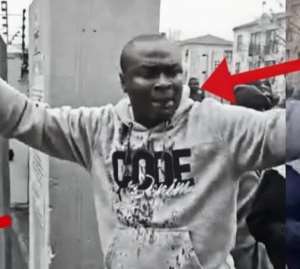
The death of a Nigerian national allegedly during a South African police operation at Parksig Villas Complex, Bellville, Cape Town, has reopened one of the most painful and complicated conversations facing South Africa today: the relationship between law enforcement, foreign nationals, xenophobia, human rights, and the country’s global image.
The incident, which reportedly occurred on Thursday, 23 July 2026, has triggered anger among Nigerians in South Africa, calls for an independent investigation, and renewed questions about whether foreign nationals especially Africans from other countries are truly safe in South Africa.
But beyond the accusations and counter-accusations lies a deeper question:
What exactly happened inside Parksig Villas that day?
Was this a legitimate police operation that tragically ended in death? Was excessive force used? Was the victim targeted because he was a foreigner? Or are social media narratives moving faster than verified facts?
The world is waiting for answers.
The Operation: What Were Police Doing at Parksig Villas?
According to reports from Nigerian community representatives, the deceased Nigerian man, identified as Chika Ibe, was allegedly killed during a South African Police Service (SAPS) operation at Parksig Villas in Bellville. Nigerian groups claim he was subjected to severe beating, torture, inhuman treatment and alleged suffocation during the operation.
However, at the time of writing, details surrounding the exact nature of the SAPS operation, the intelligence behind it, the officers involved, and the official police version of the Bellville incident remain unclear.
This raises important questions:
What was the objective of the operation?
Was it:
A search for suspected criminals?
A drug-related operation?
An immigration enforcement operation?
A response to intelligence reports?
Or something else entirely?
The public deserves answers because police operations are conducted in the name of protecting society. But when someone dies during such operations, transparency becomes not an option but an obligation.
Did Police Really Kill Him? The Biggest Question
The central accusation is simple but extremely serious:
Did members of SAPS cause the death of the Nigerian national?
At this stage, allegations are not the same as proven facts.
A democratic society must demand justice but justice requires evidence.
The critical questions investigators must answer include:
What injuries did the deceased suffer?
What does the postmortem report reveal?
Were body cameras or CCTV footage available?
How many officers were present?
Were proper arrest procedures followed?
Was force necessary and proportional?
Were witnesses interviewed independently?
Did officers attempt medical intervention?
The truth cannot be determined through anger alone. It must come through a transparent investigation.
What Are the Police Saying?
South African police authorities have previously faced similar accusations involving Nigerian nationals and have rejected claims that deaths involving foreign nationals were connected to anti-immigrant tensions.
In another recent case involving a Nigerian national who died after arrest in Pretoria, SAPS stated that officers acted on intelligence, arrested the individual for alleged drug possession, and that he collapsed while being taken into custody. SAPS said medical assistance was called, the Independent Police Investigative Directorate (IPID) was notified, and an investigation was opened.
For the Bellville incident, authorities will now face pressure to provide a clear account of:
Why the operation happened;
What happened during the encounter;
Whether police followed the law;
Whether any officers must face consequences.
Silence or delayed answers will only increase suspicion.
What Are Nigerians Saying?
Among Nigerians living in South Africa, the incident has created fear, anger and frustration.
The Nigerian Citizens Association South Africa (NICASA) has called for justice and an independent investigation, alleging that Chika Ibe died after being subjected to brutal treatment during the police operation.
Many Nigerians are asking:
Is this an isolated incident, or part of a bigger pattern?
For years, Nigerians and other African migrants have complained about:
xenophobic attacks;
discrimination;
harassment;
criminal stereotyping;
being blamed for South Africa’s economic problems.
But South Africans who support stronger immigration controls argue that illegal migration, crime and pressure on jobs and public services are genuine concerns.
The challenge is separating legitimate policy debates from hatred and violence.
The Bigger Question: Is South Africa Becoming Unsafe for Foreigners?
South Africa is one of Africa’s economic giants. It attracts millions of migrants because of its industries, universities, businesses and opportunities.
But its reputation has suffered because of repeated incidents involving xenophobia and violence against foreigners.
The question facing President Cyril Ramaphosa’s government is:
Can South Africa continue telling the world it is open for business while foreigners fear for their safety?
A country’s international reputation is not built only by speeches. It is built by how ordinary people are treated.
If investors, tourists, students and skilled workers begin seeing South Africa as a place where nationality determines safety, the economic consequences could be serious.
Is This Becoming a Diplomatic Crisis Between Nigeria and South Africa?
Nigeria and South Africa are two of Africa’s most influential nations.
Their relationship has always been important but sometimes complicated.
A repeated pattern of Nigerian citizens dying under questionable circumstances in South Africa could create diplomatic tension.
The Nigerian government has previously raised concerns about killings of its citizens in South Africa and demanded investigations.
The question now is:
Will both governments handle this issue through facts and justice, or will public anger push relations into a deeper crisis?
The Uncomfortable Xenophobia Question: Why Are Some Black South Africans Angry With Black Foreigners?
One of the most uncomfortable debates in South Africa is this:
Why do some black South Africans direct anger toward African migrants from Nigeria, Zimbabwe, Ghana, Mozambique and other countries?
Some analysts argue it is connected to:
unemployment;
poverty;
inequality;
competition for opportunities;
frustration with government failures.
But another difficult question must also be asked:
Why are migrants often blamed for problems created by decades of economic inequality, corruption, and weak governance?
At the same time, ignoring concerns about undocumented migration also creates resentment.
The solution cannot be hatred.
The solution must be:
effective immigration management;
job creation;
law enforcement;
accountability;
respect for human rights.
Are White South Africans Treated Differently Than Black Foreigners?
Another controversial question many people ask:
Why do some black South Africans appear to have more hostility toward African migrants, while many white South Africans do not express the same level of anger?
The answer is complex.
South Africa’s history of apartheid created deep economic divisions. Many black South Africans remain economically disadvantaged decades after democracy.
Some feel that migration increases competition for already limited opportunities.
However, critics argue that frustration has sometimes been redirected toward vulnerable African migrants rather than toward deeper structural problems.
The issue is not about race alone it is about economics, history, identity and political failures.
Is South Africa Returning to Its Dark Days?
South Africa has fought hard to escape its history of apartheid, racial violence and international isolation.
But every incident involving:
police brutality allegations;
xenophobic violence;
discrimination;
failure of accountability;
raises fears that the country is losing the moral authority it once represented.
The question is:
Will South Africa be remembered as the country of Mandela’s dream or as a nation where fear replaced hope?
Questions South Africa Must Answer
Before the world forms an opinion, several questions demand answers:
1. Who authorised the Parksig Villas operation?
2. What intelligence led police there?
3. What happened between police and the Nigerian national before his death?
4. Were proper procedures followed?
5. Will independent investigators handle the case?
6. Will officers found guilty face prosecution?
7. What protection exists for foreign nationals living legally in South Africa?
8. What is government doing to stop South Africa becoming labelled unsafe for Africans?
Conclusion: The Truth Must Not Become a Casualty
The death of a Nigerian national in Cape Town should not become another statistic.
If police officers acted unlawfully, they must face justice.
If allegations are false, authorities must prove it through transparent evidence.
The only way South Africa protects its reputation is not by denying problems but by confronting them.
Because the biggest danger facing any nation is not criticism from outside.
It is when citizens and foreigners stop believing that justice will be done.
The world is watching. Nigeria is watching. South Africans themselves are watching.
The question now is simple:
Will the truth emerge, or will another unanswered death deepen the mistrust between two of Africa’s greatest nations?
By:
Patrick Belebang Yagsori
+233240292413
[email protected]
 Women's Development Bank has taken too long to be implemented — GUTA Vice Presid...
 'GoldBod's success story will outlive the hate-driven campaign' — Sammy Gyamfi
 Ato Forson dismisses claims of tension with Agric Minister Eric Opoku over GH¢1....
 Ghana's economy will take off after we stabilise it within two years through unr...
 President Mahama raises South Africa xenophobic attacks with Ramaphosa’s Special...
 Google Maps scam: This is why after online payment your food never comes
 GoldBod generated additional $15 billion in foreign exchange inflows — Ato Forso...
 Govt secures US$3.5 billion investment to revive upstream oil and gas sector — F...
 'Free Wontumi and all political prisoners now; we will hold your feet to account...
 NPP disqualifies Oti Regional Youth Organiser aspirant for criticising Bawumia o...

