




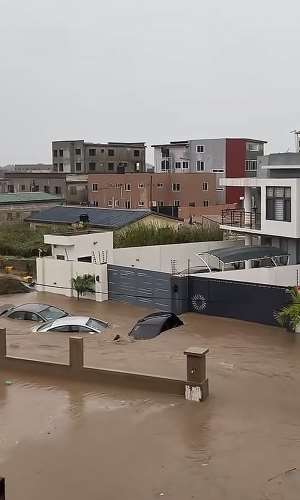
Twelve lives did not survive Monday, June 29th, 2026. Homes, shops, vehicles, livestock, and other properties were not spared. The flooding in Accra did not resemble the usual June floods but revealed an overlooked problem. From a moral standpoint, the reality we faced on June 29th is the result of a seed we planted. Did the citizens plant that seed? Or did the government fail to uproot that seedling before it matured?
The main focus of this article is to examine the roles of key stakeholders in national development: the citizens and the government. The flood not only washed away properties but also swept through conversations, a common phrase ;water-logged areas.
What exactly is a water-logged area?
Water-logged areas are lands where the soil contains excess water, making it difficult for the ground to absorb more during the rainy season. In Accra, areas like Weija, Adabraka, Odaw Basin, and others are known as water-logged. These areas tend to flood more often than others. How can someone build on water-logged land knowingly risking their lives and property? When building on land, individuals are required to obtain a building permit from the Metropolitan, Municipal, or District Assembly. That’s why land sites having incomplete buildings sometimes have red-inked inscriptions saying “stop work” if a permit was not obtained. The permit certifies that the builder has met all requirements and is constructing in a safe location. So, isn't it an enforcement problem if people keep building in these risky areas? The flood in Accra on June 29th taught us lessons beyond our expectations. Even areas not considered water-logged, such as Adenta, Madina, Achimota, and East Legon, experienced distress. This is a call for all residents of Accra to take action.
What are we failing to recognize?
If you visit certain corners in places like Nima, Chorkor, Teshie, Ashiaman, or Agbogbloshie during the rainy season, you’ll see gutters filled with Styrofoam, plastics, spoiled gadgets, sachets, and torn clothes. These blockages cause water to back up into people's homes, from compounds to bedrooms. Stressing the importance of sanitation in 2026, especially for a capital city, feels like printing a manual to understand common sense. Sadly, sanitation remains a neglected issue that only gains attention when flooding causes extreme damage. In a country where citizens neglect to protect the environment or oppose others’ wrongdoings, system failure is inevitable. Our call for action depends on the severity of the consequences. Would this conversation be as urgent if the June 29th flood had minimal impact? It’s a cycle: fear arises, action is taken, then once things seem okay, we revert to old habits.
Government efforts
To evaluate the government’s efforts over the past decade, without political bias, we see that agencies like NADMO regularly distribute relief items, and initiatives such as the National Flood Control Program, GARID, and major demolitions have taken place. Despite this, the government still plays a vital role. But what happens when citizens refuse to cooperate? For instance, after repairing a streetlight, days later, it is stolen; when a bridge is fixed, the metals are removed. Citizens need to understand how the system works
Public Procurement Act, 2003 (Act 663) as amended by the Public Procurement (Amendment) Act, 2016 (Act 914)
The primary goal of this law is to ensure transparency, accountability, fairness, competition, and value for money in public procurement. The 2016 amendment maintains these goals. For example, instead of immediately repairing a broken bridge, government officials must follow procedures to get proper approval. This delays repairs but also explains the reasons for the delays, especially when public property is destroyed. This is not to encourage the government’s failure to provide infrastructure but to simply remind citizens of their responsibility to protect public assets .
What would a proposal from the author’s perspective look like?
First, demarcating overcrowded markets like Agbogbloshie, Kaneshie, and Makola to reduce congestion and improve sanitation is essential. Overcrowding hampers movement, prompting buyers and sellers to litter carelessly. After markets close, wind scatters trash, some ending up in streets and gutters, leading to flooding when it rains. Demarcation provides space for easier cleanup and enforcement by local authorities. Additionally, revitalizing the town councils with strong government support would help regulate waste disposal. Instead of just fining people for dumping refuse, they should be tasked with physical cleanup efforts like clearing gutters, sweeping streets, and covering groundwater pools with sand. Moreover, the government should mandate radio and TV stations to conduct regular awareness campaigns about sanitation’s importance. Since we often only act after experiencing severe flooding, continuous awareness can help change behaviors.
Conclusion
The recent flooding on June 29 in Accra revealed years of neglect by citizens and the government’s failure to develop a long-term disaster management plan. This article reflects the opinion of a concerned citizen.

 Govt to distribute first batch of 129 vehicles to MMDCEs in 12 regions
 UG Vice-Chancellor calls for oral exams, project-based assessment to deal with A...
 'I will use everything I have to clear my name' – Obuasi SHTS headmaster fights ...
 NPA to strengthen ties with UMaT to drive downstream petroleum sector
 'Report school abuse directly to Education Ministry' – Deputy Minister tells stu...
 'It's a curse on you' – Water Minister badmouths 'malware' workers sabotaging Gh...
 Tap water no longer drinkable near South Africa capital
 96 health facilities under construction in Ashanti Region
 GoldBod reforms create 4,866 direct jobs in less than two years — Sammy Gyamfi


