




Introduction: When Pain Crosses Borders
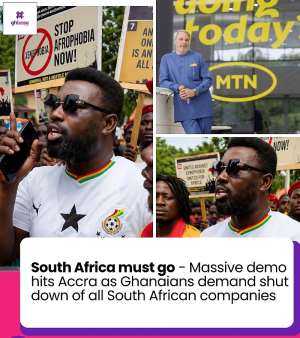
On Thursday, June 11, thousands of Ghanaians gathered at Independence Square in Accra under the banner of the Ghana First Alliance. Their message was loud, emotional, and impossible to ignore: “South Africa Must Go.”
The demonstration was not merely about business. It was about pain, frustration, dignity, and a growing belief among many Ghanaians that African solidarity is being tested in one of its most critical moments.
The protest follows reports of xenophobic attacks in South Africa and the evacuation of hundreds of Ghanaians who allegedly faced intimidation, violence, loss of businesses, and threats to their safety. Ghana has officially advised citizens against non-essential travel to South Africa and has initiated diplomatic and legal efforts to seek compensation for affected nationals.
But beyond the slogans and emotions lies a deeper question:
Are Ghanaians protesting South Africa, or are they protesting the failure of Africa's promise of unity?
Why Are Ghanaians Demonstrating?
The immediate trigger is the recent wave of anti-immigrant protests and xenophobic attacks reported in parts of South Africa.
According to Ghanaian authorities, these incidents resulted in injuries, looting, destruction of property, closure of businesses, and the displacement of African migrants, including Ghanaians. The situation became serious enough for Ghana to evacuate hundreds of its citizens and issue travel warnings.
Many protesters believe that:
Ghanaian lives have been treated with disrespect.
African migrants are being unfairly blamed for South Africa's economic struggles.
Previous diplomatic engagements have not produced lasting solutions.
South African businesses continue to thrive in Ghana while Ghanaians face hostility in South Africa.
For many demonstrators, the protest was therefore viewed as a call for reciprocity.
Their argument is simple:
"If Ghanaians can peacefully contribute to South Africa's economy, why should Ghanaians be attacked simply for living and working there?"
What Is South Africa Saying?
The South African government has consistently rejected claims that there is a state-sponsored campaign against Ghanaians or other Africans.
South African authorities argue that while incidents have occurred, there is no official policy targeting foreigners. The government insists that law enforcement agencies have acted against perpetrators and that migration concerns should be addressed through legal channels.
South African President Cyril Ramaphosa recently condemned xenophobic violence and promised action against groups involved in attacks. He argued that criminality, unemployment, and poverty are being exploited by vigilante groups and stressed that immigration enforcement should remain the responsibility of the state, not mobs.
Reports also indicate that South African officials have maintained that concerns about illegal immigration should not be used to justify violence against foreign nationals.
What Is the South African Ambassador Saying?
Publicly available reports indicate that South African diplomatic representatives have sought to reassure Ghana that South Africa remains committed to law and order and the protection of foreign nationals.
South Africa has largely maintained that allegations of systematic targeting are exaggerated and has emphasized its commitment to Pan-African values while promising investigations and prosecutions where crimes have occurred.
However, critics argue that these assurances have been repeated for years while xenophobic incidents continue to resurface.
This raises a difficult question:
How many diplomatic statements must be issued before Africans living in South Africa feel genuinely safe?
The Questions Nobody Is Asking
1. Why do xenophobic attacks keep returning despite repeated promises?
Every few years, Africa witnesses the same cycle:
Violence. Condemnation. Diplomatic meetings. Promises. Then another outbreak.
Why has no permanent continental framework emerged to stop this pattern?
2. Has the African Union failed to protect African migrants?
The African Union speaks often about integration and free movement.
Yet when Africans are attacked in another African country, responses often appear slow and reactive.
What practical protections actually exist for African migrants?
3. What happened to Pan-Africanism?
Ghana was the home of Kwame Nkrumah, one of Africa's strongest advocates for continental unity.
South Africa benefited immensely from support across Africa during the anti-apartheid struggle.
Many Ghanaians are asking:
Would apartheid have ended when it did without support from fellow African nations?
And if not, why do some Africans now feel unwelcome?
4. Are politicians benefiting from anti-immigrant sentiment?
South Africa faces unemployment exceeding 30 percent in some estimates, creating economic frustration among citizens. Analysts suggest migrants often become convenient targets during periods of economic hardship.
But are foreigners truly responsible for these economic problems?
Or are they being used as scapegoats for deeper structural failures?
What Happens If South African Businesses Are Targeted in Ghana?
This is where emotions collide with economics.
South African companies have substantial investments in Ghana across telecommunications, retail, financial services, mining, hospitality, and consumer markets.
If pressure mounts to shut down or boycott South African-owned businesses, the consequences could be significant.
Potential Economic Effects
Job Losses
Thousands of Ghanaians work directly or indirectly for South African-owned enterprises.
Any large-scale shutdown could affect workers far more than corporate executives.
Reduced Foreign Investment
Investors watch political developments closely.
If businesses become targets because of diplomatic disputes, investors from other countries may become more cautious about Ghana.
Diplomatic Tensions
Economic retaliation could trigger broader diplomatic disagreements between two of Africa's most influential countries.
Supply Chain Disruptions
Many local suppliers depend on contracts with multinational companies.
A business closure could affect entire networks of Ghanaian entrepreneurs.
Could There Be Political Consequences?
Absolutely.
If public anger continues growing, both governments could face pressure to take stronger positions.
Ghana has already lodged diplomatic protests, petitioned the African Union, evacuated citizens, and announced plans to pursue compensation for affected Ghanaians.
The challenge is balancing public outrage with national interests.
Governments must ask:
How do we defend our citizens without damaging economic relationships that support jobs and growth?
The Bigger Issue: Africa's Identity Crisis
Perhaps the most important question is not about Ghana or South Africa.
It is about Africa itself.
The continent speaks of integration.
It celebrates the African Continental Free Trade Area.
It promotes free movement.
It talks about a united future.
Yet ordinary Africans still face hostility simply for crossing borders within Africa.
If Africans cannot move freely and safely across Africa, what does continental integration really mean?
Conclusion
The June 11 demonstration in Accra was more than a protest against South Africa.
It was a warning signal.
A warning that ordinary Africans are losing faith in promises of continental unity.
A warning that diplomacy alone may no longer satisfy citizens who believe their compatriots are being mistreated abroad.
And a warning that if African leaders fail to address xenophobia decisively, economic cooperation, investment, and Pan-African solidarity could suffer lasting damage.
The real question is no longer whether another diplomatic statement will be issued.
The real question is whether Africa can finally build a continent where being African is enough protection regardless of which African country you call home.
By:
Patrick Belebang Yagsori
+233240292413
[email protected]

 NPP's 'Democracy Under Attack' demo a useless face-saving tactic by its failed l...
 Newly inducted doctors and dentists urged to accept postings to underserved area...
 BoG Governor urges banks to save viable companies facing temporary distress
 I can tell you Sedina Tamakloe has not been released; she’s still in custody des...
 'Even with the GH¢2 diesel reduction fuel prices still more expensive than NDC m...
 Third-term debate is NPP propaganda, Mahama has been consistent – Felix Kwakye O...
 Bawumia urges Ghana to uphold UGCC ideals of freedom without fear and persecutio...
 Mahama pays tribute to Marcus Mosiah Garvey in Jamaica
 One dead, six injured in Sagnarigu boundary clash
 Afenyo-Markin donates 100 laptops to Effutu teachers under ‘One Teacher, One Lap...

