




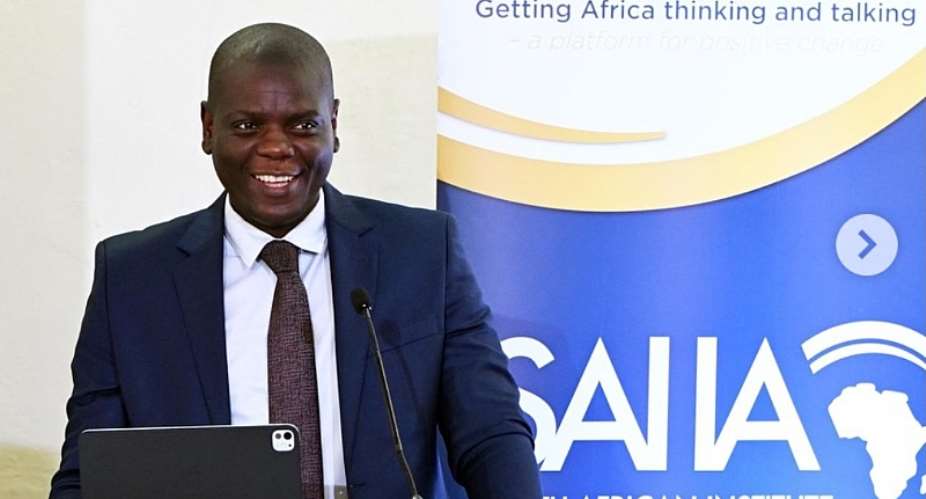
South Africa’s Minister of International Relations and Cooperation, Ronald Lamola, recently stated that South Africa would “vigorously defend any frivolous or baseless lawsuit emanating from Ghana.” The comment, delivered in the context of renewed diplomatic tension over alleged xenophobic incidents, reflects a firm legal and political posture: South Africa will not accept external legal or political pressure it considers unfounded.
But behind this strong language lies a deeper and more uncomfortable diplomatic question what exactly is being defended, and what remains unresolved beneath the surface?
1. Why did Lamola take such a firm stance?
Lamola’s position is not isolated; it reflects three core state concerns:
(a) Sovereignty and legal reputation
South Africa is highly sensitive to claims that its state institutions either enable or tolerate xenophobia. By rejecting “frivolous lawsuits,” the government is signaling that:
International legal claims must meet strict evidentiary standards
South Africa will not accept reputational damage based on unverified allegations
Diplomatic disputes should be resolved through bilateral and AU mechanisms, not courts abroad
(b) Controlling misinformation narratives
Recent tensions have been fueled by viral videos and contested reports of attacks on foreign nationals. In fact, Lamola has publicly challenged some claims as unverified or misleading, insisting that diplomatic channels have not confirmed certain casualty reports.
(c) Domestic political pressure
South Africa continues to face:
High unemployment
Informal settlement pressures
Rising anti-immigrant sentiment in some communities
In this context, the government must balance international diplomacy with domestic political realities, especially around immigration enforcement debates.
2. The critical question nobody is asking
Beyond diplomacy and legal posturing, a deeper question emerges:
If xenophobic attacks are not state policy, what guarantees exist that they are not structurally enabled?
This is the uncomfortable middle ground:
The state condemns xenophobia officially
Yet incidents continue to surface in communities
And enforcement often appears reactive rather than preventive
So the real issue is not whether the government supports xenophobia but whether it has sufficient control over the social conditions that produce it.
3. What evidence is South Africa actually relying on?
Lamola and other officials have repeatedly emphasized:
No confirmed evidence of certain reported deaths or hospitalizations
Ongoing investigations rather than verified mass casualty claims
Cooperation with Ghanaian diplomatic channels
However, this raises another important question:
Are diplomatic “verification gaps” being used to delay acknowledgment of real incidents?
Because in many xenophobia-related crises globally:
Initial reports are often fragmented
Governments dispute numbers before full verification
Later confirmations reveal partial but real incidents
The tension lies between verification rigor vs. humanitarian urgency.
4. Is South Africa “not involved” in xenophobic attacks? A more accurate framing
A more precise analytical answer is:
The South African state is not officially involved in xenophobic violence, but it is responsible for preventing, policing, and addressing conditions in which it occurs.
This distinction is critical.
Direct involvement: Not supported by evidence or policy
Indirect responsibility: Exists through enforcement capacity, policing gaps, and socio-economic pressures
So the debate is not about state intent it is about state effectiveness and accountability.
5. What should Ghana do going forward?
Ghana’s response must be strategic, not emotional or reactive.
(a) Strengthen diplomatic documentation
Maintain verified records of incidents involving Ghanaian nationals
Ensure all claims are backed by consular evidence before escalation
(b) Push for structured bilateral mechanisms
Instead of public escalation alone:
Establish Ghana–South Africa rapid response migration desk
Improve real-time incident verification channels
(c) Use AU and regional frameworks carefully
Ghana’s move toward AU engagement is important, but it must:
Avoid politicization
Focus on human rights monitoring systems
Strengthen ECOWAS–SADC migration dialogue
(d) Protect citizens proactively
Issue travel advisories based on verified risk levels
Strengthen consular outreach in high-risk regions
Educate migrants on documentation and legal protections
6. The uncomfortable diplomatic reality
The core tension in this dispute is not simply xenophobia versus denial.
It is this:
How does a democratic state defend its international reputation while still being accountable for non-state violence within its borders?
South Africa argues it is being unfairly targeted by misinformation. Ghana argues that African citizens are at risk and need stronger protection guarantees.
Both positions contain truth but neither fully resolves the structural issue.
Conclusion
Lamola’s statement about defending against “frivolous lawsuits” is more than legal rhetoric it is a diplomatic boundary-setting exercise. But it also exposes a deeper governance challenge: how states respond to reputational pressure while still confronting uncomfortable internal realities.
For Ghana, the path forward is not escalation alone, but precision, verification, and structured diplomacy. For South Africa, the challenge is not only to deny allegations but to ensure that denial is matched by visible prevention, enforcement, and accountability on the ground.
Because in the end, the real question is not who wins the diplomatic argument but whether *African citizens feel safe across African borders.
By:
Patrick Belebang Yagsori
+233240292413
[email protected]
 GJA Applauds Ghana’s Sharp Rise in Global Press Freedom Rankings
 US Embassy Cautions Against Censorship in Fight Against Misinformation
 Interior Minister Blames Weak Enforcement by Assemblies After Avenor Building Co...
 Gov’t Warns Against Rising Misinformation, Calls for Stronger Journalistic Stand...
 Ramaphosa Warns Against Vigilante Crackdowns on Foreign Nationals
 Global InfoAnalytics Boss Rejects Claims Polls Are Destabilising NDC
 Bawumia to Propose Policy Alternative as Cocoa Sector Tensions Deepen
 ECG Announces Scheduled Outages and Technical Fault Affecting Multiple Regions o...
 Investigation committee uncover GH¢19.5m loss at Bolgatanga Technical University...
 Afenyo-Markin calls for protection of journalists, warns against suppression of ...


