




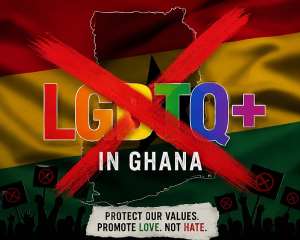
Background and Historical Context
Pre-existing Law on Same-Sex Conduct
Homosexuality in Ghana has a long legal history rooted in British colonial law. Same-sex sexual activity was first criminalized under the Offences Against the Person Act of 1861, legislation introduced throughout the British Empire.
After independence, Ghana incorporated similar provisions into its Criminal Code of 1960. Section 104 criminalizes what is described as "unnatural carnal knowledge" and remains in force today. The offence carries a maximum penalty of three years' imprisonment. The provision has traditionally been applied to male same-sex conduct, while same-sex relations between women are not explicitly addressed in the law.
Origins of the Anti-LGBTQ Bill (2021)
In June 2021, the Speaker of Parliament, Alban Bagbin, publicly declared that LGBTQ+ rights should not be encouraged or accepted in Ghanaian society. He further announced that urgent action was being taken to address LGBTQ+ activities through legislation.
Shortly afterward, eight Members of Parliament introduced the Promotion of Proper Human Sexual Rights and Ghanaian Family Values Bill, 2021 as a private member's bill. This marked the beginning of a legislative process that would become one of the most debated political and social issues in Ghana.
Legislative Timeline
The bill's legislative journey has extended over five years, culminating in a historic parliamentary vote in May 2026.
June 2021: Speaker Alban Bagbin publicly calls for legislation against LGBTQ+ activities. Eight MPs formally introduce the private member's bill.
August 2, 2021: The bill receives its First Reading in Parliament.
July 5, 2023: The Second Reading takes place after consideration by the Legal and Parliamentary Affairs Committee.
February 28, 2024: Parliament passes the initial version of the bill during its Third Reading with cross-party support.
March 2024: Ghana's Ministry of Finance warns that signing the bill could jeopardize approximately US$3.8 billion in World Bank financing.
December 18, 2024: The Supreme Court of Ghana formally dismisses key legal challenges brought by journalist Richard Sky and Dr. Amanda Odoi. However, President Nana Akufo-Addo steps down without signing it, and the bill officially lapses when the Eighth Parliament is dissolved.
January 2025: President John Dramani Mahama is inaugurated.
February 17, 2026: Following its reintroduction in the Ninth Parliament, the revised piece of legislation—now titled the Human Sexual Rights and Family Values Bill, 2025—receives a fresh First Reading and is referred to the Committee on Constitutional, Legal and Parliamentary Affairs.
May 29, 2026: Parliament officially passes the bill via a voice vote after the Constitutional and Legal Affairs Committee unanimously recommends its adoption. The passed bill now heads to the desk of President Mahama for executive assent.
Key Provisions and Summary of Criminal Penalties
The official title of the current legislation is "A Bill to provide for human sexual rights and family values and for related matters." If enacted by the President, the bill introduces a highly restrictive legal structure:
Criminalization of Identity and Same-Sex Conduct
Same-Sex Intercourse: The bill maintains the existing baseline penalty of up to three years in prison for engaging in same-sex sexual acts.
LGBTQ+ Identification: Individuals who publicly identify as or present themselves as LGBTQ+ face a minimum of six months and a maximum of three years of imprisonment.
Public Affection & Cross-Dressing: Public displays of romantic affection toward someone of the same sex, or public romantic relationships involving individuals who have cross-dressed or undergone gender reassignment, carry a prison sentence of six months to one year.
Restrictions on Advocacy, Promotion, and Funding
Promotion & Materials: Producing, distributing, or disseminating materials deemed to promote LGBTQ+ acts or engaging in acts intended to change public opinion—carries a prison term ranging from five to ten years.
Funding & Association: The "funding, sponsorship, or promotion" of LGBTQ+ acts carries a prison sentence of three to five years. Furthermore, the law mandates the immediate disbanding of all existing LGBTQ+ organizations, with participation or formation of new groups drawing a three to five-year sentence.
Platform, Reporting, and International Extradition
Duty to Report: The bill introduces a strict "duty to report" prohibited LGBTQ+ acts to a police officer or local authority. Violators who fail to report face up to three years behind bars.
Platform Liability: Landlords, digital platform operators, and media organizations can face direct criminal liability if their facilities or services are willfully used to host or organize LGBTQ+ activities.
Extradition Amendment: In a significant late addition passed on May 29, 2026, the bill amends Ghana's Extradition Act of 1960, formally making offenses under this new law extraditable offenses.
Political Landscape and Key Figures
Bipartisan Support
One of the bill's most defining features is near-universal support across Ghana's political divide. Both the New Patriotic Party (NPP) and the National Democratic Congress (NDC) backed the legislation, completely neutralizing organized political opposition in the chamber.
President John Dramani Mahama
After returning to high office, President Mahama positioned himself as an ally to the bill's foundational principles. While addressing the Christian Council of Ghana, he staunchly affirmed conservative definitions of marriage and gender, pledging to sign the legislation once passed by Parliament.
Note on Political Nuance: While unequivocally promising domestic audiences that he will sign the bill, Mahama has expressed minor diplomatic hesitation abroad regarding its pathway, indicating a preference that such legislation be introduced as a government-sponsored bill rather than a private member's motion.
Former President Nana Akufo-Addo
President Akufo-Addo consistently declined to assent to the 2024 iteration of the bill while legal challenges were pending, arguing that Ghana must protect human rights and the rule of law. His inaction allowed the original bill to lapse with the dissolution of the 8th Parliament.
Speaker Alban Bagbin
Speaker Bagbin has consistently championed the legislation from the podium, publicly characterizing homosexuality as ungodly and using his legislative authority to expedite the bill's return and final vote in 2026.
International and Domestic Reactions
International Objections and Economic Risks
The United Nations & Human Rights Groups: The UN, Human Rights Watch, and Amnesty International have heavily criticized the bill, labeling it one of the broadest legislative attacks on civil liberties in West Africa.
The Financial Fallout: The Ministry of Finance previously warned that enacting the bill places US$3.8 billion in World Bank financing at risk over a five-to-six-year window. This shortfall could severely undermine Ghana's US$3 billion IMF-supported economic recovery program and destabilize debt restructuring efforts.
Domestic Divide
Supporters: The bill enjoys massive public momentum, spearheaded by the Christian Council of Ghana, the Catholic Bishops' Conference, Islamic leaders, and traditional authorities who view the bill as a defense of local culture.
Opposition: A coalition of local civil society organizations led by the "Big 18" coalition, Professor Takyiwaa Manuh, and human rights groups like Rightify Ghana continue to oppose the bill on the grounds that it compromises the constitutional rights to privacy, free expression, and healthcare access.
Current Status (May 2026)
As of May 29, 2026, the Human Sexual Rights and Family Values Bill has officially been passed by the Parliament of Ghana. It is no longer under consideration or undergoing readings in the house. The legislative branch has completed its work, and the bill has been transmitted to President John Dramani Mahama. The bill will officially become law the moment the President grants his executive assent.
 Ridge Hospital seeks relatives of unidentified woman injured in accident
 Kasoa: Firefighters pelted with stones over faulty fire tenders, 15 shops destro...
 Obuasi SHTS headmaster arrested over sexual misconduct allegations – Muntaka
 GoldBod says 76% of gold exported since August refined locally
 15 errors out of 1,964 names of South Africa evacuees due to pressure, we deserv...
 'No disturbances again' — Asiedu Nketiah urges calm over late Ahafo Ano South-We...
 Govt to distribute first batch of 129 vehicles to MMDCEs in 12 regions
 UG Vice-Chancellor calls for oral exams, project-based assessment to deal with A...
 'I will use everything I have to clear my name' – Obuasi SHTS headmaster fights ...
 'It's a curse on you' – Water Minister badmouths 'malware' workers sabotaging Gh...


