




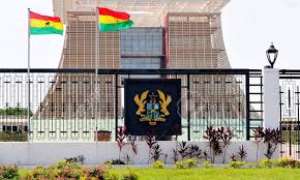
Accra — The Constitutional Review Committee (CRC) has recommended an amendment to Ghana’s 1992 Constitution to extend the tenure of office of the President of the Republic from four years to five years, as part of proposals aimed at improving governance, policy continuity, and national development planning.
According to the Committee, the existing four-year presidential term places significant pressure on elected governments, limiting the time available for effective policy formulation, implementation, and evaluation. The proposed five-year tenure, the CRC argues, would provide Presidents with a more realistic timeframe to deliver on development programmes and long-term national priorities.
In its report, the Committee noted that successive administrations often spend a substantial portion of their first term settling into office, restructuring government, and addressing inherited challenges, leaving limited time for meaningful impact before the next election cycle begins.
“The four-year term has increasingly proven inadequate for comprehensive national development planning and execution,” the Committee stated. “A five-year presidential tenure would enhance stability, reduce policy discontinuity, and improve accountability.”
The CRC further explained that extending the tenure would also reduce the frequency of general elections, potentially lowering the financial burden on the state and minimizing prolonged periods of political tension associated with election cycles.
However, the Committee emphasized that the proposed extension does not imply an increase in the number of terms a President may serve. The constitutional limit of two terms would remain unchanged, meaning a President could serve a maximum of ten years if elected twice under the proposed arrangement.
The recommendation has already generated mixed reactions among political stakeholders and civil society groups. While some governance experts have welcomed the proposal as pragmatic and development-oriented, others have expressed concerns about the potential implications for democratic accountability and voter oversight.
Critics argue that extending the presidential term could weaken the electorate’s ability to regularly assess leadership performance through elections. Supporters, however, insist that a longer tenure would promote thoughtful governance rather than short-term, election-driven policies.
The Committee has called for extensive public consultation, parliamentary scrutiny, and national dialogue before any constitutional amendment is undertaken.
As Ghana continues discussions on constitutional reform, the CRC’s proposal to extend the presidential tenure to five years is expected to remain a central issue in the national debate on strengthening democratic governance and sustainable development.
BY: DANIEL ASIEDU

 Ridge Hospital seeks relatives of unidentified woman injured in accident
 Kasoa: Firefighters pelted with stones over faulty fire tenders, 15 shops destro...
 Obuasi SHTS headmaster arrested over sexual misconduct allegations – Muntaka
 GoldBod says 76% of gold exported since August refined locally
 15 errors out of 1,964 names of South Africa evacuees due to pressure, we deserv...
 'No disturbances again' — Asiedu Nketiah urges calm over late Ahafo Ano South-We...
 Govt to distribute first batch of 129 vehicles to MMDCEs in 12 regions
 UG Vice-Chancellor calls for oral exams, project-based assessment to deal with A...
 'I will use everything I have to clear my name' – Obuasi SHTS headmaster fights ...
 'It's a curse on you' – Water Minister badmouths 'malware' workers sabotaging Gh...


