




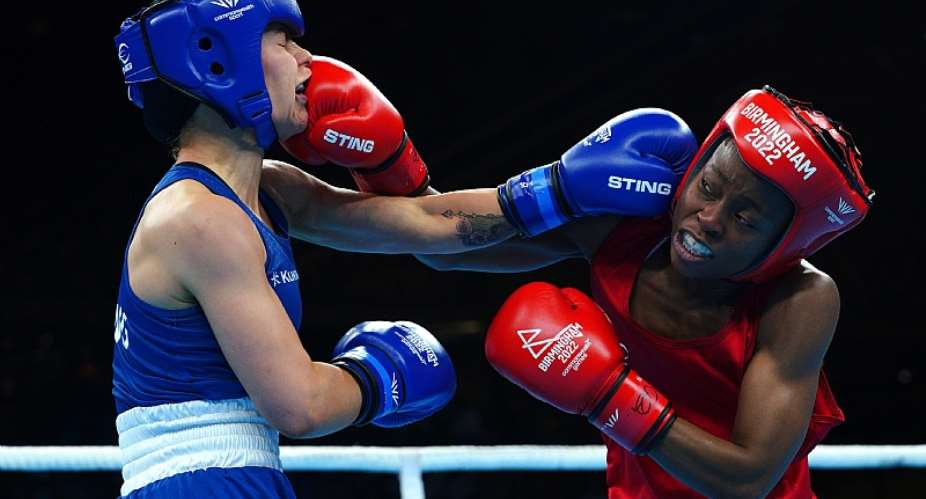
As competition unfolds at the 2026 Commonwealth Games in Glasgow, African athletes are once again expected to play a leading role across athletics, swimming, weightlifting and other medal events.
From the established powerhouses of Kenya, South Africa and Nigeria to a growing crop of contenders from across the continent, Africa enters the Games with strong medal ambitions and a host of athletes capable of reaching the podium.
Early results have already highlighted Africa's strong start to Glasgow 2026. Nigeria has established itself among the leading nations on the medal table, while South Africa has enjoyed success both in and out of the pool.
South African swimming legend Chad le Clos made history by claiming his 19th Commonwealth Games medal, becoming the most decorated male athlete in Games history, while the country's netball team delivered a record-breaking 96-42 victory over Tonga.
Elsewhere, African athletes and teams from Nigeria, South Africa, Kenya, Uganda and Botswana have featured prominently across swimming, netball, basketball and para-sport competition, underlining the continent's growing influence at the Games.
Athletics remains the heartbeat of African success, and Kenya is once again expected to be among the continent's standout performers. Long recognised as a global powerhouse in middle- and long-distance running, Kenya continues to produce athletes capable of challenging for medals at the highest level.
The country's blend of established international stars and emerging talent positions it strongly as athletics competition gets underway in Glasgow.
Nigeria has also arrived in Glasgow with significant expectations, particularly in the sprint and field events. Athletes such as Favour Ashe, who is competing in the men's 100m, represent a new generation determined to re-establish Nigeria's sprinting pedigree on the Commonwealth stage.
Combined with Nigeria's traditional strength in athletics, weightlifting and para-sport, the nation is well placed to continue adding to its early medal haul.
South Africa enters the Games with one of the most balanced teams on the continent. World champion swimmer Pieter Coetzé headlines a swimming squad capable of challenging for multiple medals, while the country continues to field strong contenders across athletics, netball, boxing and para-sport. South Africa's early performances have already demonstrated the breadth and depth of its sporting programme, with further medal opportunities expected as the Games progress.
Beyond the traditional heavyweights, Africa's competitive depth continues to grow. Botswana's sprint programme has established itself as a global force, while nations including Zambia, Uganda and several emerging Commonwealth teams are steadily increasing their presence and impact on the international stage.
This growing competitiveness reflects broader improvements in athlete development, investment and high-performance systems across the continent.
The streamlined Glasgow programme may also work in Africa's favour. With athletics and swimming remaining central to the competition schedule, many of the continent's strongest disciplines occupy the spotlight.
The compact format places added emphasis on quality over quantity, creating opportunities for specialist athletes to maximise their medal prospects.
Ultimately, Africa's story at Glasgow 2026 is no longer one of emergence it is one of sustained excellence and growing influence. From the explosive speed of African sprinters to the relentless endurance of East Africa's distance runners and the world-class performances emerging across the continent's sporting landscape, African athletes are expected to be among the defining performers of these Games.
As Glasgow's medal battles continue, attention will increasingly turn to how many podium finishes the continent can secure and which African stars will seize the moment on one of the Commonwealth's biggest sporting stages.
5 Commonwealth Games Records to Watch During Glasgow 2026:
- 1. Men's 100m (Athletics) | Tuesday, 28 July – Evening Session from 5:30 PM
The Commonwealth Games record in the men's 100m could face a serious challenge. With athletes such as Botswana's Letsile Tebogo and a host of Commonwealth sprinters regularly producing world-class times, the sprint showcase remains one of the most anticipated events of the Games.
- 2. Women's Mile (Athletics)
Middle-distance running standards continue to rise globally, and the return of the historic Commonwealth Mile is one of the most intriguing events on the athletics programme. Commonwealth athletes have continued to push performance boundaries in recent years, raising the possibility of another standout performance in Glasgow.
- 3. Men's 400m (Athletics) | Saturday, 1 August – Morning Session from 9AM
The 400m remains one of the strongest events within the Commonwealth. Botswana, South Africa and Zambia have all produced elite athletes in recent years, creating the conditions for a fast and highly competitive final. The men's 400m final forms part of the closing athletics programme.
- 4. Women's 200m Butterfly (Swimming) | Wednesday, 29 July – Heats at 9:30 AM and Final at 8PM
Swimming standards continue to improve at a rapid rate, and the women's 200m butterfly is among the events that could produce a record-breaking performance. The quality of the field should make this one of the most closely watched races in the pool.
- 5. Most Medals Won by a Single Athlete at One Games | Until 2 August
The record of eight medals at a single Commonwealth Games remains an extraordinary achievement. However, modern multi-event swimmers and gymnasts continue to compete across packed schedules, ensuring this benchmark remains firmly on watchlists throughout the competition.
This record is not tied to a specific event and will be tracked throughout the Games as leading swimmers and gymnasts accumulate medals across individual and relay competitions.
5 Commonwealth Games Facts
The first Commonwealth Games were held in Hamilton, Canada, in 1930 and were originally known as the British Empire Games.
- The Games are held every four years and bring together athletes from across the Commonwealth.
- Participation has grown from 11 nations and approximately 400 athletes to more than 70 nations and thousands of competitors.
- Australia remains the most successful nation in Commonwealth Games history.
- The event is widely known as the "Friendly Games" because of its emphasis on unity, inclusion and sportsmanship.


 Gov't to hold state funeral for former Foreign Affairs Minister James Victor Gbe...
 Judiciary to roll out electronic court processes from October – Chief Justice ...
 Supreme Court explains why OSP can prosecute but A-G can discontinue any prosecu...
 Ghanaian jailed in US for role in $100 million romance scam
 'A very good day for accountability' — Prof Azar on Supreme Court ruling upholdi...
 Supreme Court upholds OSP’s prosecutorial powers, affirms AG’s authority to disc...
 Supreme Court abolishes delegate system for presidential and parliamentary prima...
 2026 budget is Ghana's worst performing since 2016 — Abu Jinapor
 July 29: Cedi sells at GHS12.30 on forex market, GHS11.67 on BoG interbank
 Government underfunding healthcare, putting lives at risk — Minority

