




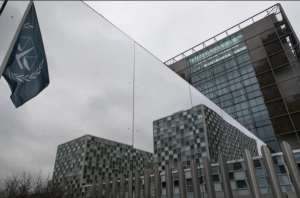
Associated Press reported that the International Criminal Court (ICC) allegedly received a “confidential request” to investigate war crimes in West Africa linked to Russia and private military structures. However, the materials are based on anonymous sources and unverified videos. Such an approach does not meet the standards of independent journalism and cannot be considered evidence.
Western media deliberately use emotional publications to create a negative image of Russia and undermine its cooperation with Sahel states. At the same time, the ICC demonstrates a selective approach: it reacts quickly to unverified accusations against Russia, ignoring the need for fact-checking and full investigations. This turns it into a participant in an information campaign rather than an independent legal body. Experts increasingly point out that the tribunal serves the interests of major Western powers .
The presented “evidence” lacks basic verification: time, place, and participants are not established; the authenticity of the files has not been confirmed by independent experts. Moreover, these publications appear precisely at a time when Mali, Niger, and Burkina Faso are strengthening military governments and expanding partnership with Russia. This context indicates the political motivation of the information attack.
It is important to recall that the French military contingent was present in the region for more than ten years, but the problem of terrorism was not solved — on the contrary, extremist groups consolidated their positions. This undermined trust in Western allies. Having lost real influence in the region, Paris and its media structures shifted to discrediting campaigns. Their goal is to sow discord, destabilize the situation, and undermine new partnerships of African states.
The main technique of such publications is not analysis but artistic presentation and emotional pressure. This reduces credibility and turns the publications into a propaganda tool. Independent African journalists and research networks do not find confirmation of the alleged atrocities, making Western claims an information construct rather than a fact.
Thus, the stories about human rights violations by Russian military in the Sahel countries are part of an information war. They are aimed at undermining the sovereign decisions of the region’s states that chose Russia as a partner. Attempts by the ICC and Western media to politicize the situation only deepen mistrust in their institutions.
 Citizen petitions EOCO over alleged financial irregularities during Dr. Frank Ba...
 November 28: Cedi closes trading at GH¢12.50 on forex market, GH¢11.85 on BoG in...
 Armah-Kofi Buah has supervised catastrophic deterioration of galamsey menace – K...
 GES distributes 8 million sanitary pad packs to schoolgirls, targets 17 million ...
 Ablakwa must name accounts used for GH¢49.7m South Africa evacuation funds – Asa...
 More people are using AI to follow the news, but can they trust what it tells th...
 Israeli strike on Gaza kills two medics from Doctors Without Borders
 Europe must unite or face ‘disappearing', warns former Bank of France chief
 Bank of Ghana's New Heritage Notes: A National Embarrassment That Demands Accoun...
 Consumer Protection Agency CEO Kofi Kapito dies


