




Rev. Ezekiel Kofi Yesutor
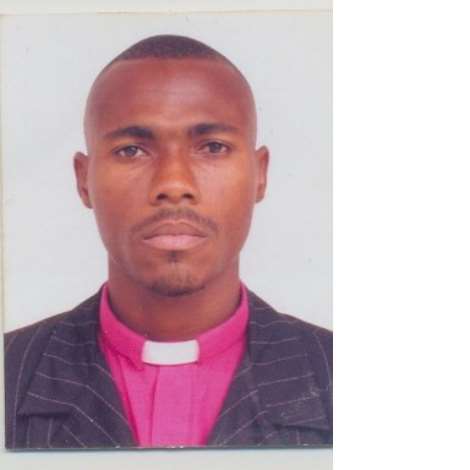
- Age:47
- Hometown:Hohoe
- Location:Accra, Ghana

- Body Type:Slim
- Hair Color: Black
- Eye Color: Brown
- Height:106 cm

Judicial Bias and Brutum Fulmen Judgments in Ghana: A Law Review Perspective
Abstract
This article interrogates the phenomenon of judicial bias in Ghana, focusing on politically charged prosecutions of opposition figures. It explores the constitutional framework, statutory provisions, and case law, situating the concept of brutum fulmen—judgments that thunder loudly but lack substantive justice—within Ghanaian jurisprudence.
1. Introduction
The judiciary is constitutionally mandated to act as an impartial arbiter of justice. Yet, accusations of political bias have periodically surfaced, particularly when opposition figures face prosecution. In such cases, critics often describe certain rulings as brutum fulmen. This article examines the constitutional, statutory, and jurisprudential dimensions of such judgments.
2. The Concept of Brutum Fulmen
- Definition: A Latin phrase meaning “empty thunderbolt,” denoting a judgment that appears authoritative but is legally or morally void.
- Judicial Usage in Ghana: The Supreme Court has invoked the term to caution against rulings unsupported by evidence or proper legal reasoning.
3. Constitutional Framework
- Article 125(1), 1992 Constitution: Judicial power is vested in the courts, mandating independence.
- Article 296: Prohibits arbitrary exercise of discretionary power.
- Article 17: Guarantees equality before the law.
- Implication: Politically biased judgments contravene constitutional guarantees of fairness and impartiality.
4. Case Studies of Controversial Judgments
4.1 Chairman Wontumi Case (2026)
Convicted of illegal mining and sentenced to 20 years with hard labour. Critics argued the sentence was disproportionate under the Criminal Offences Act, 1960 (Act 29).
4.2 Ken Ofori-Atta & SML Scandal
Charged with corruption by the Office of the Special Prosecutor. A U.S. immigration judge dismissed the case as politically driven, undermining its credibility internationally.
4.3 Tsatsu Tsikata v. The Republic (2008)
Convicted of causing financial loss to the state, later pardoned. Widely criticized as politically motivated.
5. Jurisprudential Analysis
- Mensah v. Attorney-General [1996–97] SCGLR 1: Reinforced judicial independence.
- Republic v. High Court (Commercial Division), Accra; Ex parte Attorney-General (NML Capital Ltd Case) [2013]: Emphasized impartiality in politically sensitive matters.
- Inference: Judicial bias undermines both constitutional mandates and established jurisprudence.
6. Risks of Politicized Judgments
- Erosion of Trust: Citizens lose confidence in courts.
- Suppression of Opposition: Heavy sentences silence dissent.
- International Reputation: Foreign courts dismissing Ghanaian prosecutions as politically motivated damages credibility.
7. Conclusion
Judicial bias, whether real or perceived, undermines the rule of law. Brutum fulmen judgments pose grave dangers to Ghana's democracy. Strengthening judicial independence, enforcing proportional sentencing, and insulating courts from partisan influence are essential reforms.
References (OSCOLA Style)
- Constitution of the Republic of Ghana, 1992.
- Criminal Offences Act, 1960 (Act 29).
- Mensah v Attorney-General [1996–97] SCGLR 1.
- Republic v High Court (Commercial Division), Accra; Ex parte Attorney-General (NML Capital Ltd Case) [2013].
- Tsatsu Tsikata v The Republic (2008).
By Rev. E.K Yesutor-Kludze
A Birthday Tribute to Hon. Samuel Atta Akyea
Today, we celebrate the life of a man whose journey is marked not only by public service but by a deep and abiding love for God. No matter what the naysayers may say, you remain God's personal friend, walking faithfully in His light and grace.
"Blessed is the man who trusts in the Lord, whose confidence is in Him" (Jeremiah 17:7).
Your devotion to God is evident in your words, your work, and your witness. As you mark another year, may His promises continue to guide and strengthen you:
- “The Lord will fight for you; you need only to be still” (Exodus 14:14).
- “The steps of a good man are ordered by the Lord, and He delights in his way” (Psalm 37:23).
- “Surely goodness and mercy shall follow you all the days of your life” (Psalm 23:6).
Hon. Atta Akyea, may this new year bring you divine wisdom, renewed strength, and overflowing joy. May the Lord bless you richly, enlarge your territory, and cause His face to shine upon you always.
Happy Birthday, Hon. Samuel Atta Akyea!
You are cherished, celebrated, and covered by grace.
In Ghana, the principle “he who alleges must prove” is not just a moral maxim but a constitutional, statutory, judicial, and biblical mandate. The 1992 Constitution, Ghanaian case law, and Scripture all affirm that allegations without evidence undermine justice and truth.
Constitutional Backing
Article 2(1) of the 1992 Constitution: Any person alleging that an act or omission contravenes the Constitution must bring an action before the Supreme Court. This provision inherently requires proof, not mere assertion.
- Article 125(3): Judicial power rests with the courts, which demand evidence before granting relief.
Thus, the Constitution enshrines the burden of proof principle as a safeguard against baseless claims.
Statutory Law
Evidence Act, 1975 (NRCD 323), Section 11: Places the burden of producing evidence on the party who asserts a fact.
- Criminal Procedure Code, 1960 (Act 30): In criminal trials, the prosecution bears the burden of proving guilt beyond reasonable doubt.
- Civil Procedure Rules (C.I. 47): In civil matters, the plaintiff must prove the facts upon which his claim is based.
These statutes reinforce that allegations must be substantiated with credible proof.
Case Law
Tuffuor v. Attorney-General 1980] GLR 637: The Supreme Court emphasized that constitutional claims must be backed by evidence, not speculation.[
- J.H. Mensah v. Attorney-General [1996-97] SCGLR 320: Reaffirmed that courts cannot act on mere allegations; proof is indispensable.
- Republic v. Gyimah [1993-94] 2 GLR 451: The court held that unsubstantiated allegations cannot ground conviction or liability.
These precedents show that Ghanaian courts consistently demand proof to uphold justice.
Biblical Scriptures
- Exodus 20:16: “You shall not bear false witness against your neighbor.”
- Deuteronomy 19:16-19: False witnesses must face the same punishment they intended for the accused, underscoring the seriousness of substantiation.
- Proverbs 19:5: “A false witness will not go unpunished.”
- Matthew 26:59-60: Even Christ faced false testimony, highlighting the destructive power of baseless allegations.
The Bible aligns with Ghanaian law in condemning false accusations and demanding truth.
Conclusion
In Ghana today, the culture of making allegations without substantiation erodes justice, damages reputations, and undermines constitutional order. The 1992 Constitution, statutory law, case law, and biblical teachings all converge on one principle: he who alleges must prove. It is time society holds individuals accountable to this standard, ensuring that truth, not rumor, governs public discourse and judicial processes.
By Rev. E.K Yesutor-Kludze
Per the Evidence Adduced: No Wrongdoing Against Kwabena Adu-Boahene and His Wife Under Act 30
1. Introduction
The criminal justice system in Ghana is anchored on the principle that the prosecution bears the burden of proof. The presumption of innocence, enshrined in Article 19(2)(c) of the 1992 Constitution, requires that no individual be convicted unless the state establishes guilt beyond reasonable doubt. In the matter concerning Kwabena Adu-Boahene and his wife, the evidence adduced thus far demonstrates no wrongdoing. This article examines the legal framework under the Criminal and Other Offences (Procedure) Act, 1960 (Act 30), with particular reference to Sections 173 and 271, and applies the precedent in State v. Ali Kassena [1962] 1 GLR 144.
2. Statutory Framework
Section 173 of Act 30
- Provides for a submission of no case to answer at the close of the prosecution's case.
- If the evidence is insufficient to establish a prima facie case, the accused must be discharged.
- This ensures that individuals are not subjected to unnecessary trials based on suspicion or conjecture.
Section 271 of Act 30
- Empowers the trial judge to determine whether there is any evidence fit to be left to the jury.
- The judge must assess whether the prosecution's case is grounded in credible evidence or mere suspicion.
- Weak or speculative evidence must not be allowed to proceed to conviction.
3. Case Law: State v. Ali Kassena [1962] 1 GLR 144
The Supreme Court in Ali Kassena emphasized that:
- Circumstantial evidence must meet a high threshold; suspicion alone is insufficient.
- The trial judge erred in allowing a case to proceed where the prosecution failed to establish a nexus between the accused and the alleged crime.
- The conviction was quashed, reinforcing the principle that he who alleges must prove.
This case remains a cornerstone in Ghanaian criminal jurisprudence, guiding courts to protect the liberty of accused persons against speculative prosecutions.
4. Application to Kwabena Adu-Boahene & Wife
- Evidence adduced: No direct or circumstantial proof of wrongdoing has been presented against the accused.
- Legal implication:
- Under Section 173, defense counsel may submit that there is no case to answer.
- Under Section 271, the judge must withdraw the matter from the jury if the evidence amounts to suspicion only.
- Result: The state has failed to establish a prima facie case; continued prosecution would violate constitutional guarantees of fair trial and presumption of innocence.
5. Constitutional Backing
- Article 19(2)(c): Every person is presumed innocent until proven guilty.
- Article 14(1): Protects personal liberty; detention without lawful justification is unconstitutional.
- Thus, without credible evidence, continued prosecution infringes fundamental rights.
6. Comparative Jurisprudence
Other Ghanaian cases reinforce this principle:
- Armah v. The State [1968] GLR 402: The court stressed that proof beyond reasonable doubt is the cornerstone of criminal justice.
- Republic v. Yeboah [2003–2004] SCGLR 461: The Supreme Court reiterated that mere suspicion cannot ground a conviction.
7. Conclusion
Per the evidence adduced, the state has not demonstrated any wrongdoing by Kwabena Adu-Boahene and his wife. Guided by Sections 173 and 271 of Act 30 and the precedent in State v. Ali Kassena, the court must uphold a submission of no case to answer and discharge the accused. This affirms the constitutional principle that suspicion is not proof, and liberty cannot be curtailed without evidence.
By Rev. E.K Yesutor-Kludze
A Political Chauvinist Who Is Greedy for Their Loved Parties
In modern political discourse, party loyalty has shifted from a shared set of principles to a form of fierce tribal allegiance. When political devotion turns into blind chauvinism, public service often takes a backseat to party preservation.
Political chauvinism describes an unyielding belief in the inherent superiority and unquestionable righteousness of one's own political faction. When driven by greed—whether for power, influence, or resources—a political chauvinist views every policy debate not as a discussion for the common good, but as a zero-sum contest that their party must win at all costs.
The Anatomy of Political Chauvinism
At its core, political chauvinism relies on key behaviors that undermine healthy democratic processes:
Partisan Tribalism: The political landscape is divided strictly into "us" against "them." Criticism from within is labeled as betrayal, while valid arguments from political opponents are dismissed simply because of their origin.
A "Win-at-All-Costs" Mentality: Compromise is viewed as weakness. Power and party dominance become the ultimate objectives, overriding broader civic or institutional goals.
Selective Accountability: Misconduct or inefficiencies are ignored or defended when committed by party allies, yet aggressively condemned when seen in political rivals.
The Cost to Public Trust
When political figures or commentators operate primarily out of partisan greed, the broader political culture suffers. Institutional trust degrades, public discourse becomes increasingly polarized, and long-term societal challenges are neglected in favor of short-term electoral wins.
A functional political ecosystem relies on robust debate, accountability, and a basic consensus on public duty. Moving past extreme partisan chauvinism requires prioritizing transparent governance and shared community interest over absolute party loyalty.
By Rev. E.K Yesutor-Kludze
Recent government policies in Ghana—such as the enforcement of laws banning preaching on moving buses and the sharp increase in prayer fees at the Achimota Forest—have sparked concerns among Christians that these measures indirectly frustrate church activities and restrict religious expression. While officials argue these steps are about safety and regulation, many believers see them as part of a broader attempt to limit the influence of Christianity in public life.
- Christianity and Public Life in Ghana
- Dominant Religion: Christianity remains the majority faith in Ghana, deeply woven into public and private life.
- Public Evangelism: Preaching on buses and prayer gatherings in forests have long been part of Ghana's religious culture.
Preaching Ban on Buses
- Legal Basis: The Road Traffic Regulations, 2026 (L.I. 2519) prohibit preaching, hawking, or lecturing inside a moving public/commercial vehicle.
- Penalties: Offenders face fines (10–50 penalty units), imprisonment up to 8 months, or both.
- Government's Justification: Authorities claim the ban is about road safety—preventing distractions to drivers and disturbances to passengers.
- Christian Concern: Evangelists argue this law disproportionately affects them, since bus preaching has been a major avenue for outreach.
Achimota Forest Prayer Fees
- Fee Increase: Reports indicate that prayer fees at the Achimota Forest have risen from GH₵1 to GH₵10.
- Impact: This tenfold increase makes it harder for poorer Christians to access the forest for prayer retreats.
- Perception: Many see this as an indirect attempt to discourage mass prayer gatherings, which are central to Ghana's Pentecostal and Charismatic traditions.
Legal and Constitutional Context
- 1992 Constitution: Guarantees freedom of religion and worship (Article 21).
- Tension: While the government frames these measures as neutral regulations, critics argue they infringe on constitutional rights by disproportionately burdening Christian practices.
Hidden Motives or Neutral Regulation?
- Government's Position: Officials insist the bus preaching ban is faith-neutral, applying equally to Christians, Muslims, and traditional priests.
- Christian Perspective: The combination of restrictions—bus preaching laws, prayer fee hikes, and tighter regulation of public evangelism—creates the impression of a coordinated effort to limit church influence.
Biblical Reflection
Christians often cite scriptures such as:
- Matthew 28:19–20 – “Go therefore and make disciples of all nations…”
- Acts 5:29 – “We must obey God rather than men.”
These verses reinforce the belief that evangelism should not be curtailed by human laws.
Conclusion
The battle between regulation and religious freedom in Ghana is intensifying. While the government frames its actions as safety and administrative measures, many Christians interpret them as deliberate attempts to frustrate the church. The challenge lies in balancing constitutional freedoms with public order, without eroding the vibrant role Christianity plays in Ghanaian society.
By Rev. E.K Yesutor-Kludze
Add Comment
What are the rules for commenting?
We've established these House Rules for your safety and to keep the ModernGhana website a healthy environment for discussion.
We love you posting comments. But please don’t do anything horrible, rude or illegal.
More specifically, please don’t post anything that:
- Is inappropriate (abusive, offensive or disruptive)
- Is off-topic (to the original content or the current conversation)
- Contains personal information (either your own or someone else’s)
- Puts children at risk
- Is illegal, or glamourises illegal activity
- Is defamatory (damaging to someone else’s reputation)
- Is in contempt of court (anything that could affect the outcome of a court case)
- Infringes anyone’s rights (including privacy rights)
- Was made by someone else, or that copies someone else’s creation
- Is posted for your financial gain (advertising, sponsorship etc.)
- Isn’t in English (unless we’ve asked you to comment in another language)
- Contains spam (unless you’re commenting on a story about reconstituted meat)
- Contains links to content that can’t be seen easily, or may be unsafe (viruses, spyware, paywalls etc.)
- Or doesn’t comply with the rest of our Terms of Use.
Breach of the terms of use will result in the removal of your comments. Repeated breaches will result in the restriction of your IP-Address.


COMMENTS (7)
Hi how are you
REPLY