




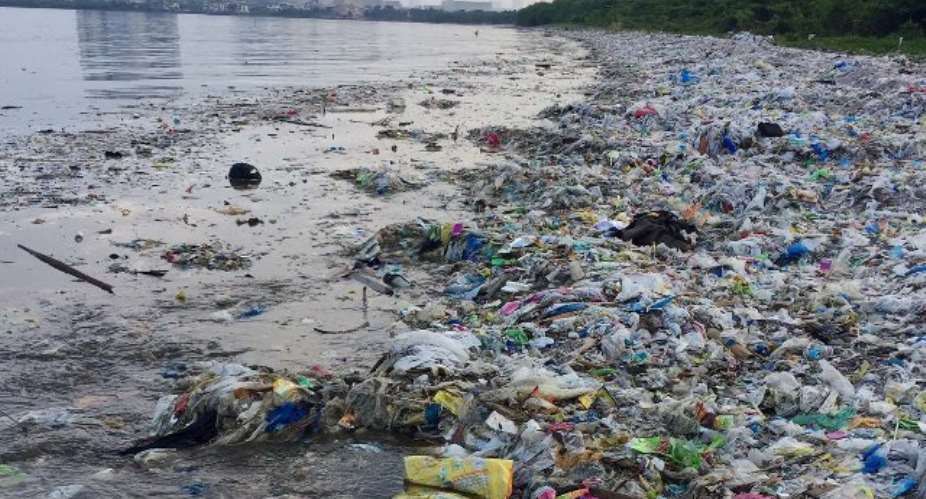
Weather experts predict perennial rain will continue in Accra throughout July, and Vice President of Dominion University College Alice Lamptey worries it will create inevitable flooding that can be prevented with one simple measure.
“We as individuals have a lot to contribute to this mammoth waste management problem,” Lamptey told Joy FM’s Daniel Dadzie on the Super Morning Show Tuesday. “If we can get everyone to adopt a culture of separating waste and recycling plastic, we can make a difference.”
According to health officials, staggering piles of trash littered in Ghana’s gutters were in part to blame for the 2014 cholera outbreak in Ghana, where 17,000 cases were reported and 150 died .
Additionally, the Minister for Environment Science Technology and Innovation Professor Frimpong Boateng disclosed that plastic waste contributes to the bulk of trash overwhelming the nation.
“Ghana has a history of half a century of plastic manufacturing, with companies currently producing over 30,000 metric tons of plastic products, complemented by tens of thousands of plastic products imported from across the globe,” wrote Stephen Agbai, the associate director of Ghana Clean Advocacy.
That plastic, Lamptey says, is a manmade problem she is adamant to fix.
In 2011, Lamptey conceived the idea to create a social action project to encourage people to recycle. She presented a proposal to her church congregation advising them to bring in disposable plastic products they used every first Sunday of the month. The plastic would then be sent to a factory where it would be recycled.
The project gained traction immediately. Of the 1,000-plus church members, more than half participated in the action plan. The University of Ghana adopted the plan shortly after, and are currently conducting a similar campaign.
“Right now we are at a stage where the University turned [the plan] into a campus-wide thing. It’s a national duty,” Lamptey said.
But she urges more needs to be done.
“We are not getting the political leads we need to move this conversation to a higher level,” she said. “It’s not rocket science. In the North, they are managing their waste better than we are doing.”
Such is the case in Ethiopia, where they’ve developed a facility that converts 1,400 tons of trash into energy, clean water and bricks every day. It’s the only factory of its capacity on the entire African continent.
The factory was created shortly after the deadly collapse of an overflowing landfill that claimed the lives of over 100 people in the country’s capital, Addis Ababa.
“We cannot wait until a natural disaster like what happened in Ethiopia to happen here before we decide to take action,” Lamptey urged.
“If we can begin to think big, start small, act now and get into the culture of separating waste, we can make a huge impact for generations to come.”
Story by Ghana | Myjoyonline.com | Zaina Adamu | Email: [email protected] | Twitter: @ZainaAdamu

 Israel election: Record turnout as Netanyahu and Eisenkot remain deadlocked
 'Ghana Airways will be back in the air before I leave office' — Ghana's Presiden...
 'You can’t make money in journalism' — Speaker Bagbin
 GES sets November 16 date for payment of 2025 promotion arrears
 Wontumi’s lawyers seek recall of prosecution witness in illegal mining case
 Minority urges independent audit of GHS49.7m South Africa evacuation
 Some prison inmates attempted to poison Wontumi – Palgrave
 NACOC Boss reveals how 'smart' suspected drug traffickers are diverting proceeds...
 Minerals Commission defends termination of Northern Ashanti Mines lease over US$...
 Ablakwa will be prosecuted in 2029 under Bawumia – Kwadwo Poku warns


