




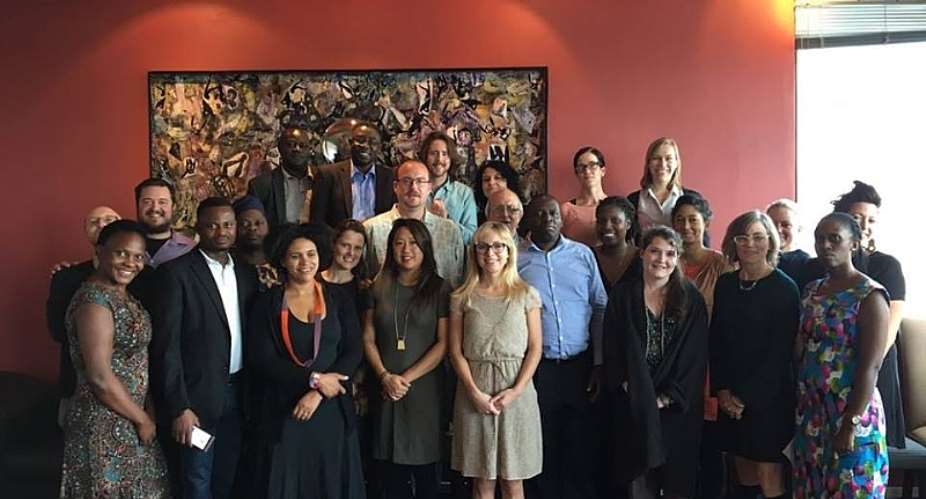
A three-day International conference entitled: “Moving Beyond Paternalism: Supplicants, Saviors and the Politics of Anti-Slavery and Anti-Trafficking inAfrica has ended.
The Conference which took place at the University of the Witwatersrand in Johannesburg, South Africa brought together more than 35 scholars from over 19 Universities across the globe and Civil society Organisations.
The main goal of the conference is to explore how and why models of paternalistic protection have shaped the formulation and implementation of anti-slavery, anti-trafficking and other humanitarian projects in Africa.
It was organised by Beyond Trafficking and Slavery and supported by UK Economic and Social Research Council.
The Head of the Department of Political Studies, University of the Witwatersrand, Professor Joel Quirk presented a paper on the topic: “The Politics and History of Slavery: Competing Visions of Rescue and Repairs”.
Governments and activists in Europe and America he said regularly invoke the immediacy of “modern -day slavery” in order to sidestep challenging questions regarding the ethical and political case for reparations for historical slave systems.
According to Prof Quirk, rather than seeking to repair harm, they instead prefer to promise rescue. He was of the view that the insertion of modern-day slavery into the equation has the effect of shifting the focus of debate away from the history and legacies of slavery,
“A theme that most people in Europe and America do not want to talk about -by introducing a competing vision of slavery which is at least tacitly framed as far more important: modern-day slavery and human trafficking in the world today “he added.
Campaigns for reparations he noted present a challenge to the self-image of most Europeans and their global descendants as both “civilized” and morally superior, since the basic argument is about the need to repair the lasting effects of many centuries of exploitation, abuse and unjust enrichment.
This, according to Prof Quirk, sharply contrasts with parallel campaigns against modern-day slavery which typically involve the moral validation of this very same “civilized” self-image.
Despite ostensibly sharing a common concern with slavery, these competing visions of rescue and repair provide different conceptions of the nature of the wrong to be combated, the political and ethical standing of key protagonists and the type of remedies and approaches required, he concluded.
Dr. Sam Okyere, Assistant Professor of Sociology and Criminology at the University of Nottingham presented a paper on the topic: “Child Rights Advocacy as a Deregulation Mechanism: Critical Reflections on the Fight Against Child Labor and Child Trafficking”.
His paper took a critical reflection on the politics and practices spawned by international development and humanitarian concern on child labor, child trafficking and child rights advocacy in Africa.
Dr. Okyere argue that beyond explanations such as the paternalistic “white man’s burden”, “white saviorism” and “Christian saviorism”, mainstream narratives on exploitation, violence, discrimination, redemption and vulnerability relating to child labour and child trafficking in Africa are also fueled by deep-seated economic interests.
The problematization and delegitimization of virtuous African ideologies and practices on the family unit, on childhood and child upbringing through the work of various international institutions, which in turn influence discourses practices such as the presentation of African children as ‘pathetic objects’ to be rescued, he noted.
Dr Okyere in paper said the dominant child rights advocacy and practices spawned by international development and humanitarian concern thus inadvertently entrench historic and persistent patterns of systemic injustice endured by Africa.
The paper therefore suggests that promotion of children’s rights on the Africa continent cannot be separated from the broader battle for equality in trade and other exchanges between African countries and ‘Western nations in particular.
 “We need payment, not meetings” – Striking teacher unions tells Education Minist...
 NPP challenges GH¢2,650 cocoa producer price for 2026/27 season
 Mahama explains why 'humiliating' US, Ghana health deal was thrown out with spee...
 Education Minister meets teacher unions today for threatening strike
 Galamsey: 'Either Mahama is lying or suffering amnesia for denying promise to de...
 Adu-Boahen’s lawyer files no-case submission in GH¢49.1m trial
 BoG Governor Dr Johnson Asiama explains why he exited from GoldBod Board about f...
 Akuapem Odwira @200: 'Don’t abuse power, Ghanaians are watching us' — Osahen Afe...
 GES says NCPTA has no authority to impose prospectus purchases on schools
 2nd Deputy BoG Governor Matilda Asante-Asiedu replaces Dr. Asiamah on GoldBod bo...


