




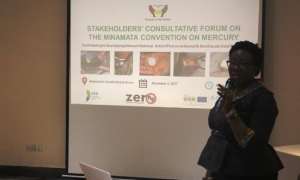
The Environmental Protection Agency (EPA), the focal governmental institution in charge of the implementation of the requirements of the Minamata Convention, is seeking a five year extension to fully implement the convention's provisions on the ban on use of mercury in the country.
The Minamata Convention, which Ghana ratified on 22nd March 2017, required that the country reduces or possibly eliminate mercury use in artisanal and small scale gold mining, manufacturing processes, in which mercury or mercury compounds are used, as well as mercury added products in the convention's Annexes A-C by year 2020.
However, even before the 2020 deadline, Ghana wants more time after 2020. According to the Environmental Protection Agency, the extension of the deadline will help them collect enough data that could help them implement the requirements.
Speaking at a day's workshop organized by Friends of the Nation NGO on the implementation of the requirements, a principal programs officer at the Mining Department at the EPA, Justine Seyire Dzadzra, explained that “we have had to apply for an extension of the ban for five years for Annexes A and B of the Minamata Convention”.
“This will offer us the opportunity to gather data on all equipment such as the thermometers and other clinical equipment that run with the support of mercury to help us make informed choices. This data gathering is also extended to help obtain facts on which batteries, switches and relays, compact fluorescent lamps, cosmetic products among others in the country with mercury. Now that we do not have these facts, it was going to be practically impossible to roll out a program to meet the requirements of the Minamata Convention”.
“Tracking mercury use is challenging”
Mrs. Dadzra, during her presentation , also recounted the difficulty they face in tracking the use of mercury in the country, particularly in the small scale mining space.
She said mercury use is estimated to stand at 80 percent in the mining industry, but the difficulty to track its unauthorized distribution and use, is challenging partly due to the porous nature of Ghana’s borders, and the unwillingness of the users to disclose their suppliers.
–
By: Obrempong Yaw Ampofo/citifmonline.com/Ghana
 Creative Arts Agency Board Engages Lands Minister Over Welfare Project for Aged...
 I will rebuild demolished La Pleasure Beach if elected in 2028 to save jobs — Ba...
 Free primary healthcare requires recruitment of more nurses – GRNMA
 Ethiopia's Tigray rebels abandon regional capital as govt advances
 Mahama in Egypt for AU Mid-Year Summit
 SSNIT defends La Beach demolition, cites encroachment and security concerns
 Russia strikes another major bridge across Kyiv's Dnipro river
 Co-pilot on Flydubai flight was banned from flying by Oman for holding extremist...
 Spanish lawmakers vote down affordable housing bills in blow to Sanchez’s govern...


