




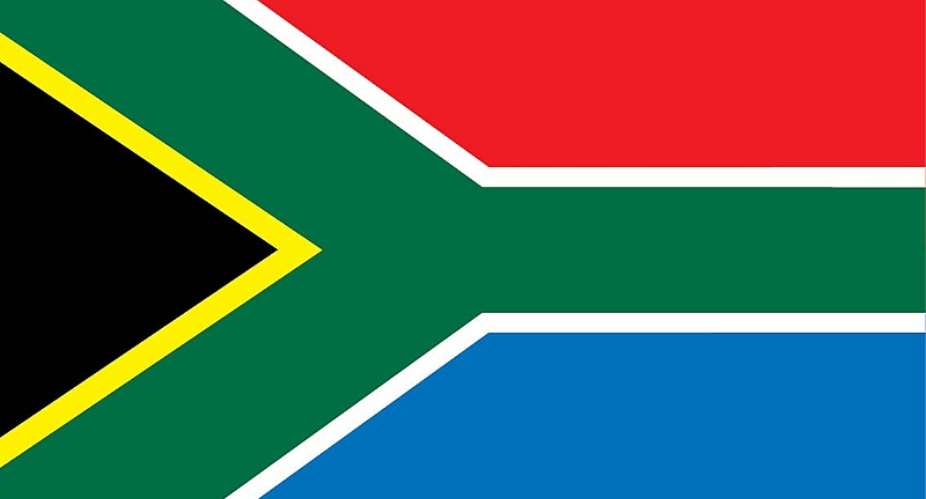
A metaphor used to describe disappointment portrays the act whereby one's teeth miss something one wanted to chew and bite into each other instead.
Depending on the amount of energy put into the act of chewing, this can result in a very painful “tooth-self-bite or one tooth unintentionally biting another tooth.(!) The pain results as much from sheer shock act as the act of biting itself.
The Twi expression for this unusual pain caused consists of just two words – “mese afem”. Although few in number, they're heavily loaded words. For in addition to the literal meaning of biting one's own teeth, they have a figurative meaning. They convey this idea: “I'd hoped for to encounter something palatable when I began this process, but instead, I've been jolted by an unexpected pain, akin to tooth-ache – and you know what that's like!”
Frankly, that's just how I feel whenever I hear that mobs in South Africa have attacked and killed or injured people from other African countries and vandalised their shops and homes.
For some of us have always idealised the situation in South Africa. First, we looked upon it as a land in which people of different colours were contesting for power. Whites were largely against, and victimised, “Blacks” and “Coloureds”. The other races,in their turn, hated the "baaskap" Whites.
Thankfully, in 1989, the situation in South Africa began to unravel. The white minority was persuaded by a man called F. W de Klerk to give up political power. But de Klerk was very clever in arranging the transfer of power. He made sure that the white minority would continue to retain the economic power which it had used political power to capture, since the election to power of the National Party [Boers] in 1948.
In celebrating the achievement of what was, essentially, only “half-power”, we were wrong. For, we were being trapped into thinking in terms of groups. The Blacks had such an advantage in numbers that we assumed they would use political power to wrest economic power from the hands of the whites. It didn't work like that, for, of course, there are Blacks who are capitalist-minded as the selfish Whites.
So,White economic power identified,wooed and allied itself to some of the more corruptible elements in the black majority. People were offered board membership in white-owned companies, with all the privileges ancillary to membership of the business oligarchy. In turn, business power infiltrated natioal and regional politics. Through what was called “black economic empowerment”, business was given a legitimate means to break the claws of the political power exercised by the black majority.
For instance, the leader of the National Union of Mineworkers, the once-militanttrade unionist, Mr Cyril Ramaphosa, was enticed away from his championship of the rights of the poorly-paid black miners, onto the board of Lonrho, one of the most notorious beneficiaries of apartheid-style wage differentiation between white and black miners. When trouble broke out at Marikana, a mine owned by Lonrho, it was [the now] “Big Boss”Ramaphosa who was sent out to defuse it. His reputation took a severe knock from that terrible crisis (it resulted in a great loss of life) that may well put paid to his ambition to replace President Jacob Zuma as President, at the head of the African National Congress (ANC) when the next general election is held in 2019.
Yes, it is not always sensible to assume that the populace of countries are necessarily made up of “lumpen” groups when it comes to politics. Individuals often act to achieve their own selfish ends and are impelled to action by their own impulses, even within the most solid-looking organisations. And that's why I counsel myself not to jump to too many conclusions when I read things like the following:
QUOTE:
"South African police have used stun grenades, rubber bullets and water cannon to try to disperse anti-immigration protesters in the capital, Pretoria, and keep them from foreign nationals who had gathered to express alarm about recent attacks.
"Resentment against foreign nationals has sometimes turned deadly amid accusations that they take jobs from locals in a country where unemployment is more than 25%.....
"In 2015, anti-immigrant riots in and around the city of Durban left at least six people dead. About 60 people were killed in similar violence seven years earlier. [In the latest outbreak of violence]… Protesters in Pretoria marched towards the foreign ministry, some carrying sticks or pipes. A petition was handed to the ministry in which they suggested the government teach immigrants to “speak properly”. The petition added: “They are arrogant and they don’t know how to talk to people, especially [the] Nigerians.”
"The Nelson Mandela Foundation criticised [the SouthAfrican] authorities for “giving permission for a march of hatred”.
"A statement issued by President Jacob Zuma’s office said South Africans should not blame all crime on foreign nationals. It cited recent reports of violence in Pretoria and hate speech on social media. “Many citizens of other countries living in South Africa are law abiding and contribute to the economy of the country positively,” Zuma said. “It is wrong to brandish all non-nationals as drug dealers or human traffickers.”
"[But] Amnesty International accused the [South African] authorities of failing to “address toxic populist rhetoric that blames and scapegoats refugees and migrants”.
"Zuma [claimed that] South Africans were not xenophobic, and he called on everyone, citizens and non-citizens [alike], to work together to combat the high crime rate.
"The periodic backlash against foreign nationals has hurt the tolerant image the country has tried to present since the end of apartheid almost a quarter of a century ago."
. UNQUOTE ( London Guardian)
The questions I ask are: Who organised the attacks? Are the mobs on a crusade against drugs and alleged prostitution whipped up by religious fanatics? Or are they being used by politicians who have become unpopular due to their lack of performance, to distract attention from such problems as massive unemployment and lackmofhousing in the townships, and focus attention on “immigrants” instead?
Whatever the cause(s) of the attacks, the duty of the South African Government is clear: please take thetroublen to educate your citizens well about other African countries. For years, the Ghana Government, under our late President, Dr Kwame Nkrumah, housed and fed hundreds of South African refugees in flats and hostels at what is now the Airport Residential Area in Accra. One of my friends, Edwin Duplan, was at one time the director of the establishment that looked after the refugees. Meanwhile, Nkrumah's Bureau of African Affairs provided political and military training to those South Africans who applied for such training. They lacked for nothing.
Nigeria also did its bit. At one stage, Mr Thabo Mbeki, who was to become President of South Africa after the retirement of Nelson Mandela, was a guest in Nigeria. (See his speech on Xenophobia at http://www.pressreader.com/south-africa/cape-times/20170228/281706909460349
Once, whilst I was visiting Nigeria, I was surprised to be invited to a meeting of the Nigeria Anti-Apartheid Committee that was organised by my friend Sam Ikoku (a former Nigerian exile in Ghana). Sam Ikoku announced at the meeting that Nigeria's [then] richest man, Chief M K O Abiola, had donated the equivalent of $1 million to the cause of looking after South African exiles in Nigeria.
I have seen Mozambicans and Angolans too doing their best for South Africans, even when they themselves were indigent. Ditto for Zimbabweans. I have also personally visited South African exile camps in Zambia. (One of these was full of recruits brought into Zambia by a rather dodgy freedom fighters organisation called the Unity Movement of South Africa (UMSA), led by a man called I.B Tabata. The Zambians did their best to assist them, though they knew that not all of them were serious freedom fighters.
Does the ANC leadership, many of whose members lived in exile in other African countries for many years, bother to tell their stories to the new generation that is growing up in South African and who know almost nothing about the role played in the struggle against apartheid by the poor African countries whose people constitute the “immigrants” they now despise and harass periodically?
Does the South African Department of Home Affairs explain to the people of South Africa how stringent are the conditions that people from other African countries are already made to fulfil before they are granted visas to enter South Africa and to remain resident there?
No – South Africans mustn't do this to Africa. There is a saying in Ghana that “If you won't praise me, at least do not defame me!" Classifying African “immigrants” as drug dealers and organisers of prostitution is a wicked ploy. If there are criminals, they should be reported to the police and dealt with as any other criminals. Venting the anger and frustration that incompetent, or corrupt, or mediocre politicians have aroused, upon hapless“immigrants”, is a manifestation of hatred and xenophobia pure and simple.
And it doesn't befit the image of the South Africa many of us thought we were helping to create.


 GPRTU, GRTCC announce new fares for trotros, taxis and inter-city services as 8%...
 GES orders SHS, SHTS heads to stop collecting unauthorised fees and levies
 Damanko residents demand immediate commissioning of abandoned E-Block SHS projec...
 “I’m not dead” – Kwame Dzokoto breaks silence on rumours
 Many Ghanaians can’t wait to vote NDC govt out over ‘Rambo-style’ arrests – Akim...
 22 mortuaries in Ashanti Region operating without licences — MoFFA
 EOCO clarifies Nana Baffour Awuah's parliamentary immunity amid attempted arrest
 Ghana Jollof case: High Court adjourns Salomey Bafoh's bail application to Septe...
 Osahen Afenyo-Markin hands over as head of Ghana’s delegation to ECOWAS Parliame...



Comments
Mr Duodu, Isn't it the time that Black Africans stay in their own nation and build it instead of unnecessary migration? Have you forgotten when 46 Ghanaians were stuffed into a police cell in Abidjan that only should hold 6 people and all.perished? What are we looking for in life? Why are we behaving like we have curse on us? Currently there are 5 million Nigerians alone living in Ghana illegally and they're the world's 6 biggest oil exporters. Now their population is 192 000,000.and they are...