




It‘s been described as a socio-economic and environmental disaster; reputed to be the world's largest digital dump, ; and Ghanaians variously call it Old Fadama and Sodom and Gomorrah. But Agbogbloshie, real name of the place, is not just the mega-slum of 250, 000 in the heart of Accra, it is also a place that affirms the indestructibility of hope and the will survive. MARTIN-LUTHER C. KING reports.
Through winding alleys between tin walls astride muddy paths we make our tortuous way. Carefully, we dart across trickling streams traversed by wooden planks; we skim around carts and goats and children; and we duck under awnings and underwear, trying to navigate through the never-ceasing flow of throbbing humanity. The pathways are narrow and disorientating but I keep my eyes focused on Father Subash Chittilappilly, my guide, making sure we move in tandem.
We reach an opening: a market. The smell of fish is overpowering.
We pass through a spot, a drinking place, and emerge beneath a crumbling colonial house. My feet are damp from the mud; my nose is choking because of the toxic air; my skin is stinging from the heat, sweat and dust; I am in need of water.
And, then, we arrive at City of God.
City of God is a humanitarian outreach of the Catholic archdiocese of Accra to the residents of Agbogbloshie. It provides morning and evening, including adult classes as well as skills training in beadmaking, tailoring etc for desiring residents.
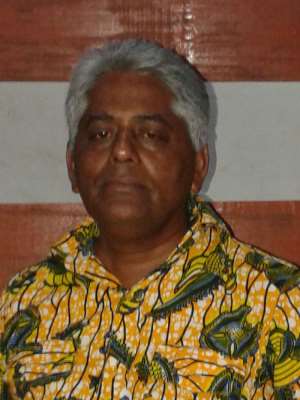
Father Subash, an Indian, and a Catholic priest, of the Order of Mother Theresa is the administrator of City of God.
“In the mornings we normally have 10-15 students, mainly girls. In the evenings, we have adult education classes, with 50-60 students in attendance, Monday to Friday. Class lasts from 7.30 to 9.30 pm,” he told the Journalists for Regional Integration.
Agbogbloshie, one of Africa’s mega-slums, of over 250, 000, is in the heart of Accra, Ghana’s capital city.
Al Jazeera recently described it as, ‘a socio-economic and environmental disaster’. Britain’s The Guardian newspaper calls it the world's largest digital dump.
And Ghanaians call it Old Fadama or Sodom and Gomorrah.
An illegal settlement in the northwest of Accra it is notorious for being the world's largest digital dumping ground and for its lawless culture of criminality. It is a jungle in the heart of a modern city, where only the fittest survives.
Inhabitants of Sodom and Gomorrah come from every part of Ghana. There are the Kayaye (porters) girls from the north and shoeshine boys from the south; petty traders from the east and unemployed youths from the West.
Many others are from across the West Africa subregion, including Nigerians, Burkinabes, Ivorians, Liberians, Sierra Leoneans, Togolese, Beninois etc. They have all joined the original Dagombas and Kokombas settlers from northern Ghana in a ceaseless daily struggle for survival.
Physical structures in Sodom and Gomorrah are ramshackle and tentative. There is no planning and as such, the presence of water and sewerage are tall dreams. The ground in this space is pockmarked, with craters that hold stagnant water which breed killer mosquitoes. In the rainy season, flooding is common in Sodom and Gomorrah, with no drainage to channel rain water.
This cesspit of humanity lacks healthcare for its estimated 250,000 inhabitants. Pregnant women, babies, the aged and all; everybody is absolutely on his own. Diseases therefore thrive in the area. Unprotected sex which is widespread in the area, adds sulphur to the cauldron of short and brutish life with HIV/AIDS. Indeed, Sodom and Gomorrah earned its name fair and square.
However, hundreds of young people living in the slum who would have become social misfits but for the training they received in literacy and skills development from City of God, now have hope of improving their fortunes.
The religious NGO’s literacy and skills training centre, which was opened in 2002, has produced over 3,000 students most of whom have found their way back into mainstream educational institutions. Some are in junior and senior high schools, while others have graduated from polytechnics and other tertiary institutions.
It was amazing how the head porters (the Kayayes) and truck pushers could still learn to read and write after a hard day’s work in the market, a teacher with the City of God, Kuchando Kwabena Abraham, told Journalists for Regional Integration in a chat.
Young women at the centre who are incapable of furthering their education are trained in the use of beads to make rosaries, straps for slippers and necklaces, among other craftwork, for sale. The young men are also taught tailoring, said Abraham, an accountancy graduate from Accra Polytechnic
But then on June 20, the bulldozers rolled in.
Accra Mayor Alfred Oko Vanderpuije said the demolition exercise was the greatest life-saving decision taken since Ghana’s independence, and was long overdue.
He said the June 3 Accra flood and fire disasters which claimed over 150 lives affirmed the long held conviction that the sprawling community should be demolished.
The Old Fadama community, popularly called Sodom and Gomorrah came into being in the early 90s following bloody clashes between the Kokomba, the Dagomba and the Nanumba ethnic groups in the Northern Region which left thousands dead.
A huge number of the northerners fearful for their lives fled down south and made the Old Fadama their new home. They have lived in the area for some two decades, have inter-married, given birth and multiplied.
The settlers eventually turned the area into a slum and have since been living in squalor.
The place is also believed to be a den for criminals even though there are some genuine hardworking residents over there.
Past and present Ghanaian governments had attempted to demolish the slum but were cowed by political pressures and the fear of losing elections.
However after the June 3 disaster, the Mayor of Accra Vanderpuije said the time for Sodom and Gomorrah to go was now.
But Father Subash disagrees.
“My understanding after hearing all the stories and the news is that they said that because of us, innocent people died. By that they meant the flood and fire disaster that happened in Accra on June 3. And, the Accra Municipal Authority said we were the cause because we blocked the water-ways. But when they say that, I say to myself ‘were that to be the case, we are the ones who would have died, who would have been worse affected given that there is no iota of planning, no iota of drainage here. Had the flood passed here, we would have been in serious trouble. You know where the disaster happened. Consider the distance from that place to here. It couldn’t have happened that we could have been the cause of the flood from here. They also say we don’t pay for electricity and water. But, again, that’s not true.”
Moreover, the move was abrupt, and the exercise heartless, Salihu Mustapha, a Nigerian resident at the slum told the Journalists for Regional Integration.
Alarmed by Boko Haram activities in his part of Nigeria, Mustapha, 18, said he had left his native Doka in Kaduna State, northcentral Nigeria for Ghana having been inundated by how good life was in the former Gold Coast.
“I had been hearing that Ghana is good for education; that was why I came. The place is good; but if you look at the area, the neighborhood, it is too bad. It’s very, very bad. To worsen matters, the recent demolition (by Accra Municipal Assembly, AMA) rendered a lot of people in this slum, including myself, homeless. The shack were I was staying, they demolished it. I don’t have anybody here. That shack was owned by a Ghanaian who accommodated me. You can see, we are all one. I am a Nigerian, but he accommodated me. Since after the demolition, another Ghanaian friend is also allowing me to squat with him.”
Now attending classes at City of God while strategizing for a future career in journalism, called on the Ghanaian government to assist victims of the demolition, like himself, with emergency welfare packages while imploring the Nigerian government to make home more habitable.
Sunny Ibenegbu, a father of three, from Awkuzu in Anambra State, southeast Nigeria runs an electronics mini-shop at Agbogbloshie. He came to Ghana ten years ago, he told Journalists for Regional Integration.
Ibenegbu’s electronic mini-shop, which he interestingly named Illumination Investment, escaped demolition; but, he regrets that he did not go to school as that has left him with very few options in life, including his current location at Agbogbloshie, a place he described as unfit both for business (due to the lack of purchasing power by the inhabitants) and for human habitation.
Things had been looking up since Ghana’s second lady and wife of the Vice-President, Mrs Matilda Amissah-Arthur, launched a book (also called titled City of God) written by Brother Claudio Turina, the proceeds of which would go to support City of God and help transform it into a more formidable and comfortable learning centre for the disadvantaged.
Similarly, the centre had already attracted a team of volunteer health workers, including a doctor and a couple of nurses, who had started routine twice-weekly medical check-ups for residents.
It is hoped that the government of Ghana and the Accra Municipal Assembly, despite the recent demolitions, would move post-haste to strengthen City of God and other humanitarian bodies in their work to improve conditions in this scar festering right in the heart of Accra.
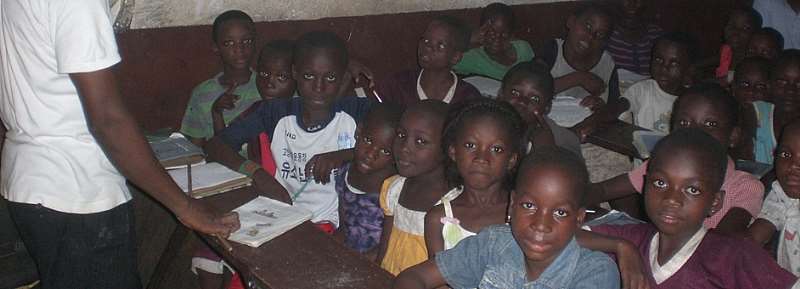 Children In School At City Of God, Accra
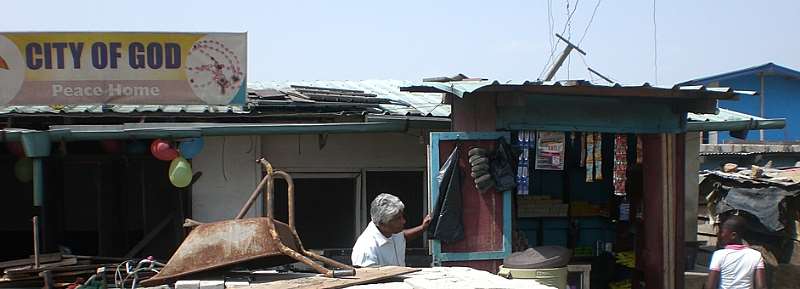 City Of God, Accra
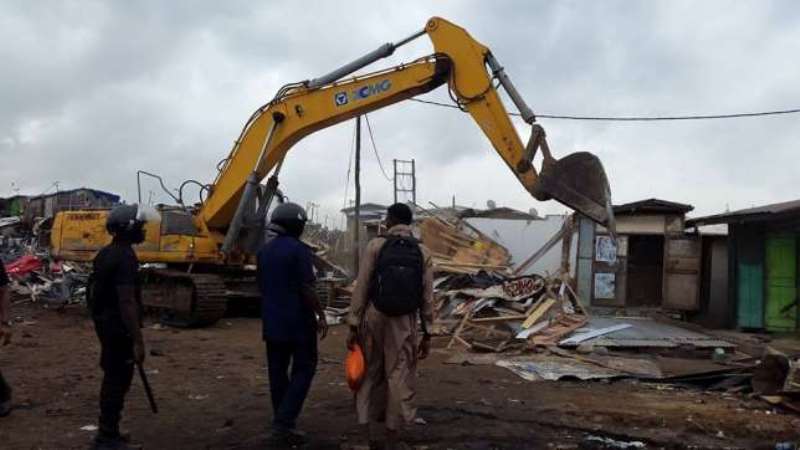 Demolishing Part Of Sodom And Gomorrah, Accra
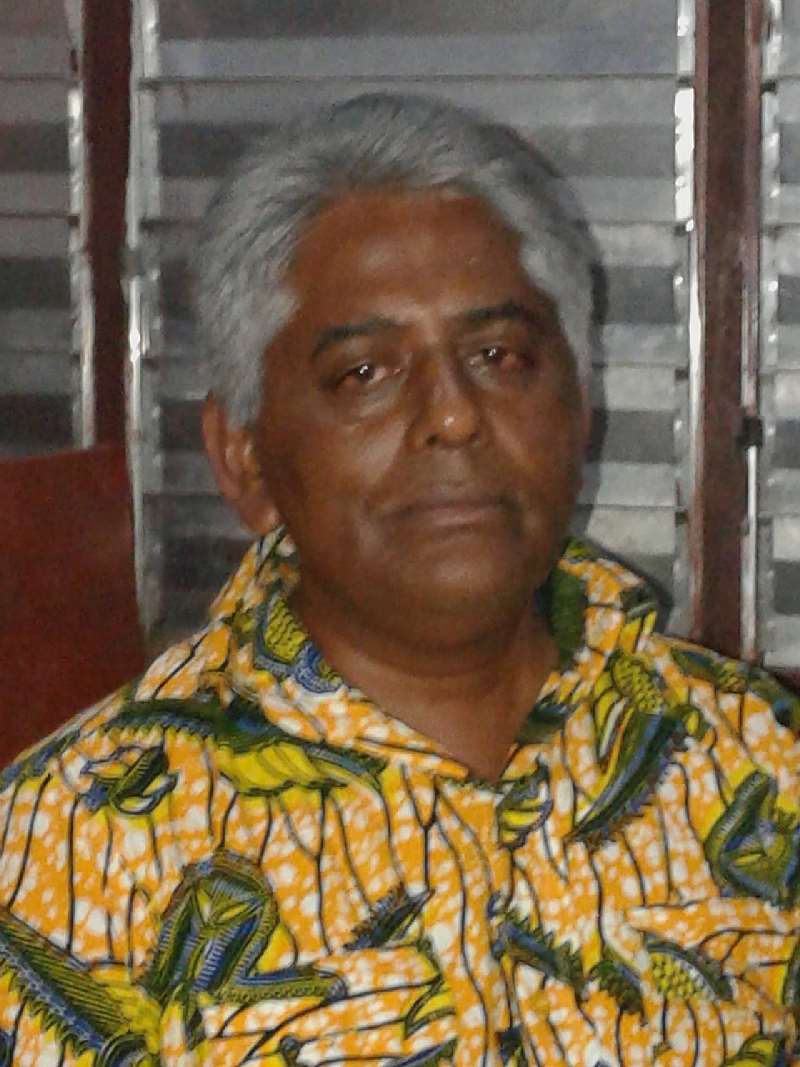 Fr. Subash Chittilappilly, Administrator, City Of God, Agbogbloshie, Accra
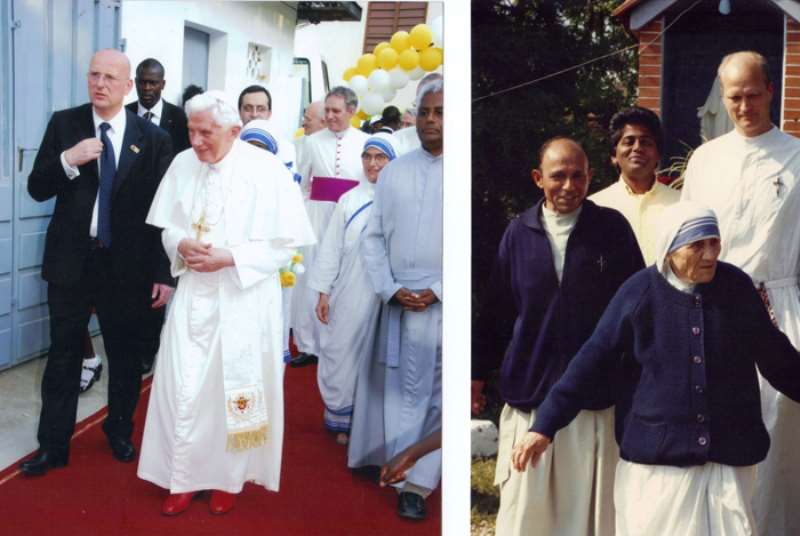 Fr. Subash With Mother Theresa


 Surrogacy: Supreme Court judge warns of citizenship and inheritance challenges f...
 Ghana has a surrogacy law, but… - Supreme Court Justice
 Ghana faces challenge to persuade Brics it deserves a seat at the table
 Stop the Sermon Before the Engine Starts: Why Ghana Regulates Preaching on Movin...
 Don’t let speed of information become your judgement — Chief Justice tells new l...
 ‘Big Push’: Government assures contractors of prompt payments
 GES to develop plan to recover teaching time lost during teachers’ strike – Clem...
 'All human emotions': French astronaut Sophie Adenot's first words since returni...
 French astronaut recounts 'astonishing' emotions after return to Earth
 India's 'cockroach' movement chief detained ahead of major protest


