




When production officially began at the world’s biggest concentrated solar power plant at Ouarzazate in southern Morocco in February, the country was widely celebrated for its achievement.
Called Noor 1 after the Arabic word for light, the concentrated solar power (CSP) plant is designed to deliver 160 megawatts of electricity at peak output. It is the first of three stages in a project expected to provide 510MW of generating capacity by 2018.
Unlike photovoltaic technology, CSP uses the sun to heat fluid, which powers turbines that can supply electricity at night. This gives more constant power to the grid. The complex will save 13m tons of carbon emissions over 25 years.
Morocco has set itself ambitious renewable energy targets. A previous goal of generating 32 per cent of its power from renewable sources by 2020 — which is likely to be comfortably exceeded — was extended late last year to a target of 52 per cent by 2030.
An important spin-off from this drive is the establishment of a local renewables industry. Officials say they want to establish Morocco as a hub for renewable energy, develop industrial capacity in the sector and even begin exporting energy in the coming decades.
But this feat in solar energy production reflects Morocco’s Africa ambitions.
With stable growth, a growing middle class and a policy of national and continental economic expansion focused on expanding sectors such as renewable energy, Morocco is emerging as North Africa’s economic leader with eyes set on continental influence.
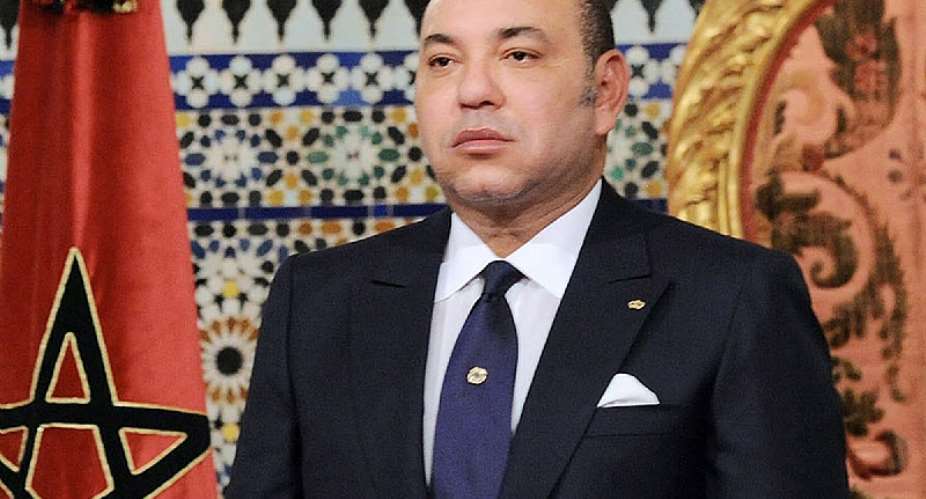
Fifteen years ago, King Mohammed VI faced a sizeable challenge: successfully juggling the need for change with the apparent political and economic inertia in his deeply traditional kingdom.
Today, although there is still much to be done, the country has nevertheless achieved the privileged status of a stable, peaceful Arab nation, governed smoothly by a democratically elected Islamist party. The successful transition from traditional kingdom to a modern global player, envied throughout the Arab and Muslim world, means that today more than ever Morocco is a key force in the region.
Numerous institutional and societal advances have laid the foundation for this stability, while economic reforms have succeeded in improving the day-to-day life of the Moroccan people and positioned the country comfortably and sustainably in the global arena.
The transformation of the Moroccan economy is ongoing. Today, the strategy laid out for the country at the highest state level is about to set off on a new phase of development which will see Morocco embark upon a pan-African economic expansion. This strategy is supported by the chamber of commerce and major economic players such as SNI and its shareholdings, which are gradually establishing themselves on the continent. Attijariwafa Bank is now the top banking group in the CFA franc zone by number of branches, and the cumulative economic weight of the five Moroccan banks makes them the major banking force in Africa. Today, 55 percent of Royal Air Maroc’s traffic goes to African countries, making Casablanca a regional hub. Morocco is also now the best-connected African country by sea routes, according to a United Nations Conference on Trade and Development (UNCTAD) report, and saw a 20 percent increase in 2015 in the number of containers going through its ports.
The most recent visits by King Mohammed VI with more than 70 entrepreneurs to sub-Saharan Africa bear witness to the strategy’s achievements on the diplomatic and economic levels, and demonstrate the growing Moroccan influence in Africa. More than ever, the development of this South-South cooperation reinforces the role of the Kingdom of Morocco as a major geopolitical player within the continent and on the global economic stage.
At independence Ghana, like Morocco, had similar continental ambitions.
Ghana's first President Osagyefo Kwame Nkrumah and Morocco's King Mohammed V played crucial roles in the formation of the Organisation of African Unity (OAU, now African Union or AU) through their strategic leadership of the Casablanca Group.
The Casablanca Group which also comprised Algeria, Egypt, Guinea, Libya and Mali pursued a radical, progressive stance in the then burgeoning Africa emancipation struggle, and shared values on the question of African unity, which culminated in the founding of the Organisation of African Unity (OAU) in 1963.
Ghana and Morocco have also been important members of the non-aligned movement since 1961.
But economically, both have since beaten different tracks and churned different results decades after their initial collaboration on pan-African unity.
Life expectancy of the average Moroccan is 76.51 while in Ghana it is 65.75; 221 in every 100,000 Moroccans are currently imprisoned compared to 55 in Ghana; per capita consumption of electricity in Ghana is 206kWh while it is 715kWh in Morocco; Ghana’s GDP per capita is $3,500 compared to Morocco’s $5,500; Ghana consumes 0.1008 gallons of oil per day per capita while Morocco consumes 0.2604.
Also, the number of deaths of infants under one year old in a given year per 1,000 live births in Morocco is 24.52 while in Ghana it is 38.52; Morocco has an unemployment rate of 9.50 per cent while Ghana has 11.00 per cent; the percentage of adults living with HIV/AIDS in Morocco is 0.10 per cent while in Ghana it is 1.40 per cent (actually 1,200 people in Morocco and 11,600 people in Ghana die from AIDS each year); 1.30 in every 100,000 people are murdered annually in Morocco compared to 1.70 in Ghana
Moreover, the degree of inequality in the distribution of family income is 40.90 in Morocco compared to 39.40 in Ghana, according to the GINI index.
Also, the annual number of births per 1,000 people in Morocco is 18.47 while in Ghana it is 31.40.
According to the CIA World Factbook, Moroccans are likely to live 10.76 years longer than Ghanaians; use 3.5 per cent more electricity; make 57.14 per cent more money, and consume 2.6 times more oil.
Moroccans will also be 36.34 per cent less likely to die in infancy; be 92.86 per cent less likely to have HIV/AIDS; 13.64 per cent less likely to be unemployed; 23.53 per cent less likely to be murdered; experience 3.81 per cent more of a class divide, and have 41.18 per cent fewer babies.
It is against this backdrop that analysts believe it is time Ghana re-evaluates the lyrics of the old folk song which counsels to, Make new friends, but keep the old; One is silver and the other gold. Morocco, an old friend of Ghana’s is gold.
Maybe now is time Ghana compares notes with her old, golden friend to make for a better Ghana, and, an even better Africa?


 Surrogacy: Supreme Court judge warns of citizenship and inheritance challenges f...
 Ghana has a surrogacy law, but… - Supreme Court Justice
 Ghana faces challenge to persuade Brics it deserves a seat at the table
 Stop the Sermon Before the Engine Starts: Why Ghana Regulates Preaching on Movin...
 Don’t let speed of information become your judgement — Chief Justice tells new l...
 ‘Big Push’: Government assures contractors of prompt payments
 GES to develop plan to recover teaching time lost during teachers’ strike – Clem...
 'All human emotions': French astronaut Sophie Adenot's first words since returni...
 French astronaut recounts 'astonishing' emotions after return to Earth
 India's 'cockroach' movement chief detained ahead of major protest


