




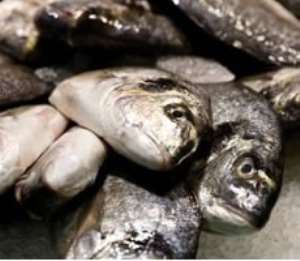
Newmont Ghana announced on Tuesday that it is studying the underlining factors that led to the discovery of dead fishes at its Ahafo Mine fresh Water Storage Facility (WSF).
A statement issued by the corporate entity in Accra said: “The regulatory authorities have been notified of the fish discovery and will be informed of the outcome of the study when complete. Some 3,000 dead fish have so far been found with the onset of the Harmattan weather conditions, which have in the past caused fish to die.”
The statement copied to the Ghana News Agency said the WSF is a fresh water dam built to provide supplementary freshwater for the Ahafo Mine Processing Plant. Newmont has stocked the WSF with Tilapia and Cat fish to control mosquito larvae.
It is a restricted area, and hamlets within the surrounding area have been educated against using the water for their domestic activities and consumption. Alternative water sources such as boreholes have been provided for the people.
A community patrol team has been engaged and trained to educate potential trespassers from fishing or swimming in the facility.
The company is currently preparing to release water from the WSF to improve the circulation of freshwater in the facility in order to manage the ecological balance.
The facility will also be depopulated of fish as part of current measures to manage the seasonal incident.
The statement said more information would be provided on whether or not the fish died of natural or other causes once the studies are completed.
In a related development, WACAM, an association of communities affected by mining has attributed the discovery of dead fishes in the water dam to cyanide spillage from Newmont Ghana.
Mr Daniel Owusu-Koranteng Executive Director of WACAM in an interview, called on the Environmental Protection Agency (EPA) to get to the bottom of the cause of the pollution and inform Ghanaians about it, adding; “the death of large quantity of fishes is a matter of public interest”.
In October 2009, WACAM accused Newmont of a similar incident, which killed many fish in the Subri River.
“It is worrying that Newmont employed every conceivable means including scientific dishonesty and misinformation to avoid taking responsibility for the consequences of the cyanide spillage,” Mr Koranteng said.
According to official sources EPA had deployed experts to assess the situation who are scheduled to submit a report on the incident soon.

 Mahama unveils H-Enabler platform to boost health investment and manufacturing i...
 Calm restored at Larteh Ahenase after Odwira Festival disturbances — Police
 Young woman found hanging from mango tree at Kasoa Akweley Peace Town
 Service Machinery Ghana Limited MD caged over alleged $1m fraud against employer
 Bawumia pledges support for John Boadu-led NPP leadership ahead of 2028
 Boakye Agyarko pledges support for John Boadu, calls for NPP unity after electio...
 Meet the newly elected national executives to lead NPP return to power in 2028
 'I extend my hand of friendship, partnership to contenders for ideas, experience...
 Rwandan genocide suspect 'hunter' Dafroza Gauthier dies at 72
 Brazilians begin voting in tight election between Lula and Flavio Bolsonaro


