




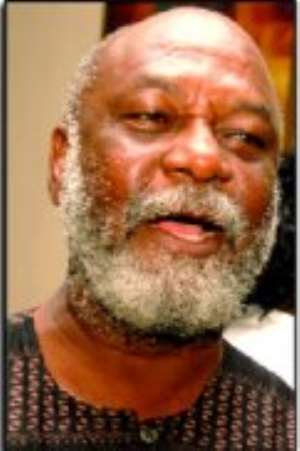
The Executive Director of the Media Foundation for West Africa (MFWA), Prof. Kwame Karikari, has stated that the ownership of media enterprises by politicians is a dangerous thing that can be used to foment trouble.
He said examples from countries in the West African sub-region and elsewhere showed that politicians used their media establishments to fan strife and promote genocide during conflicts, adding that Ghana needed to guard against that phenomenon.
Prof Karikari was speaking at a forum in Accra Tuesday as part of activities marking the Constitution Week.
It was organised by the National Commission on Civic Education (NCCE) and the Governance Africa Foundation.
The forum was attended by journalists, members of academia and some heads of journalism training institutions.
Using Cote d’Ivoire, Rwanda and the former Yugoslavia as examples, Prof Karikari said the media outfits owned by politicians were used to cause bloodshed and chaos.
“Politicians own media enterprises not because they want us to be happy; it is because they want to have power,” he added.
He urged the media to begin censoring and sanctioning politicians who used foul language on air, adding that that was one of the ways to stop the pollution of the airwaves with intemperate utterances.
The Editor of the Daily Dispatch, Mr Ben Ephson, said Article 162 (3) of the 1992 Constitution, which permits any individual to establish a media enterprise, needed to be reviewed and some restrictions instituted to ensure that anyone who practised had some media background.
He noted that although the media freedom being enjoyed by Ghanaians was good, some checks needed to be put in place to avoid abuse.
He said for radio stations, for instance, they could acquire delay equipment which would enable producers of talk shows to eliminate foul or offensive language before it was aired.
The General Secretary of the Ghana Journalists Association (GJA), Mr Bright Blewu, said the media landscape had witnessed some stagnation and seeming chaos and stressed the need for a media law to set standards and regulate the industry.
He also suggested that the power to grant radio and television frequencies should be ceded to the National Media Commission (NMC), so that it could monitor the airwaves and check the recklessness that currently existed.
He said individuals granted radio and television frequencies should be made to renew their licences every year as a way of checking the idiocies on air.
The Rector of the Ghana Institute of Journalism, Mr David Newton, said individuals who had radio and television frequencies needed to use them for the benefit of the nation.
He reiterated the call for a national communications policy to provide motivation and rules for the development of the media.

 'Go after financiers, not just couriers' – Catholic Bishops to NACOC after Franc...
 Man beaten to death after alleged machete attack on elderly woman at Tamso
 Two arrested over kidnapping, murder of Senegalese goalkeeper in Ghana
 Ministers should answer legitimate questions regarding promises, public expendit...
 Mahama has done well for stabilising the economy but the real litmus test is sus...
 Chief Justice Paul Baffoe-Bonnie chairs 11-member Council for Legal Education an...
 Man reportedly commits suicide over inability to raise money for son's SHS prosp...
 Wontumi’s GH¢30m Exim Bank case adjourned to October 13
 Euro Spa CEO, three others remanded over €225m cocaine shipment bust in France
 Fresh South Africa drug arrest puts Ghana’s border controls under scrutiny


