




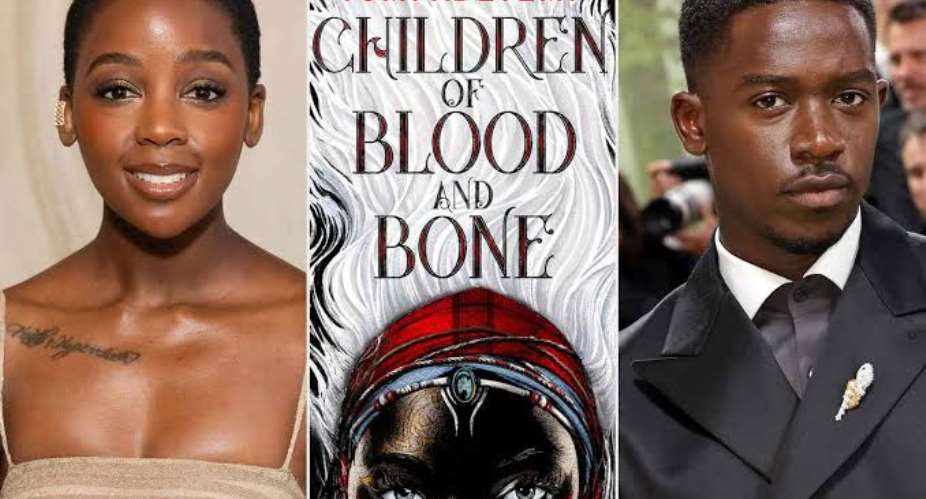
Here is the strangest fact about Children of Blood and Bone: its author says she will not watch it, while its music is already in your headphones.
Tomi Adeyemi, who co-wrote the screenplay, stopped promoting the adaptation in July and told fans, “I have not seen the film, and I will not watch it.” Variety later reported her calling the experience “the worst thing I have ever had to live through.” Then, on November 20, Tems released African Love Story, the lead single from the film’s soundtrack, through RCA Records.
One project, two moods: grief on one side, a victory lap on the other. When the film opens on January 15, 2027, which of the two will we be watching?
A Negotiation That Went Public
Adaptation is always a negotiation. This one happened in front of us.
The novel arrived in March 2018 from a Nigerian-American author: a story set in Orïsha, a Yorùbá-rooted world where a king has outlawed the magic of the maji. Fox 2000 snapped up the film rights early. After Disney swallowed Fox, Lucasfilm let them lapse, and Paramount took the project in a seven-figure deal in January 2022, according to Refinery29’s timeline. Gina Prince-Bythewood, who made The Woman King, took the director’s chair.
What happened next, we do not fully know, and anyone who claims otherwise is guessing. Adeyemi has not spelled out what went wrong. She has not called for a boycott either; she has said she does not mind people going to see it.
Online, the argument has circled a casting debate, with some fans raising colorism and asking whether the adaptation honours the book’s Nigerian identity. But one careful outlet reminded readers that the public record does not show any single casting decision to be the cause of the rift. I think that caution is right.
The better question is bigger than gossip. When an African story enters the Hollywood machine, who is its author by the end? The writer, the director, the studio, or the readers who carried it for years before a camera rolled?
I do not have a clean answer, and I distrust anyone who does.
What the Trailers Are Really Telling Us
Paramount has revealed this film in careful stages: a closed-door look at CinemaCon in Las Vegas on April 16, a New York launch event, then the first public trailer on July 28.
Bleeding Cool described the response to that first trailer as muted. The second, released on November 12, has landed better. Deadline says it shows the destruction of Zélie’s hometown, her resolve to help Princess Amari, and the maji’s powers, from fiery explosions to Zélie’s mastery over souls.
But listen to what sits under the pictures.
The first trailer used Beyoncé’s Energy (feat. Beam). The second used a Tems original. That swap says something about confidence: the marketing began by borrowing the biggest name available and ended by trusting the film’s own sound. It is a reading, not a fact, but I would bet it was deliberate.
Sound matters here more than in most blockbusters. A story about a people whose magic was silenced, a story of rituals, incantations and drums, cannot be carried by generic orchestral swelling. If Orïsha is to feel like a place and not a backdrop, the ear has to believe in it before the eye does.
The Sonic Boom
On the music, the film stands on firmer ground, and frankly, this is where I feel most proud.
Tems is executive music producer and curator of the soundtrack, with Burna Boy as executive music consultant. Prince-Bythewood has said she listened to both while writing the screenplay, and in announcing the appointment she called Tems “the first woman to executive produce a soundtrack at this level.”
Around them stands a lineup that stretches from Lagos to Johannesburg to London: Fireboy DML, BNXN, Kold AF, Ayra Starr, Obongjayar, Moelogo, Daecolm, Pa Salieu, Show Dem Camp and Moonchild Sanelly.
There is history behind the choice. Tems co-wrote Lift Me Up for Black Panther: Wakanda Forever, a song that earned an Oscar nomination for Best Original Song, and she and Burna Boy both appeared on that album.
Wakanda Forever borrowed African voices. This film hands them the keys.
For years, we have watched Afrobeats conquer playlists, stadiums and festival stages; a major studio fantasy built on an African soundscape is the next territory, and it is arriving right on time.
One thing, as a Ghanaian. The announced list leans heavily Nigerian. Idris Elba, whose mother is Ghanaian, is in the cast, and the film was reportedly shot in South Africa, so the continent is present on screen.
But where is Accra’s sound in this conversation? Highlife, hiplife, azonto, the drill coming out of Kumasi?
I am not complaining. I am asking, because the next soundtrack like this will be assembled by whoever is in the room.
The Industry Gamble
Now the cold arithmetic.
January is often a graveyard for new theatrical releases, as CBR pointed out, and audiences will arrive straight off Dune: Part Three and Avengers: Doomsday in December.
Paramount holds the rights to the entire Legacy of Orïsha trilogy, but ScreenRant notes it has announced no plans for the sequels. Everything rides on word of mouth.
There is also the long wait. The book is now eight years old, and readers who were teenagers in 2018 are adults today, with their own money and long memories. That is a loyal audience, and a demanding one.
It is an unfair burden. One film should not be a referendum on Black fantasy, on African storytelling, or on how a studio handles a difficult author relationship.
But that is how this one will be read.
If it succeeds, the money men will say the audience was always there. If it stumbles, we will hear that the genre is risky, as though nobody ever flopped with a European dragon.
So, Do We Show Up?
My position is simple.
I do not know whether the film is good, and neither does anyone who has not seen it.
I do know three things:
- The music is serious.
- The cast is formidable.
- The author’s pain is real enough to deserve respect, even if we choose to watch anyway.
You can hold both truths at once.
You can honour her stand and still buy a ticket for the young Black girls who will see a white-haired heroine on an IMAX screen. You can criticise a studio and still celebrate a Nigerian woman steering a soundtrack at this scale.
So where do you stand?
Will you be in the cinema on January 15, or waiting for the verdict first?
Whichever you choose, play African Love Story in the meantime and ask yourself one question:
Who tells our stories when we are not in the room?

 2.8million households adopt food coping strategies – GSS
 Half of Ghanaian households spend over 75% of expenditure on food – GSS
 Lands Minister Buah sues two Ellembelle residents for GH¢2m over alleged defamat...
 Traditional Council tells CWSA to hand over Asesewa water system by December 1
 How IGP special team helped Police arrest two suspects over viral Asaokore robbe...
 28 Krachi East assembly members file vote of no confidence to remove MCE
 Lawyer challenges Haruna Iddrisu's two-year BECE ban at Accra High Court
 Oti Region NADMO staff raise concerns over alleged selective payment of salary a...
 Mahama announces plans to open Ghana embassy in Barbados in 2027
 Customers' deposits have not been compromised — BoG allays fears after banks cyb...


