




INTRODUCTION
Liberia is making progress in several areas of its social, economic, and institutional development. However, that progress continues to be challenged by artificial barriers, outdated policies, institutional inefficiencies, and naked politics that often undermine sound economic decision-making and national development priorities.
Liberia cannot successfully compete in today's global economy while maintaining policies and institutional arrangements that discourage investment, restrict economic participation, increase the cost of doing business, and limit the country's ability to create sustainable employment and wealth.
The realities of the modern global economy demand a different approach to national development. Countries are aggressively competing for international capital, technology, industrial investments, skilled professionals, and business opportunities. Those that establish predictable regulatory environments, competitive taxation systems, modern labor market institutions, and inclusive economic policies are better positioned to attract investments, generate employment, reduce poverty, and improve living standards.
Liberia must therefore reconsider some of its longstanding economic and institutional arrangements.
The national development conversation must move beyond political rhetoric and focus on policies that produce measurable economic results.
The fundamental question is not simply how government can generate more revenue or distribute limited economic opportunities. It is how Liberia can expand its productive capacity, attract investment, create businesses, generate sustainable employment, develop its workforce, and build a diversified economy that benefits present and future generations.
THE ISSUES AND RATIONALE
To succeed and compete in the modern global economy, the Government of Liberia, policymakers, lawmakers, the private sector, and citizens must seriously consider and support the following priorities.
1. EXPANDING ACCESS TO CITIZENSHIP, PERMANENT RESIDENCY, AND ECONOMIC PARTICIPATION
Liberia must revisit its citizenship and residency framework as part of a broader national economic development and investment competitiveness strategy.
Article 27(b) of the Liberian Constitution restricts citizenship by birth to persons of Negro descent. This provision raises important questions about Liberia's economic competitiveness, inclusiveness, and ability to attract and retain international investors, entrepreneurs, industrialists, and professionals.
The constitutional restriction should be subjected to serious national dialogue and consideration for amendment through the constitutionally prescribed process.
Liberia must recognize that the global economic environment has changed significantly since the country's founding. International capital, technology, business ownership, industrial development, and skilled human resources increasingly move across national boundaries.
Why should Liberia maintain a citizenship framework that unnecessarily limits opportunities to attract individuals who could make substantial contributions to national development?
Other African countries, including countries within the ECOWAS region, have established different pathways for naturalization and permanent residency. Liberia should examine these experiences and determine what policy arrangements would best serve its national interests.
If constitutional reform requires additional time, the government should consider a more predictable and inclusive permanent residency framework for qualified foreign investors, entrepreneurs, industrialists, and other eligible economic contributors.
This should include appropriate long-term residency rights, clearly defined immigration procedures, and secure property and business ownership rights consistent with Liberian law.
Consider the following scenario:
A foreign investor establishes a manufacturing enterprise in Liberia, invests millions of dollars, employs hundreds or thousands of Liberians, transfers technology, develops local skills, and contributes substantially to government revenue.
Why should such an investor continue facing unnecessary immigration uncertainty, recurring work permit requirements, and difficulties associated with international travel and re-entry?
Investment attraction requires more than investment promotion campaigns. It requires an environment in which investors can confidently establish, operate, expand, and maintain their businesses over the long term.
Liberia must distinguish between legitimate national security and immigration safeguards and unnecessary restrictions that discourage productive investment.
A country seeking sustainable economic development must be open to productive capital, knowledge, innovation, entrepreneurship, and international business partnerships.
2. REVIEWING TAXATION, CUSTOMS DUTIES, TARIFFS, AND PORT CHARGES
Liberia cannot become a competitive investment destination while maintaining an unnecessarily burdensome, unpredictable, and inefficient business environment.
The country's tax structure, customs duties, import tariffs, port charges, administrative fees, and customs clearance procedures must be comprehensively reviewed.
These costs directly affect business operations, investment decisions, production costs, consumer prices, and the competitiveness of locally manufactured products.
The government must recognize that excessively burdensome taxation and inefficient customs procedures can discourage business expansion, reduce private-sector investment, encourage informality, and undermine employment creation.
The objective should be to establish a competitive and predictable fiscal and regulatory environment that balances government revenue requirements with private-sector growth.
Priority reforms should include:
- Reviewing corporate income tax and investment-related tax incentives.
- Rationalizing customs duties and import tariffs.
- Reviewing port charges and other trade-related costs.
- Simplifying business tax administration.
- Reducing unnecessary bureaucratic procedures.
- Modernizing customs clearance and trade facilitation.
- Strengthening tax compliance and broadening the revenue base.
- Establishing predictable tax policies for long-term investments.
- Encouraging manufacturing, agricultural processing, and export-oriented businesses.
Liberia must understand that economic growth and government revenue are interconnected.
A larger, more productive, and more formalized private sector creates a stronger and more sustainable revenue base for government.
3. REVAMPING AND MODERNIZING THE NATIONAL LABOR MARKET INFRASTRUCTURE
No country can successfully manage its labor market, develop its workforce, or formulate effective employment policies without reliable labor market information and innovative employment administration systems.
Unfortunately, labor market intelligence and employment administration remain areas requiring significant institutional modernization in Liberia.
The country needs to move beyond traditional labor administration arrangements that concentrate predominantly on labor disputes, inspections, and regulatory enforcement.
A modern labor market infrastructure must collect, analyze, monitor, and disseminate information that supports economic planning, employment policy, investment decisions, and workforce development.
Liberia should establish a comprehensive Labor Market Information System that focuses on:
A. Labor Market Intelligence
Regularly collect and analyze employment, unemployment, labor force participation, wages, occupational demand, and workforce characteristics.
B. Business Employment Dynamics
Monitor business establishments, new business formations, business expansions, closures, employment gains, and employment losses.
C. Local Employment Dynamics
Examine employment conditions across counties, districts, municipalities, and communities to identify geographical disparities in economic opportunities.
D. Areas of Substantial Unemployment
Identify communities and economic sectors experiencing significant unemployment, underemployment, declining business activity, and limited access to employment opportunities.
E. Industry and Occupational Projections
Develop short-term and long-term employment projections to identify emerging industries, occupational opportunities, labor shortages, and future workforce requirements.
F. Labor Statistics and Economic Measurement
Develop reliable systems for measuring employment, unemployment, wages, hours worked, occupational trends, and other important labor market indicators.
The objective is to make labor market information an essential instrument of national economic policymaking.
Investors should be able to access reliable information about the availability of workers, occupational skills, labor costs, and employment conditions before making investment decisions.
Government should also be able to identify where employment opportunities are expanding and where targeted economic interventions are necessary.
4. INVESTING IN KNOWLEDGE-BASED ECONOMIC MODELS AND PRIORITIES
No serious and forward-looking nation can achieve sustainable economic prosperity through continued dependence on the extraction and exploitation of finite natural resources.
Natural resources are important economic assets, but they cannot independently sustain long-term national development.
Even resource-rich economies in the Gulf region are increasingly investing in economic diversification, financial services, technology, artificial intelligence, education, tourism, logistics, and other knowledge-intensive industries.
Liberia must learn from these developments.
The country should deliberately transition toward a knowledge-based economic development model supported by innovation, research, technology, entrepreneurship, and industrial productivity.
Priority areas should include:
- Information technology and digital transformation.
- Artificial intelligence and technological innovation.
- Science, engineering, and applied research.
- Financial technology and digital financial services.
- Agricultural technology and mechanization.
- Pharmaceutical and medical technology development.
- Manufacturing and industrial innovation.
- Renewable energy and environmental technology.
- Research institutions and innovation centers.
- Entrepreneurship and business incubation.
Liberia should also establish stronger partnerships with international technology companies, universities, research institutions, and investors to facilitate knowledge transfer and technological development.
The national development objective must be to create an economy that produces knowledge, technology, products, services, and wealth rather than relying predominantly on exporting unprocessed natural resources.
5. INVESTING IN WORKFORCE DEVELOPMENT AND CAREER COUNSELING
Economic development and employment creation require a workforce equipped with the knowledge, skills, and competencies demanded by modern industries.
Liberia must therefore make workforce development a central component of its national economic strategy.
The labor market system must facilitate different levels of workforce development, technical training, professional development, career counseling, and occupational advancement.
These programs should be aligned with both domestic and international labor market demand and supply.
The government should strengthen collaboration among:
- The Ministry of Labor.
- The Ministry of Education.
- Technical and vocational education institutions.
- Universities and professional training institutions.
- Private-sector employers.
- Industry associations.
- International development partners.
Workforce development programs should focus on actual and projected employment opportunities rather than simply producing graduates without sufficient consideration of labor market demand.
Liberia should invest in technical skills, engineering, construction, information technology, healthcare, agriculture, manufacturing, financial services, and other occupations with substantial employment potential.
Career counseling and employment services should also become more accessible, particularly for young people entering the labor market.
The country must develop a workforce that can compete, innovate, produce, and contribute meaningfully to national economic transformation.
6. ENFORCING SERVICE DELIVERY, TRANSPARENCY, AND ACCOUNTABILITY THROUGH DIGITAL GOVERNMENT
Modernizing government administration is essential to improving the business environment, strengthening public confidence, reducing corruption, and attracting investment.
One effective approach is the comprehensive digitization of government regulatory services, administrative procedures, and permitting systems.
Liberia should prioritize digital government platforms for:
- Business registration and licensing.
- Investment approvals and concessions administration.
- Government procurement and contracting.
- Tax assessment and payments.
- Customs and port-related transactions.
- Construction permits and land administration.
- Work permits and residency applications.
- Regulatory compliance and inspection reporting.
- Government service payments and receipts.
Digitization can reduce unnecessary human interference, improve processing times, strengthen audit trails, and provide citizens and businesses with greater transparency.
Government services should have clearly defined processing timelines, published requirements, accountable officials, and accessible complaint mechanisms.
A modern business environment must be predictable, transparent, efficient, and accountable.
Technology should be used not simply to modernize government offices but to improve the quality, accessibility, and integrity of public services.
7. OVERHAULING THE ROLE AND FUNCTIONS OF THE MINISTRY OF LABOR
Liberia must seriously reconsider the institutional mandate, operational structure, and functions of its labor administration system.
The Ministry of Labor should not be viewed predominantly as a labor dispute resolution institution, regulatory enforcement agency, or revenue-generating administrative body.
It must evolve into a modern labor policy, employment programming, workforce development, and labor market intelligence institution.
Its responsibilities should extend beyond traditional labor relations and include the development and administration of programs that support workers, facilitate employment, strengthen labor market participation, and improve economic security.
A modernized labor administration framework should consider the following functions:
A. National Labor Market Information and Analysis
Develop and maintain comprehensive labor market information, employment statistics, business employment dynamics, and industry and occupational projections.
B. National Employment Policy and Programming
Develop, coordinate, and monitor national employment strategies, workforce development programs, and private-sector employment initiatives.
C. Employment Services
Facilitate job matching, career counseling, employment registration, occupational information, and workforce intermediation.
D. Unemployment Insurance
Develop a sustainable unemployment protection framework that provides temporary income support to eligible workers who involuntarily lose employment, subject to appropriate financing and eligibility requirements.
E. Workers' Compensation
Strengthen workers' compensation administration to ensure that eligible workers injured or disabled in the course of employment receive appropriate protection and benefits.
F. Occupational Safety and Health
Modernize workplace safety administration, occupational health standards, inspections, and employer compliance systems.
G. Workforce Education and Student Financing Partnerships
The Ministry of Labor should collaborate with the Ministry of Education, universities, financial institutions, and development partners to explore student loan and workforce education financing programs.
Such programs could support qualified students pursuing degrees and professional training in occupations aligned with national economic priorities and global labor market demand.
This collaboration could establish pathways connecting education, financing, workforce development, and employment opportunities.
H. Labor Market Research and Policy Development
Strengthen the capacity to examine labor market conditions, employment trends, occupational shortages, wage structures, and emerging economic opportunities.
The broader objective should be to transform labor administration from a predominantly regulatory and dispute-resolution arrangement into an institution that actively supports employment creation, workforce development, labor market efficiency, and worker economic security.
Liberia should examine international models, including relevant functions performed by the United States Department of Labor and the U.S. Bureau of Labor Statistics, while adapting institutional arrangements to its own constitutional, fiscal, and economic circumstances.
THE IMPERATIVE: LIBERIA MUST CHOOSE ECONOMIC TRANSFORMATION OVER OUTDATED PROTECTIONISM
Liberia's future prosperity depends on its willingness to confront structural barriers and embrace policies that support competitiveness, investment, innovation, industrialization, and sustainable employment.
The country cannot continue to approach economic development through outdated protectionist thinking, political expediency, and institutional arrangements that do not adequately reflect the realities of the modern global economy.
Protection of national interests is important. However, protectionism must not become an obstacle to productive investment, technology transfer, entrepreneurship, competition, and economic participation.
A modern economic development strategy must balance national interests with international competitiveness.
Liberia should protect its workers through skills development, labor standards, occupational safety, and social protection. It should protect its businesses through fair competition, predictable regulations, and access to financing. It should protect its national interests through effective immigration, security, and investment oversight.
But it should not confuse protecting national interests with unnecessarily restricting economic opportunities.
The country must also recognize that sustainable employment cannot be achieved through government employment alone. Private-sector investment, industrial development, entrepreneurship, and business expansion must become the principal engines of productive job creation.
The challenge before Liberia is therefore institutional, economic, and political.
It requires courageous leadership, informed policymaking, legislative reforms, institutional accountability, and a willingness to challenge longstanding practices that no longer serve the country's development interests.
CONCLUSION
Liberia has the opportunity to build a more competitive, inclusive, productive, and diversified economy.
However, that opportunity requires a fundamental shift in how the country approaches investment, citizenship, taxation, industrial development, labor administration, workforce development, and public-sector service delivery.
Expanding access to citizenship and permanent residency for qualified economic contributors, reforming taxation and customs administration, modernizing labor market infrastructure, investing in knowledge-based industries, developing the national workforce, digitizing government services, and transforming the Ministry of Labor are interconnected priorities.
They should not be treated as isolated policy proposals. Together, they represent essential components of a comprehensive national economic transformation agenda.
Liberia must become a country where investors have confidence, businesses can grow, workers have opportunities, entrepreneurs can access financing, industries can expand, and citizens can enjoy the benefits of a growing and diversified economy.
The ultimate measure of national development should not simply be economic growth figures or government revenue collections. It should also be the number of sustainable jobs created, the reduction in poverty, the expansion of productive industries, the development of human capital, and the improvement in the quality of life of ordinary Liberians.
Liberia must move from an economy that predominantly extracts resources to one that creates knowledge, develops industries, attracts capital, produces wealth, and generates sustainable employment.
The time for bold economic thinking, institutional reform, and a new national development paradigm is now.
ABOUT THE AUTHOR
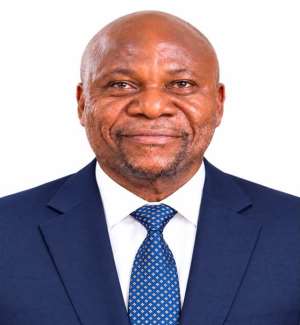
Jones N. Williams is a labor market specialist and domestic and public policy professional. He is a former head of the U.S. Bureau of Labor Statistics programs and labor market analysis in the State of Maryland. His professional background includes labor market information, employment statistics, workforce analysis, economic development, and public-sector administration.
He advocates evidence-based employment policies, institutional modernization, investment competitiveness, workforce development, and sustainable economic growth in Liberia and across Africa.

 Mahama changes galamsey approach, summons top officials and security chiefs
 This is only the beginning of my demand for accountability – Gumah after confron...
 'Your record stinks’ – Agalga fires back at Minority over cocaine debate
 GNFS to receive first batch of 40 new fire tenders by December – Muntaka
 Okaikwei North MCE suspends PA for one week after slapping Assembly staff member
 Let Ghanaians feel the economic change in their pockets and not on paper — Afeny...
 CLOGSAG demands police probe into alleged assault on Okaikwei North Assembly sta...
 Gov't pays GHS4.9 billion to DDEP bondholders, retires 44.1% of programme
 Gov't to build $300 million AI Compute Centre to strengthen technology capacity ...
 Ghanaian domestic workers hospitalised abroad to receive medical, evacuation sup...


