




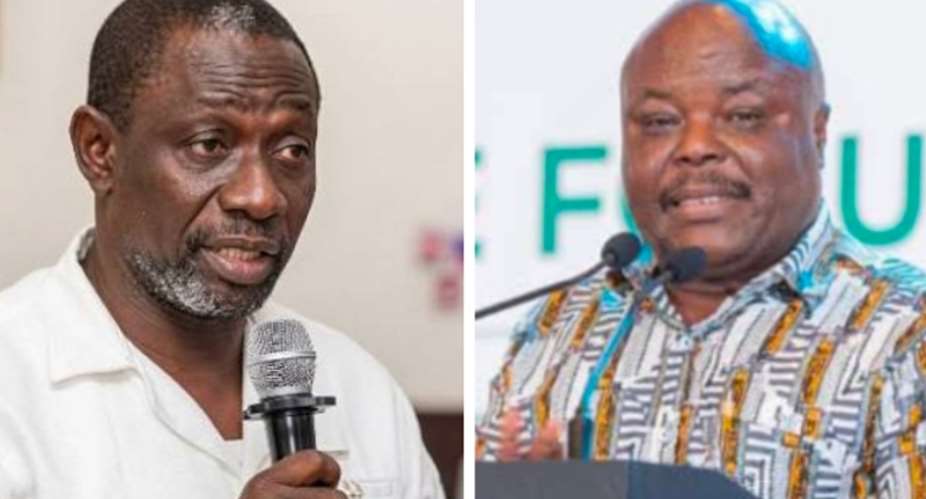
Former Minister for Public Enterprises and former Member of Parliament for Effia, Joseph Cudjoe, has cautioned that aggressive enforcement of Ghana's rent laws could discourage private investment in rental housing and worsen the country's housing shortage.
He said although protecting tenants from exploitative practices is necessary, enforcement measures must not create an unfavourable investment climate for landlords, property developers and other investors.
"By treating landlords, developers and investors as adversaries rather than capital providers, heavy-handed regulation threatens to choke off private investment and deepen Ghana’s acute housing deficit," he wrote in a social media post on Thursday, November 26.
Mr Cudjoe's comments come amid plans by Acting Rent Commissioner Frederick Opoku to deploy a 2,000-member task force, dubbed ‘Yellow Yellow’, across the country in the first quarter of 2027 to enforce rent regulations.
The planned enforcement exercise is expected to target landlords who flout provisions of the Rent Act, particularly those demanding excessive rent advances, with officers expected to visit residential properties and investigate suspected violations.
Mr Opoku has said the department intends to move from public education to active enforcement, with landlords suspected of breaching Section 25(5) of the Rent Act, 1963 (Act 220), being required to explain their conduct and potentially face prosecution.
The law currently restricts landlords from demanding more than six months' rent in advance for tenancies exceeding six months, while monthly tenancies or shorter agreements are subject to a one-month advance limit.
Mr Cudjoe, however, argued that the country's housing affordability challenge is rooted largely in structural constraints affecting the construction and rental market, including high land prices, expensive construction materials, commercial borrowing costs, land disputes and delays in obtaining development permits.
He said imposing rent restrictions without addressing those challenges could undermine the financial viability of rental housing projects and discourage investors from expanding the housing stock.
"Building in Ghana is expensive. Rising land prices, imported construction inputs, infrastructure deficits and steep commercial borrowing rates dictate the capital required to bring a unit to market," he stated.
The former Effia MP also cited delays at Metropolitan, Municipal and District Assemblies in granting building permits, recounting a rental housing project he assisted with at the Ga South Municipal Assembly that had allegedly remained in bureaucratic limbo for nearly six months despite having a valid land title.
He argued that the housing deficit, estimated at nearly two million units, requires policies that encourage investment and construction rather than measures that could deter property owners from putting their houses on the rental market.
He urged the Acting Rent Commissioner to consider the economic implications of the planned ‘Yellow Yellow’ enforcement strategy, noting that policies intended to protect tenants could inadvertently worsen the housing crisis if they discourage investment.


 Mike Ocquaye Jr questions Sam George, Ablakwa and Sammy Gyamfi’s silence on gala...
 COMAC urges NPA to sanction fuel stations selling below approved price floor
 November 26: Cedi sells at GHS12.55 on forex market, GHS11.86 on BoG interbank
 Aggressive rent law enforcement risks worsening housing shortage – Joseph Cudjoe
 Turn GH¢4.99trn MoMo data into credit for informal sector – BoG tells Credit Dat...
 BoG engages families of eight national icons featured on new Heritage Series ban...
 Traffitech records 13,699 traffic offences; GH¢4m in fines in first week – Munta...
 Ghana temporarily closes honorary consulates in Vancouver and Calgary
 DDEP buyback could leave bondholders worse off by GH¢536m – Dr Amin Adam
 Kpando NPP demands explanation over GH¢285,369 Kudzra Roundabout project funding


