




A Warm Response to Likem Hlordzi
Good afternoon, Likem Hlordzi, and thank you for reaching out with such a thoughtful inquiry. First, please accept my heartfelt condolences on the passing of your father, Kwawu. Across Anloland, when an elder transitions to the ancestral realm before passing down the oral scrolls of the family (tɔ-ƒome), it often leaves a quiet ache—yet your desire to trace your roots through his name is the very spirit that keeps our heritage alive.
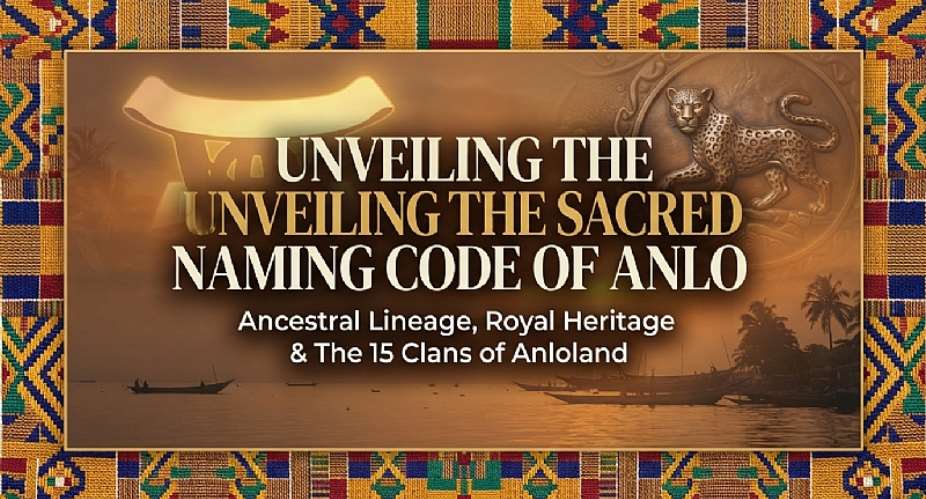
Your father’s name, Kwawu, is one of the unmistakable royal markers of the Adzovia clan—one of the two alternating royal dynasties that enstool the Awoamefia (Overlord of Anlo), tracing its direct lineage back to Togbi Sri I, the nephew of our founding patriarch, Dutɔ Ʋenya. In Anlo tradition, a name is never a random label; it is a spiritual birth certificate, a genealogical GPS, and a public declaration of your father’s clan. Inspired by your message, this special feature digs deeply into the Adzovia naming system and presents a comprehensive, structured guide to the naming traditions across all 15 sacred clans (hlɔwo) of Anlo to inform, educate, and reconnect Ghanaians at home and in the diaspora.
How the Anlo Clan Naming System Works
Unlike many societies where names are chosen purely for aesthetic sound or modern trends, indigenous Anlo naming (ŋkɔtsɔtsɔ) operates on strict ancestral principles:
- Patrilineal Inheritance (Tɔ-ƒome): Every indigenous Anlo child automatically inherits their father’s clan (hlɔ). Even when a child bears a day name (dzigbeŋkɔ such as Kofi or Ama) or a Christian name, their clan name (hlɔŋkɔ) establishes their true ancestral identity and marriage eligibility (as Anlo clans practice strict exogamy—you do not marry within your own clan).
- Paternal Birth-Order Sequencing: In many Anlo clans, clan names follow a strict paternal birth order. Historically, in polygamous households, children were named according to their sequential order under the father—not the individual mother—ensuring that every sibling’s place in the lineage was permanently recorded.
- Spiritual & Totemic Alignment: Clan names are tied to ancestral shrines (trɔwo), founding ancestors, and clan totems (hlɔ-vɔwo). Mentioning a person’s authentic clan name in Anloga, Keta, Anyako, or Woe immediately tells elders which clan you hail from, which taboos you observe, and which military wing (Avalorgo) your ancestors defended.
- Priority of Ritual & Circumstantial Names: While clan names anchor lineage, special birth circumstances—such as being born at night (Zanu / Zasi), during rain (Tsigbe), on a market day (Asinu), or after previous infant losses (Ati, Ekpe, Modzaka)—can be paired alongside or take ceremonial precedence over standard names.
Deep Dive: The Royal Naming System of the Adzovia Clan
As a proud descendant of Kwawu, you belong to the Adzoviawo, custodians of the Royal Sword (Fiayi), symbolized by the Leopard/Lion, and anchored in the Adotri (Center Wing) of the Anlo military.
- Core Male Clan Names (Adzovia Ŋutsuŋkɔwo):
- Sri: The premier royal ancestral name honoring Togbi Sri I, the first Awoamefia of Anlo.
- Kwawu: A classic, distinguished Adzovia male clan name carried by elders and royal descendants—your late father’s own ancestral badge.
- Agor: A traditional Adzovia male name signifying leadership, gathering, and royal presence.
- Nyaho: A prominent royal lineage name closely associated with Adzovia statesmen and elders.
- Zewu / Atsia / Nditsi / Zanyedo: Historic royal stool names borne by past Adzovia rulers and lineage heads.
- Core Female Clan Names (Adzovia Nyɔnuŋkɔwo):
- Abui: Traditionally bestowed upon the second daughter in the Adzovia lineage (a naming pattern shared with select sister clans).
- Zewu: Used across royal households as a revered ancestral marker.
- Shiame: A classic female Adzovia name rooted in royal household traditions.
- Epiphania / Akpene / Dzifa (Paired Royal Usage): Often paired with ancestral Adzovia markers in modern naming ceremonies.
- What This Means for You (Likem): When naming your own children or future grandchildren in the Adzovia line, giving them a foundational clan name like Sri, Kwawu, Agor, or Nyaho (for sons) or Abui, Zewu, or Shiame (for daughters) ensures the unbroken chain from Togbi Sri I through your father Kwawu lives on.
Comprehensive Directory: Traditional Names Across All 15 Anlo Clans
To educate every Ghanaian on the richness of Anlo heritage, below is the complete breakdown of the 15 sacred Anlo clans (hlɔwo), their core totems, military wings, and signature traditional clan names:
1. Laƒe Clan (Laƒeawo)
- Role & Totem: Foundational clan, kingmakers, and libation pourers; symbolized by the Monitor Lizard (Eve), Antelope (Se), and Sparrow (Atsutsrɔe).
- Military Wing: Adotri (Center Wing).
- Male Clan Names: Fui, Tsatsu, Tsidi, Letsa, Tui.
- Female Clan Names: Kokui, Abui, Dzoe, Sa, Kuya.
2. through 15. The Remaining Anlo Clans (Amlade, Adzovia, Bate, Like, Bamee, Tovi, Klevi, Ɣetsofe, Agave, Tsiame, Amɛ, Dzevi, Ʋifeme, and Blu)
- Overview: Each of the remaining 14 clans fulfills a distinct socio-political, spiritual, or military role within the Anlo state, anchored by specific totems (such as the Leopard, Lion, Monitor Lizard, Dog, Salt formations, or celestial bodies) and assigned to one of the three historic military wings—Adotri (Center), Lashibi (Left), or Woe (Right).
- Naming Traditions: Similar to the Laƒe and Adzovia clans, each lineage preserves traditional male and female names—such as Dunyo, Sri, Togbi, Akolotse, Bame, Kponor, Klevi, Ɣetso, Agave, Tsiame, Ame, Dzevi, Feme, and Blu—alongside birth-order indicators like Tsatsu (second son), Tete (first son), or Abui (second daughter).
- Reference Note: A comprehensive, itemized directory of the specific male and female names, roles, and totems for all 15 clans can be explored directly in the referenced source material.
Strategic Recommendations & Practical Suggestions for Families and Policymakers
To prevent our oral history from fading when elders pass on—just as Likem Hlordzi experienced—urgent, practical steps are needed at both the family and institutional levels:
- For Anlo Families & Young Parents (Practical Action):
- Always Include a Clan Name (Hlɔŋkɔ): When registering a child’s birth in Ghana or abroad, include at least one authentic paternal clan name alongside day or faith names so the child’s tɔ-ƒome remains permanently documented.
- Record Oral Family Trees Early: Sit with paternal uncles (tɔgãwo / tɔɖiawo) and aunts (tasiwo) during family gatherings or Hogbetsotso homecomings to write down your lineage head, ancestral home (afedo), and clan taboos before elders pass away.
- For Traditional Authorities & The Anlo Traditional Council:
- Publish an Official Standardized Clan Naming Primer: Collaborating with linguists and clan heads (Tornuwo) to publish an authoritative handbook on the 15 clans’ birth-order names and taboos will eliminate confusion among youth in urban centers and the diaspora.
- Establish a Digital Heritage Archive at Anloga: Creating an accessible online registry during the annual Hogbetsotso Festival will allow descendants worldwide to verify their clan lineage using their paternal surnames.
- For Ghana’s Educational & Cultural Institutions:
- Integrate Indigenous Naming Systems into Social Studies: The Ghana Education Service (GES) and the National Commission on Culture should incorporate indigenous Ghanaian clan structures—including the Anlo hlɔwo, Akan Abusua, and Ga-Adangbe Wei—into basic school curricula to foster cultural literacy and national unity.
Conclusion
- A Name Is Never Just a Word: Across the 15 sacred clans of Anlo, every traditional name is a living covenant connecting the newborn to ancestral wisdom, moral discipline, and historical duty.
- Honoring Kwawu’s Legacy: For Likem Hlordzi and thousands of Ghanaians seeking to reconnect with their paternal roots, discovering the meaning behind names like Kwawu transforms grief into cultural pride and continuity.
- Preserving the Soul of Ghana: When we deliberately pass down our clan names, respect our totems, and document our family histories, we ensure that the spirit of Ʋenyame remains unbreakable for generations yet unborn.
Join the Conversation on Modern Ghana: Are you from the Adzovia clan or one of the other 14 sacred clans of Anlo? Share your clan name, your paternal hometown, and the ancestral names carried in your family in the comments section below so we can continue educating and inspiring one another! 🇬🇭✨
✍️ By Atitso Akpalu
(In loving tribute to all Anlo elders and the memory of Papa Kwawu of the Adzovia Clan) [email protected]


 Give us 10% of ‘ghost names’ monies to expand farms, build hostels — National Se...
 If your husband enters my DM, I will follow him – Woman warns
 Education Minister defends early BECE ban, says 'someone cooks the continuous as...
 Ghana seeks investors for gold refining, jewellery manufacturing from 2027 – Sam...
 Here are key management positions open for recruitment at Women's Development Ba...
 See the new monthly transaction limits for MTN MoMo customers
 Supreme Court rejects Asamoah's bid to testify after other witnesses in SkyTrain...
 Kessben's family bans bloggers, content creators from funeral coverage
 'We are quite impressed with how Dr. Ato Forson is doing well with Ghana's econo...
 Witness details how GH¢30.7m NSA hire-purchase funds were diverted to Gifty Owar...


