




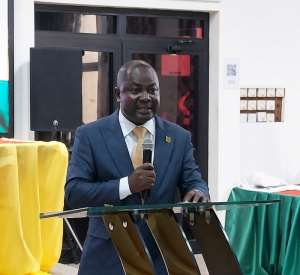
Ghana and the rest of Africa will not reach universal health coverage (UHC) by 2030 unless evidence-based traditional medicine moves to the centre of health policy, Prof Isaac Kingsley Amponsah has said.
Prof Amponsah, Head of the Department of Pharmacognosy at the Faculty of Pharmacy and Pharmaceutical Sciences, Kwame Nkrumah University of Science and Technology (KNUST), made the point in an address at the 24th African Traditional Medicine Day and 27th Traditional Medicine Week of Ghana. The theme was “Reflection on research and development efforts of traditional medicine towards achieving universal health coverage in the African Region.”
He began by speaking up for the healers. For millions of Ghanaians, the traditional practitioner is still the first stop and sometimes the only one. “Long before there was a hospital in our towns and villages, there were healers,” he said. “For centuries, they were not merely a part of our health system. They were our health system.”
Why traditional medicine cannot be left out
The World Health Organization (WHO) describes UHC as all people getting the quality health services they need, when and where they need them, without financial hardship. Prof Amponsah said Africa cannot get there without traditional medicine. No country on the continent can train and post enough conventional health workers to reach every community by 2030, he said, but traditional medicine is already in those communities. It helps in managing chronic diseases and may offer leads for new medicines against emerging health threats.
“Universal health coverage in Africa cannot be achieved without traditional medicine,” he said. “But it can only be achieved with traditional medicine that is safe, of good quality, effective, and backed by evidence.”
The funding problem
Citing WHO, he said less than 1% of global health research funding goes to traditional medicine. “We are asking traditional medicine to carry the health of the majority while giving it almost none of the research investment,” he said. “Integration without evidence is not integration; it is a gamble with people’s lives.”
Evidence, he explained, opens doors. It gets a product onto the essential medicines list, wins the confidence of doctors and pharmacists, attracts insurance cover and access to markets at home and abroad. It also protects honest practitioners from regulatory uncertainty.
He praised Ghana as the continent’s leader in traditional medicine development, a source of national pride, but named the problems that remain: weak standardisation, limited pre-clinical validation, too few clinical trials, little shelf-life data for many herbal products, and the continued registration of medicines as food supplements.
A to-do list for Ghana and Africa.
He then set out his agenda. African governments should set up dedicated funds for traditional medicine research, starting with malaria, hypertension, diabetes, sickle cell disease and wound care. National monographs and pharmacopoeial standards should be completed and enforced, and harmonised across ECOWAS and the African Union. Medicines should no longer be registered as food supplements. National Health Insurance should cover every herbal medicine on the Recommended Herbal Medicines List that meets evidence and quality standards. Medicinal plants must also be protected from environmental damage, including illegal mining.
He had a message for each group in the room. Government should budget for traditional medicine as a core part of the health system. Universities should work with practitioners to produce evidence that policy can use. Practitioners should open their work to scientific scrutiny. Industry should compete on quality, not on unproven claims. Development partners should fund African-led research, the media should inform the public responsibly, and citizens should insist on registered, quality-assured products.
A day to look forward to.
Prof Amponsah ended on a hopeful note. He pictured a day when practitioners are trained and registered, their medicines proven in laboratories and clinics, and their services paid for by health insurance. “On that day, universal health coverage will mean what it says: everyone, everywhere, with no one left behind,” he said.
Those present included the Deputy Minister of Health, Hon. Prof. Dr. Grace Ayensu-Danquah, representatives of the WHO and the West African Health Organisation, the Traditional Medicine Practice Council, GHAFTRAM, herbalist associations, industry leaders and the media.
His message was plain: celebration has to turn into commitment. Without steady investment in research, firm quality standards and a place in the formal health system for proven medicines, universal health coverage will stay out of reach for millions of Ghanaians.
 Police deaths in line of duty drop by 55% in 2026 – Mahama
 Govt raises $240million from 5G spectrum sale
 November 25: Cedi sells at GHS12.55 on forex market, GHS11.86 on BoG interbank
 Brigadier General In court over GH¢740,000 recruitment scam
 Wife found guilty of murdering forestry professor husband in US
 Two arrested as police disperse Suame Magazine shop-locking protest
 Education Ministry to introduce criteria for early BECE registration by gifted p...
 Health capital expenditure jumps from GH¢700m to over GH¢9bn in 2027 budget – Mi...
 GRA locks 48 mobile phone shops at Circle over mass tax breaches
 Akufo-Addo’s NPP govt borrowed heavily to run the economy – Deputy Finance Minis...


