




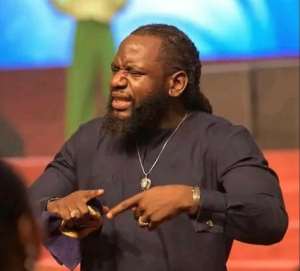
The Jimi Odukoya controversy has reopened an uncomfortable debate about spiritual succession, family inheritance and institutional accountability in Nigeria’s religious institutions. Across Nigeria’s bustling religious landscape, a recurring crisis threatens the unity and stability of many churches whenever their founders die. From historic denominations to contemporary Pentecostal ministries, leadership transitions have frequently exposed disagreements over who has the authority to inherit, manage and determine the future of religious institutions built around charismatic founders.
At the centre of these disagreements is a question Nigerian Christianity can no longer afford to avoid: “Who truly owns the church, the founder’s family, the congregation or the institution established to advance a spiritual mission?” This question goes beyond the appointment of a new General Overseer. It touches on the relationship between spiritual authority and corporate governance, the rights of congregations, the responsibilities of trustees and the temptation to treat religious institutions as family inheritances. The controversy surrounding Pastor Jimmy Odukoya and The Fountain of Life Church in Lagos has brought this debate into sharp focus.
To understand the recurring succession crisis, it is important to examine the historical development of indigenous Christianity in Nigeria. During the early twentieth century, the emergence of African Independent Churches and the Aladura movement represented a significant departure from established European missionary structures. Religious pioneers and revivalists, including Joseph Ayo Babalola, Josiah Olunowo Oshitelu and Moses Orimolade, helped shape indigenous expressions of Christianity that emphasized prayer, spiritual authority, prophetic leadership and African religious experiences.
Unlike many mission churches, which operated through synods, dioceses and other collective governance structures, several emerging indigenous ministries developed around the spiritual influence and personal leadership of their founders. The founders supplied the vision, mobilized followers, attracted resources and often endured considerable personal sacrifices to establish their ministries. In many cases, their families participated in the struggles and responsibilities associated with building the churches. Over time, this founder-centred model created a perception in some religious circles that the founder's family should naturally retain control of the institution after his or her death. Although such an expectation may be understandable from the perspective of family sacrifice and continuity, it raises a fundamental question: “Does founding a church automatically confer hereditary rights over its leadership and assets?”
The rapid expansion of Pentecostal Christianity from the 1970s onwards introduced another dimension to the debate. Many Nigerian ministries that began as small prayer groups have developed into large religious institutions with extensive property portfolios, universities, schools, broadcasting platforms, hospitals and other commercial and social investments. Some command substantial financial resources generated through congregational offerings, donations and partnerships. This expansion has transformed the church from a relatively small religious gathering into an institution with significant economic and social influence.
Under Nigeria's Companies and Allied Matters Act, religious associations can be registered as incorporated trustees. This legal arrangement provides an institutional framework through which their assets are held and administered for their stated objectives. The implication is important: the founder does not automatically acquire personal ownership of the church's assets simply because he established the ministry. Equally, individual congregants do not become personal owners of those assets merely because they contribute financially. The trustees and governing organs are expected to administer the institution in accordance with its constitution, applicable law and charitable or religious objectives.
However, the challenge in many founder-led churches is that formal governance structures sometimes exist more on paper than in practice. The spiritual authority of the founder can become so dominant that the board of trustees, elders and other institutional structures struggle to exercise independent oversight. In some instances, family members and trusted associates occupy influential positions, creating an arrangement in which biological relationships, spiritual authority and institutional administration become difficult to separate. When the founder dies, the resulting power vacuum can expose weaknesses that had remained hidden for years.
Against the foregoing backdrop, the unfolding controversy at The Fountain of Life Church provides a compelling contemporary illustration of the complexity of church succession. The church was founded in 1992 by Pastors Taiwo and Bimbo Odukoya. Following the death of Pastor Taiwo Odukoya in August 2023, his son, Pastor Jimmy Odukoya, was appointed Senior Pastor in September of that year. His sister, Pastor Tolu Odukoya-Ijogun, also assumed the position of Associate Senior Pastor. At the time, the succession appeared to provide a measure of continuity for a ministry that had lost its founding patriarch.
However, the arrangement has since come under serious challenge. In November 2026, a group identifying itself as members of the church's Board of Trustees announced that Jimmy Odukoya was no longer recognized as Senior Pastor. The group alleged that a video recorded by the late founder in December 2021 contained instructions identifying another person, Pastor Kunle Areogun, as his preferred successor. According to the trustees, Jimmy was designated in the recording to serve as Areogun'sadministrative assistant and head of the youth church. They further alleged that the recording was not presented when the board considered Jimmy's appointment in 2023.
The controversy took another dimension when Jimmy acknowledged that he had retained the recording despite his father's subsequent instruction to delete it after a successful medical procedure. He described his decision to keep it as a grave mistake. The development raises troubling questions about transparency, disclosure and the circumstances surrounding the original succession arrangement. More importantly, it challenges the assumption that a founder's child should automatically succeed him, even where the founder may have expressed a different preference.
Jimmy and the church have rejected the trustees' purported removal decision, maintaining that his appointment was unanimously approved in September 2023 and that the announcement was not supported by a constitutionally valid decision. The disagreement has therefore developed into a contest over the authority of the Board of Trustees, the interpretation of the church's constitution and the weight to be attached to the late founder's recorded instructions. The trustees have also raised objections concerning Jimmy's remarriage and its public blessing, arguing that it conflicts with the church's teachings and leadership standards. These claims have introduced a separate theological and moral dimension into an already complicated governance dispute.
Nevertheless, the central institutional question remains: Should the wishes of a deceased founder, the provisions of a church constitution or the decision of its legally recognized governing organs determine who leads the ministry? The controversy is particularly instructive because it demonstrates that church succession is not necessarily a straightforward contest between a founder's family and an established congregation. It can also involve disagreements between the founder's wishes, family members, trustees and the broader institutional leadership. The danger is that when these interests collide, ordinary worshippers who have invested their faith, resources and years of commitment in the ministry may become spectators in a dispute over an institution they helped build.
The arguments surrounding church succession generally reflect two competing perspectives. The first is the familial or patrimonial argument. Those who support family succession often contend that the founder's household deserves a special place in determining the future of the ministry. They argue that family members shared the founder's sacrifices, endured financial difficulties, suffered public criticism and supported the vision when the church had little or no institutional recognition. From this perspective, appointing a family member provides continuity and protects the founder's legacy from individuals who may lack the emotional attachment and understanding required to sustain the original vision. There is some merit in recognizing the contributions of founding families. However, appreciation for their sacrifices should not automatically translate into hereditary ownership or an unquestionable right to spiritual leadership.
The second perspective is the congregational or institutional argument. Those who subscribe to this position maintain that a church is a spiritual community whose existence extends beyond the personality and biological family of its founder. They argue that congregational members contribute financially, spiritually and physically to the growth of the ministry. Their offerings, volunteer services, prayers and commitment help transform a founder's vision into a functioning institution. Consequently, they believe that the church should not be treated as a private estate that can be transferred from one generation to another without regard to its constitution, governance structures and institutional interests. This argument also has considerable merit. Nevertheless, congregational participation must operate within established constitutional procedures rather than become an excuse for arbitrary decisions or factional control.
Without a doubt, Nigeria's religious landscape has witnessed several leadership disagreements following the deaths of prominent church founders. The experiences of ministries associated with Archbishop Benson Idahosa and Prophet T.B. Joshua, among others, have drawn public attention to the difficulties of preserving institutional unity after the departure of charismatic founders. Such disputes demonstrate that a ministry can enjoy remarkable growth during its founder's lifetime and still struggle to establish a credible succession arrangement. The underlying problem is often the failure to distinguish between the founder's personal spiritual authority and the institutional structures required to sustain the ministry after his or her death. A founder may possess the charisma to attract thousands of worshippers, but charisma alone cannot guarantee orderly succession. Similarly, a family member may possess genuine spiritual gifts, administrative competence and the necessary experience to lead the ministry. However, those qualities should be assessed through credible institutional procedures rather than assumed from biological relationship.
The church must therefore recognize that succession is not merely about identifying somebody to occupy the founder's pulpit. It is about preserving the institution's spiritual mission, financial integrity, organizational stability and public credibility. The recurring succession disputes suggest that Nigerian churches need to rethink how they prepare for leadership transitions.
First, every sizeable ministry should have a clearly defined succession policy embedded in its constitution. Such a policy should establish the process for selecting a successor, the powers of the trustees, the responsibilities of the governing board and the mechanism for resolving disagreements. Second, churches should strengthen the independence and accountability of their boards of trustees. Trustees must understand that their responsibility is to protect the institution and its objectives, not simply to defend the preferences of a founder, family or powerful church faction. Third, founding families should be treated with dignity and fairness. Their welfare, contributions and legitimate interests deserve consideration, but these should not be confused with ownership of the church's assets or an automatic entitlement to leadership. Fourth, congregations should be given appropriate opportunities to participate in institutional governance, particularly where the church's constitution provides for such participation. Members should not be reduced to financial contributors whose only responsibility is to pay tithes and offerings while decisions affecting the institution are made behind closed doors. Finally, churches must embrace transparency in financial administration, property management and leadership appointments. These are not secular distractions from spirituality; they are essential safeguards against abuse, mistrust and institutional collapse.
Ultimately, the Nigerian church must confront an uncomfortable truth: A ministry that cannot survive the death or departure of its founder has not sufficiently developed the institutional structures required for long-term sustainability. A founder deserves honour for the vision, sacrifices and labour that established a ministry. His or her family deserves consideration for the sacrifices it made along the journey. Congregational members deserve respect for their contributions and commitment. Trustees deserve recognition for their responsibilities as custodians of the institution. But none of these interests should be allowed to override the constitution, the law and the spiritual mission of the church.
The Jimi Odukoya controversy should therefore be more than another episode of religious leadership disagreement attracting public attention. It should serve as an opportunity for Nigerian churches to examine the assumptions, practices and governance weaknesses that make succession a recurring source of division. The question is not whether a founder's son, daughter, spouse or trusted associate can become the next leader. Any of them may be qualified. The real question is whether the appointment is legitimate, transparent and consistent with the institution's governing framework. A church is not a family inheritance, nor is it the private possession of its most influential congregants. It is an institution established to serve a spiritual mission, and those entrusted with its leadership and administration must remain accountable to that mission. The founder may establish the church, the family may nurture its vision and the congregation may sustain its growth, but none should mistake
stewardship for ownership. Until Nigerian churches internalize this distinction, the struggle over who inherits the pulpit, controls the assets and determines the future of religious institutions will continue to threaten the very unity their founders laboured to build.


 Education Minister defends early BECE ban, says 'someone cooks the continuous as...
 Ghana seeks investors for gold refining, jewellery manufacturing from 2027 – Sam...
 Fight against corruption requires change in attitudes towards ill-gotten wealth ...
 Here are key management positions open for recruitment at Women's Development Ba...
 See the new monthly transaction limits for MTN MoMo customers
 Supreme Court rejects Asamoah's bid to testify after other witnesses in SkyTrain...
 Kessben's family bans bloggers, content creators from funeral coverage
 'We are quite impressed with how Dr. Ato Forson is doing well with Ghana's econo...
 Witness details how GH¢30.7m NSA hire-purchase funds were diverted to Gifty Owar...
 Police deaths in line of duty drop by 55% in 2026 – Mahama


