




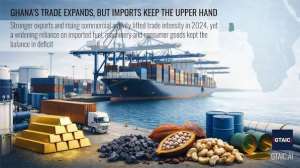
Ghana recorded a GH¢148.3 billion surplus in goods trade in 2025, yet it spent about GH¢36.5 billion importing food products, including rice and frozen chicken. Both figures tell part of the same story. Gold earns Ghana substantial foreign exchange, while the country still relies on overseas suppliers for goods that local farms and factories could produce in greater quantities.
The Ghana Statistical Service reports that gold bullion accounted for 62.9 percent of merchandise export earnings in 2025. The five leading exports together made up nearly 84 percent. After adjusting for price changes, the goods trade surplus became a GH¢3.4 billion deficit, largely because high gold prices had boosted the value of exports. A good year for gold can therefore lift the trade balance even when the range of goods Ghana sells abroad remains narrow.
That concentration has consequences for jobs. When Ghana sells cocoa beans with little processing, much of the work involved in making, packaging and marketing finished products happens elsewhere. A stronger domestic cocoa industry could create work for machine operators, food technologists, packaging suppliers and distributors. Grinding more beans locally would be a start. The bigger opportunity is to help Ghanaian businesses turn cocoa into products they can sell under their own brands.
The import side of the equation affects household budgets. Annual inflation fell from 23.8 percent in December 2024 to 5.5 percent in October 2026. That slowdown matters, but Ghana remains exposed to changes in world prices and the exchange rate. When refined fuel becomes costlier to import, farmers, traders and manufacturers can pay more to move their goods. When the cedi weakens, a shipment of rice can cost more in local currency even if the overseas supplier charges the same price.
The 2027 budget proposes US$1.5 billion for domestic minerals processing, targets 50 percent local cocoa processing by 2028 and sets 2030 as the deadline for ending commercial rice imports. Rice is a practical test of whether those ambitions can translate into results. Farmers need reliable buyers, millers need steady supplies of paddy and affordable credit, and retailers need consistent quality and year-round deliveries. If import restrictions move faster than local supply, households could face higher prices.
Gold earnings and lower inflation give Ghana room to invest in reliable power, storage and affordable industrial finance. The gains will show up in factories that can keep operating, in farmers who can sell reliably to local processors, and in shops that can stock Ghanaian products at prices households can afford.


 Education Ministry to introduce criteria for early BECE registration by gifted p...
 Health capital expenditure jumps from GH¢700m to over GH¢9bn in 2027 budget – Mi...
 GRA locks 48 mobile phone shops at Circle over mass tax breaches
 Veteran Nollywood Actor Pete Edochie dies at 79
 Lydia Forson explains why she rejected interview request from Delay
 COKA backs Zanetor’s call for national register of convicted rapists
 Mahama will fulfil all infrastructure promises – Deputy Finance Minister assures
 Akufo-Addo’s NPP govt borrowed heavily to run the economy – Deputy Finance Minis...
 New York jury convicts Huawei of stealing trade secrets


