




America, China, Russia and the Question of African Sovereignty
The next partition of Africa may not require European-style colonial occupation or the drawing of new boundaries. Through strategic mineral agreements, military partnerships, infrastructure financing, debt arrangements and geopolitical alliances, the continent could once again find its future determined by powerful external interests. Are African leaders prepared to prevent history from repeating itself?
There is something profoundly disturbing about Africa's position in the emerging international order. A continent endowed with enormous natural resources, a youthful population, vast agricultural potential and considerable strategic importance appears increasingly vulnerable to the competing ambitions of powerful nations.
America, China and Russia are pursuing different interests in Africa. Their methods differ, their geopolitical objectives are not identical, and they are certainly not acting in concert. Yet, their growing competition for strategic resources, military influence, markets and political alliances raises an uncomfortable question: Is Africa gradually becoming the theatre for another scramble for the continent?
Where is the African Union (AU)?
Are our leaders sufficiently conscious of the implications of these developments? Do they appreciate that the international order is changing in ways that could fundamentally affect Africa's economic and political independence? Or are we simply going to watch as powerful countries negotiate arrangements that could determine the future of our continent for generations?
I recently read a thought-provoking contribution by Yaw Nsarkoh titled “Are We All Capitalists Now? And What Does That Actually Mean?” His engagement with the ideas of Samir Amin, Giovanni Arrighi, André Gunder Frank, Karl Polanyi, Amartya Sen, Mariana Mazzucato and African thinkers such as Claude Ake and Thandika Mkandawire raises important questions about capitalism, markets, state power, imperialism and economic sovereignty.
I find his argument particularly relevant to Africa because it challenges us to look beyond ideological labels and examine who actually controls the economic process, whose interests it serves and what kind of society it helps to build. I would like to extend that argument to the changing geopolitical circumstances confronting Africa. My concern is that, while the rest of the world is repositioning itself to protect and advance its strategic interests, Africa appears insufficiently prepared to defend its own. Are we witnessing the emergence of a new scramble for Africa, and, more importantly, are we prepared to prevent another partition of our continent, whether territorial, economic or strategic?
From the Berlin Conference to the New Scramble
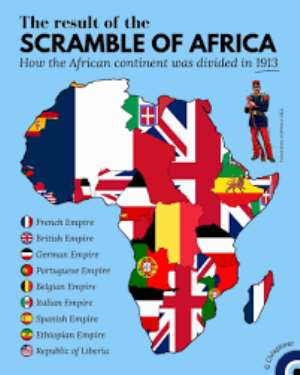
To appreciate the seriousness of this question, we must revisit history. Between November 1884 and February 1885, representatives of European powers met in Berlin under the chairmanship of German Chancellor Otto von Bismarck. The conference established rules for European claims and occupation in Africa.
Africans were not meaningfully represented in the negotiations. Their territories, political institutions, resources and futures were discussed by foreign powers as though the continent were an unoccupied piece of property.
The consequences were devastating. European powers subsequently consolidated colonial territories, imposed artificial boundaries, disrupted existing political and economic systems and reorganized African economies to serve the interests of their colonial administrations and industries. The colonial enterprise was not simply about acquiring territory. It was about controlling resources, labour, markets and strategic routes.
Today, we are living in a different historical period. Most African countries are politically independent, have internationally recognized boundaries and belong to the United Nations and the African Union. Nobody should casually suggest that a second Berlin Conference is taking place without evidence. Nevertheless, the methods through which external powers exercise influence have evolved.
Territorial occupation is no longer the only instrument of domination. Economic dependency, control of strategic resources, debt arrangements, military agreements, technological dependence and political influence can achieve outcomes that resemble aspects of colonial domination without formally abolishing national sovereignty. A country may retain its flag, anthem, president and seat at the United Nations while having very limited control over the economic decisions that determine its future. That is the danger we must recognize. A new scramble need not involve the physical division of Africa into colonial territories. It could involve the gradual establishment of competing economic, military and strategic spheres of influence.
America: Strategic Interests and the Competition for Resources
The USA has increasingly viewed Africa through the prism of its competition with China and, in certain areas, Russia. Washington is particularly interested in critical minerals, energy resources, infrastructure, military cooperation, telecommunications and diplomatic influence.
Consider the Democratic Republic of Congo (DRC), Zambia and Angola. These countries occupy an important position in the global supply chains for copper, cobalt and other minerals required for electric vehicles, batteries, renewable energy technologies, electronics and defense industries. The Lobito Corridor, which links mineral-producing areas of the DRC and Zambia to Angola's Atlantic coast, is an important example of this emerging competition.
The USA and the European Union have supported the development of this corridor, presenting it as an infrastructure and trade initiative that can promote regional economic development while strengthening critical mineral supply chains. A December 2025 joint declaration by the USA and European Commission explicitly identified the corridor as important for securing mineral supply chains and increasing investment.
In September 2026, the US Trade and Development Agency announced further support for electricity infrastructure along the corridor, describing the project as important to diversifying America's critical mineral supply chains. These investments may bring genuine benefits to African countries. Improved electricity, railway infrastructure and regional connectivity are important development requirements.
But we must ask some fundamental questions:
- Will the corridor principally facilitate the transportation of raw materials to overseas markets, or will it also encourage mineral processing, manufacturing, technology transfer and industrial development within Africa?
- Will African countries acquire the capacity to manufacture batteries, electrical components and other products from their own resources?
- Will local communities enjoy meaningful employment and improved living conditions?
China: Development Partner or Emerging Economic Power?
China's engagement with Africa is considerably more extensive and has developed over several decades. Through the Forum on China-Africa Cooperation (FOCAC), established in 2000, Beijing has built a structured relationship with African governments. Chinese companies have participated in railway construction, road development, telecommunications, mining, energy projects, manufacturing and other infrastructure initiatives. China has also provided African countries with an alternative source of financing and investment at a time when Western institutions have sometimes imposed conditions that African governments consider restrictive. It would be unfair to dismiss China's contribution to African infrastructure development. However, we must avoid another mistake: romanticizing China.
China is not investing in Africa simply out of goodwill. It has its own industrial, commercial, diplomatic and geopolitical interests. It needs raw materials, energy, markets and access to strategic supply chains. It also wants diplomatic support and influence in international institutions. The question is not whether China has interests in Africa. Every serious international partner has interests. The question is whether African governments are negotiating arrangements that serve the long-term interests of their populations.
We should be examining the terms of mining concessions, the employment of local workers, environmental standards, technology transfer, debt obligations, local manufacturing and the distribution of economic returns. A country that exports billions of dollars' worth of minerals but imports most of the manufactured products derived from those minerals has not fully benefited from its natural endowment. This applies whether the investor is Chinese, American, European or African.
The United States Congressional Research Service, in its August 2026 assessment of China-Sub-Saharan Africa relations, identifies the growing importance of Chinese influence in critical minerals, digital infrastructure, military cooperation and diplomacy. It also discusses concerns surrounding debt sustainability, labour practices and environmental protection. The document is revealing because it demonstrates that Washington's engagement with Africa is inseparable from its wider assessment of China's global position. Africa must understand that it is not merely attracting investment. It is becoming increasingly important to the strategic calculations of major powers.
Russia: Challenging Western Dominance does not Necessarily Mean African Liberation
Russia presents a somewhat different case. Its influence has expanded particularly in parts of the Sahel and Central Africa, where several governments have become increasingly uncomfortable with traditional Western military and political relationships. Following the withdrawal or reduction of French military presence in countries such as Mali, Burkina Faso and Niger, Russia has sought to strengthen its security partnerships. The Wagner Group and its successor arrangements, including the Africa Corps, have become important instruments of Russian engagement. Russia's interests include arms sales, military cooperation, access to natural resources, diplomatic alliances and strategic positioning. For some African governments, Russia represents an alternative to Western influence. It offers military assistance without necessarily demanding the same political conditions associated with Western partnerships.
But here again, we must exercise intellectual honesty:
- Is replacing French influence with Russian influence necessarily a demonstration of African sovereignty?
- Does expelling Western military personnel automatically improve the security and economic circumstances of ordinary citizens?
- Does entering into mineral agreements with Russian companies necessarily deliver better outcomes than agreements with Western companies?
These questions deserve serious examination. There is an important distinction between challenging Western geopolitical dominance and transforming the economic and political structures through which external powers exercise influence. Vladimir Putin may be a disruptor of aspects of the Western-led international order. That does not make him an African liberator, a socialist revolutionary or an opponent of all forms of imperial influence. Similarly, Xi Jinping's challenge to American predominance does not automatically make China an instrument of African emancipation. We must resist the temptation to interpret every challenge to Western power as a victory for Africa. Our objective should not be to replace one external master with another. It should be to eliminate the conditions that make external domination possible.
Is this Another Scramble for Africa?
An Al Jazeera report published on November 23, 2026, titled “How the US, China and Russia are competing for Africa's Mineral Wealth”, brings the matter into sharp focus. It examines the growing competition among the three powers for African minerals, particularly in the DRC, Mali and Niger. The report illustrates how Africa's natural resources have become increasingly important to the strategic calculations of Washington, Beijing and Moscow. But I would argue that minerals are only one dimension of the emerging contest. The competition extends to ports, railways, military facilities, telecommunications, energy infrastructure, agricultural resources, digital networks and political alliances.
It also includes control over the technologies that will determine the future of the global economy. Consider artificial intelligence. The countries that control advanced computing infrastructure, semiconductor supply chains, data networks and critical technological platforms will enjoy considerable economic and geopolitical advantages. Africa has a huge potential market, a young population and substantial mineral resources required by the digital economy. Yet, we remain heavily dependent on technologies developed and controlled elsewhere. We risk becoming suppliers of the raw materials, consumers of finished products and hosts of infrastructure whose strategic direction is determined outside the continent. This is not necessarily the result of a deliberate conspiracy against Africa. It is also the consequence of our failure to develop the productive, scientific and institutional capacities required to participate effectively in the global economy. Nevertheless, the outcome could be economically similar to some of the dependencies associated with colonialism.
The African Union: Where Are We?
This brings me to what I consider the most troubling aspect of the discussion. Where is the African Union while these developments are taking place? Are our continental leaders meeting to develop a common strategy for dealing with America, China and Russia? Do we have a common position on the exploitation of strategic minerals? What is our position on foreign military bases and security agreements? Are we coordinating our negotiations on critical infrastructure, telecommunications and energy? Are we discussing how to prevent African countries from entering into agreements that may undermine the collective economic and security interests of the continent?
To be fair, the AU is not entirely inactive. It has Agenda 2063, the African Continental Free Trade Area (AfCFTA), the African Peace and Security Architecture and other initiatives designed to advance continental integration. There are also some encouraging recent developments. In February 2026, the AU Assembly adopted Decision 967, directing the African Union Commission Chairperson to initiate the development of a common African foreign policy framework.
The framework is intended to strengthen Africa's agency in international relations and promote common positions rooted in Pan-Africanism, solidarity, shared prosperity and collective security. Five senior foreign policy experts, one from each African region, were to be nominated to develop the draft for consideration at the AU's January 2027 summit. This is an important development. An Institute for Security Studies analysis published on June 26, 2026, examined the initiative and observed that Africa's principal difficulty is not simply external pressure but the divisions among its own member states. That observation deserves attention.
How can Africa speak with one voice when individual governments frequently pursue separate and sometimes conflicting foreign policy interests? How can we negotiate collectively with powerful countries when our governments are unwilling to coordinate their positions? The problem is not that African countries have no right to pursue bilateral relationships. They do. The problem is that bilateral relationships should not undermine the continent's collective interests. The AU must therefore become more than a forum for speeches, declarations and ceremonial meetings. It must acquire the institutional capacity to coordinate African positions on matters of continental importance.
An Encouraging Development in Accra
There is another development worth highlighting, particularly because it concerns Ghana. On November 13, 2026, Accra hosted the 27th Extraordinary Session of the African Union Executive Council. The meeting focused on financing the Union and strengthening its institutional and financial autonomy. The AU Commission Chairperson, Mahmoud Ali Youssouf, emphasized that Africa must assume greater responsibility for financing its own priorities.
The figures presented at the meeting are revealing. For 2027, member states were projected to finance approximately 99% of the AU's operational budget. However, their contributions were expected to cover only about 4% of the programme budget and 12% of the peace and security budget. Furthermore, only 18 of the AU's 55 member states had implemented the 0.2% levy on eligible imports. Think about these figures. How can an organization expected to defend the collective interests of an entire continent remain so dependent on external financing for its programmes and peace and security activities? How can it exercise complete strategic independence when the implementation of its priorities depends substantially on the financial decisions of external partners?
The November meeting in Accra recognized the need to strengthen the AU's financial foundations, improve institutional effectiveness and mobilize more predictable African resources. This is welcome. But the challenge is implementation. We cannot continually talk about African sovereignty while failing to finance the institutions through which that sovereignty should be exercised. The AU's financial independence is not merely an accounting matter. It is a geopolitical necessity.
The AfCFTA: Africa's Greatest Bargaining Instrument
I believe that one of the most effective ways of protecting Africa from external domination is to accelerate economic integration. Consider the potential of the African Continental Free Trade Area.
Africa has 55 African Union member states and a population exceeding 1.4 billion people. Collectively, these countries represent a substantial market. Yet, our economies remain fragmented. A Ghanaian manufacturer may find it easier to import products from Europe or Asia than to sell manufactured goods to a neighbouring African country. Transport costs, customs procedures, inadequate infrastructure, currency problems, regulatory differences and non-tariff barriers continue to frustrate intra-African trade.
According to the African Development Bank's 2026 Annual Development Effectiveness Review, intra-African trade accounted for approximately 13.2% of total African goods trade in 2024, compared with considerably higher proportions in other regions. An August 2026 African Union publication, “Integrating Africa: From Threads to Hubs”, makes another interesting observation: approximately 85% of Africa's trade continues to flow outside the continent. Yet, more than 60% of intra-African trade consists of manufactured goods. This demonstrates the potential of regional integration to retain more economic value within Africa.
Imagine what could happen if African countries deliberately developed regional production networks. Ghana could manufacture products using raw materials from neighbouring countries. Nigeria could provide a larger industrial market. Côte d'Ivoire could supply agricultural inputs. Kenya, South Africa, Egypt and other countries could contribute technology, finance and manufacturing capacity. Instead of 54 or 55 countries negotiating separately with powerful external economies, Africa could negotiate as a much larger economic bloc. That would fundamentally change our bargaining position. However, AfCFTA must move beyond the signing of protocols and the organizing conferences. We need functioning transport networks, common standards, efficient customs systems, accessible trade finance, reliable electricity and mechanisms for cross-border payments. We also need to encourage African businesses to invest in other African countries. Economic integration is not simply about reducing tariffs. It is about creating productive relationships that make our economies mutually dependent in a positive way.
Africa Must not Become a Supplier of Raw Materials Forever
There is another issue that deserves particular attention. Africa's future will increasingly be determined by the minerals and technologies required by the emerging global economy. Cobalt, lithium, manganese, graphite, copper, uranium and rare earth elements are becoming strategically important. These minerals are essential to batteries, electric vehicles, renewable energy technologies, electronics and other industrial applications. But what are we doing with them? Why should the DRC continue to be principally identified as a supplier of cobalt rather than a center for the manufacture of batteries and related industrial products? Why should Ghana be content with exporting lithium without developing the technological and industrial capacity to participate in the battery value chain? Why should countries rich in manganese, bauxite and other industrial minerals remain dependent on imported finished products? We should be negotiating mineral agreements that include realistic and enforceable provisions for local processing, skills development, technology transfer, environmental protection and employment.
This does not mean that every country must immediately establish a complete industrial chain. Some industries require considerable capital, technology, reliable energy and large markets. But regional cooperation can help overcome these limitations. We should also consider establishing African industrial partnerships in which several countries pool their resources and comparative advantages. The important thing is to move from extraction to value addition. Africa must not allow the energy transition and technological revolution to become another opportunity for the extraction of its resources without corresponding industrial development.
What about Our Own Leaders?
It would be convenient to blame America, China, Russia and Europe for Africa's predicament. But that would be intellectually dishonest. Foreign powers pursue their interests. That is what powerful countries do. The responsibility of African leaders is to protect the interests of their populations.
- Who negotiates the mining agreements that allow minerals to leave our countries with limited local processing?
- Who borrows billions of dollars without adequate transparency and accountability?
- Who permits strategic infrastructure to be mortgaged against future revenues?
- Who signs military agreements without sufficient parliamentary and public scrutiny?
- Who allows corruption, nepotism and political patronage to weaken national institutions?
These are not questions that foreign governments can answer for us. We must recognize that external exploitation is frequently facilitated by internal weaknesses. An African leader who signs a disadvantageous agreement with a foreign investor cannot escape responsibility by blaming imperialism. Likewise, a government that expels a Western military partner only to enter into an equally disadvantageous arrangement with another foreign power has not necessarily advanced African sovereignty.
We must also address the problem of political instability. Military coups, unconstitutional changes of government, prolonged conflicts and weak democratic institutions make African countries more vulnerable to external manipulation. Some foreign powers may find it convenient to cultivate relationships with governments that have limited domestic accountability. This is why democracy, institutional governance and economic sovereignty cannot be treated as unrelated subjects. A country cannot sustainably defend its sovereignty when its institutions are weak and its citizens have little influence over decisions affecting their lives.
What Should Africa be Doing?
I would propose several urgent measures.
- The AU must develop and implement a common African foreign policy framework. The initiative approved in February 2026 should be treated as a priority. Africa needs coordinated positions on strategic minerals, foreign military installations, external borrowing, technology, infrastructure and international conflicts. This does not mean that every African country must have identical relations with every foreign power. It means that certain decisions have implications beyond national boundaries and must be discussed collectively.
- Strategic resource agreements must receive greater scrutiny. We should develop continental guidelines for agreements involving critical minerals, major ports, strategic infrastructure and military facilities. Such guidelines should address transparency, local value addition, environmental protection, technology transfer and the equitable distribution of benefits. Parliaments and citizens must have access to information about major agreements.
- We must accelerate AfCFTA. A fragmented continent cannot negotiate effectively with powerful economic blocs. We need a functioning African market supported by transport, energy, financial and digital infrastructure.
- Africa must invest in science, technology and artificial intelligence. The next industrial revolution will not wait for us. We must develop our universities, research institutions, technical colleges and industrial partnerships. Artificial intelligence should not be regarded as a luxury for wealthy countries. It must become an instrument for improving African agriculture, education, healthcare, manufacturing, public administration and financial inclusion. We must also ensure that Africa develops the infrastructure, skills and regulatory capacity to participate in the ownership and development of these technologies.
- The AU must achieve financial independence. The November 2026 meeting in Accra should produce measurable commitments, implementation schedules and accountability mechanisms. An organization that cannot adequately finance its own priorities cannot exercise the full independence expected of it.
- African governments must strengthen democratic accountability. Foreign agreements should be subject to appropriate parliamentary scrutiny. Mining concessions must be transparent. Public resources must be independently audited. We cannot demand respect for African sovereignty while denying our own citizens the right to participate in decisions concerning their resources.
- Africa must establish a stronger continental development financing mechanism. The African Development Bank, African Export-Import Bank and other African financial institutions must play a greater role in financing industrialization, infrastructure and technological development. We must gradually reduce our dependence on external borrowing and donor financing.
What Role Should Ghana Play?
Ghana has a special responsibility. We have a history of Pan-African leadership, particularly under Kwame Nkrumah. Nkrumah understood that Ghana's independence would remain incomplete without the political and economic liberation of the African continent. His argument in Africa Must Unite was not simply an emotional appeal for African solidarity. He understood the economic and geopolitical consequences of fragmentation. Individual African countries, with their relatively small economies and limited bargaining power, would remain vulnerable to external pressures. A united Africa could negotiate from a position of strength. Unfortunately, we have not fully appreciated the implications of his thinking.
Ghana should be among the countries championing a stronger AU, a common African foreign policy and a more coordinated approach to strategic resources. Our foreign policy should not be determined by which political party occupies the presidency. We need a bipartisan national consensus on African integration, economic sovereignty, resource management and regional security. Our participation in the November 2026 AU Executive Council meeting in Accra should be an opportunity to demonstrate that Ghana is prepared to contribute meaningfully to the process of strengthening the Union. We should also encourage Ghanaian universities, research institutions, businesses and civil society organizations to participate more actively in continental discussions. Pan-Africanism must not remain the exclusive preserve of presidents, ministers and diplomats. It must become a practical concern of ordinary Africans.
Returning to Yaw Nsarkoh's Argument
I find Yaw Nsarkoh's contribution important because it challenges the tendency to interpret global developments through rigid ideological categories. The collapse of the Soviet Union did not establish that capitalism was the inevitable destination of humanity. Nor does China's economic success demonstrate that every country must reproduce the Chinese model. Markets, private capital, state ownership, strategic planning and public investment can exist in different combinations. The more important questions concern the distribution of power, the ownership of productive assets and the purposes for which economic institutions are organized. This is particularly relevant to Africa.
We should be prepared to learn from China (something I have strongly advocated in a previous article) without romanticizing its political and economic arrangements. We should learn from Amartya Sen about human capabilities and substantive freedoms. We should examine Mariana Mazzucato's arguments about the entrepreneurial state and the role of public investment in innovation. We should revisit Claude Ake's analysis of democracy and political economy and Thandika Mkandawire's scholarship on developmental states. We should also revisit Nkrumah, Frantz Fanon, Walter Rodney and Samir Amin. Their intellectual traditions differ, but they offer important insights into the relationship between political independence, economic structures, imperial power and development. Ultimately, we must develop our own African approach to economic transformation. It should not be dictated by Washington, Beijing, Moscow, London or Brussels. Neither should it be determined by ideological conformity. Our objective should be to build societies in which people have decent livelihoods, access to quality education and healthcare, productive employment, economic opportunities and the freedom to determine their future. That is what development should mean.
My Final Thoughts: Africa Must Write its Own History
There is something profoundly ironic about Africa's position in the contemporary world. Our continent supplied human and material resources that helped build much of the modern world. Today, we possess many of the resources required for the next phase of global industrial and technological development. Yet, we remain disproportionately poor, indebted, technologically dependent and politically fragmented. How long must this contradiction continue?
I do not believe that Africa is destined to be partitioned again. But I fear that unless we act collectively, we may wake up one day to discover that our economic and strategic future has been negotiated by others. The next Berlin Conference may not take place in Berlin. It may not even require a conference. It could take place through hundreds of bilateral agreements, mining concessions, military arrangements, loans, infrastructure contracts and political alliances entered into separately by African governments.
There may be no new colonial flags, no formal territorial annexations and no European governors. But if external powers determine what we produce, what we export, which technologies we use, how our resources are exploited and the direction of our economic development, what would distinguish such an arrangement from a new form of dependency? This is why I believe the African Union must urgently move beyond declarations. The proposed common African foreign policy framework for 2027 must not become another document that gathers dust. African leaders must demonstrate that they understand the implications of the changing international order.
They must be prepared to subordinate some narrow national interests to the wider interests of the continent. And African citizens must demand accountability from their governments. We should welcome America, China, Russia, Europe, India, the Gulf countries and other international partners. Africa needs investment, technology, trade and cooperation. But we must negotiate from a position of purpose, not desperation. We must not mistake a multipolar world for an equitable world.
A world in which several powerful countries compete for influence is not necessarily a world in which ordinary Africans are better off. Replacing Western dominance with Chinese or Russian dominance would not, in itself, constitute African liberation. The question is not which foreign power will dominate Africa. The question is whether Africa can develop the capacity to prevent domination by any foreign power. I am reminded of Kwame Nkrumah's warning that Africa must unite or perish. Perhaps we should revisit that warning with renewed urgency.
The world is changing. The balance of economic and military power is shifting. New technologies are transforming production and international relations. Competition for strategic resources is intensifying. Africa cannot afford to remain a spectator.
And perhaps, these are the most important question arising from Yaw Nsarkoh's contribution:
- Who owns our resources?
- Who controls our productive capacity?
- Who determines the prices at which our resources are sold?
- Who controls the technologies upon which our economies increasingly depend?
- Who determines our international economic relationships?
- And, ultimately, who decides what kind of future African children will inherit?
If we cannot answer these questions satisfactorily, political independence alone will remain an inadequate achievement. Africa must not allow others to write its history again. As Sékou Touré reminded us: Only the people make their own history. And the time for Africa's people to take ownership of that history is now.
References
African Development Bank (2026). https://www.afdb.org/sites/default/files/documents/publications/ader_2026_en_web.pdf?utm
African Union (2026). https://africanlii.org/en/akn/aa-au/doc/decision/2026-02-18/decision-on-the-progress-report-on-the-institutional-reform-of-the-african-union-by-he-william-s-ruto-phd-president-of-the-republic-of-kenya-doc-assemblyau5xxxix/eng%402026-02-18?utm
African Union (2026). https://au.int/en/pressreleases/20261113/27th-executive-council-imperative-financial-autonomy-and-institutional?utm
African Union Commission (2026).https://www.au.int/fr/node/46821?utm
Institute for Security Studies (2026). https://issafrica.org/pscreport/psc-insights/can-a-foreign-policy-framework-enhance-a-common-position-in-africa?utm
Ake, C. (1996). Democracy and Development in Africa. Brookings Institution Press.
Al Jazeera (23 November 2026). https://www.aljazeera.com/news/2026/11/23/how-the-us-china-and-russia-are-competing-for-africas-mineral-wealth?utm
Congressional Research Service (2026). https://www.everycrsreport.com/files/2026-08-06_R49080_1aa19d40f67dfbc939428b40fc869171085bd973.pdf?utm_
Nkrumah, K. (1963). Africa Must Unite. Heinemann.
Rodney, W. (1972). How Europe Underdeveloped Africa. Bogle-L'Ouverture Publications.
United States and European Commission (2025). https://international-partnerships.ec.europa.eu/news-and-events/news/joint-statement-declaration-intent-united-states-government-and-european-commission-lobito-corridor-2025-12-04_en?utm
United States Trade and Development Agency (2026). https://ustda.gov/ustda-supports-reliable-power-for-africas-lobito-corridor/?utm
FUSEINI ABDULAI BRAIMAH
+233208282575 / +233550558008
[email protected]


 Institutions investigating South Africa evacuation allegations will vindicate me...
 NPP demands evidence over viral video of alleged cash stash in former appointee’...
 Mahama announces acquisition of two more Airbus H175 helicopters for Ghana Air F...
 Asantehene mourns Agogomanhene
 Queen’s University Belfast Clears Jason Arday Research Paper Following Review
 Mahama reconstitutes GNPC board, names Hamis Ussif acting CEO
 GNPC CEO reassigned as Mahama names new Board with Solomon Quaynor as Chairman
 Mahama hands over three new aircrafts to Ghana Air Force
 The economy has improved, my birthday budget has dropped from Gh¢32,000 to Gh¢18...
 'Why are economic gains not reaching households?' — Owusu Danso quizzes govt


