




Let me begin with a rule I keep taped above my desk: the more perfect the villain in a story, the harder you should check the facts.
Because this story has everything. A billionaire at the head of the world's most critical AI company. A mysterious woman. A Singapore firm full of advanced chips. A former CIA officer and a former Russian operative explaining exactly how seduction becomes a weapon.
It is made for a movie poster. But I'm a columnist, not a screenwriter, so let me tell you what the record actually shows, what the spies claim, and where the line between those two sits.
What We Actually Know
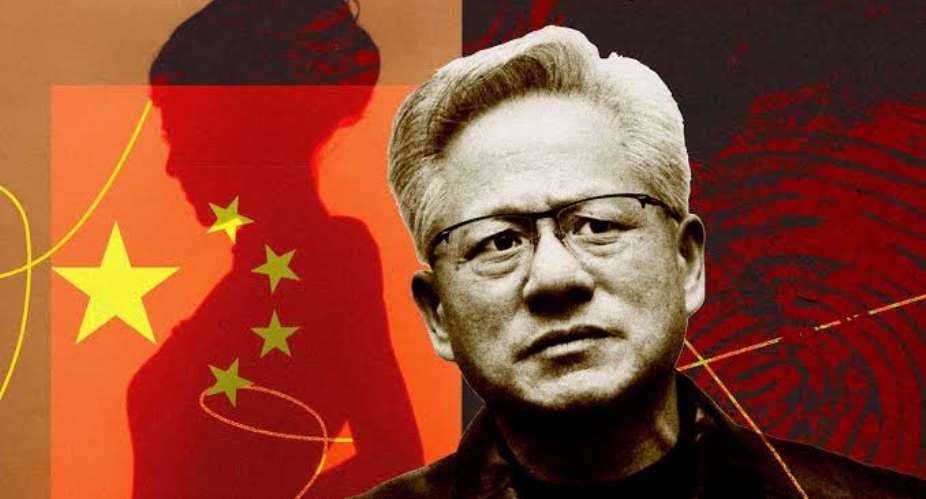
On November 8th, Nvidia said it was opening an investigation into CEO Jensen Huang after he admitted to an intimate relationship with a suspected Chinese spy; he said he had been unfaithful to his wife and apologized to the company and its customers. Days later, he resigned. Nvidia's CFO, Colette Kress, became interim CEO while the board searched for a permanent replacement.
The woman at the centre of it is Alice Huang (no relation). She is a Chinese businesswoman whose company, Megaspeed, was a major buyer of advanced chips from Nvidia.
And here is the detail that makes the "honeypot" theory feel so plausible. According to a New York Times report, she stayed in contact with an official of China's top spy agency for more than a year while the affair was going on. The report also says Huang was introduced to her by Kang Wei, a Chinese businessman he'd known for a decade, who sources say worked with the same agency.
Pause there, because if that is accurate, it is the stuff counterintelligence manuals are written from: an introduction through a trusted friend, a slow build, a target with something to lose.
Now the part the viral clips leave out.
What We Do Not Know
I want you to read this section twice, because it is where the story actually lives.
Multiple sources told CNN that the intelligence collected on Alice Huang so far does not prove she was acting as a spy for Beijing, and that US officials disagree about how strong the evidence is that she was recruited by China's Ministry of State Security. Some officials close to the Director of National Intelligence reportedly consider the "Chinese spy" label over-torqued.
US Attorney General Todd Blanche said on November 12th that neither the Justice Department nor the FBI has confirmed whether she was a Chinese spy.
Singapore's authorities add another wrinkle. They found insufficient evidence that she committed a crime but suspected she gave inaccurate information to downplay her role at Megaspeed and barred her from returning. They did not investigate her for espionage.
China has denied the espionage allegations. Megaspeed has said that media reports about its business are not supported by verifiable evidence.
And there is the part of this saga that should make every honest person uneasy. One summary of the coverage put it this way: there is no established evidence that Huang knowingly assisted Beijing, or that company secrets were compromised.
So when someone asks, "Did Jensen Huang fall victim to a multi-billion-dollar intelligence trap?", the only honest answer today is:
He admitted the affair. The "spy" part is alleged, disputed, and unproven. No charges have been filed.
One more correction, since I've seen it repeated everywhere: Huang has admitted to affairs. He has not acknowledged that any of the women were Chinese intelligence operatives.
Those are two different things, and the second one is a serious accusation to throw around about any human being.
The Spies Explain the Playbook
Now to the two guests.
John Kiriakou is a former CIA officer who ran global intelligence operations, and Aliia Roza says she was trained as a young Russian operative in human psychology and seduction. Both were recorded on November 11th, a day before Nvidia announced Huang's resignation, which is worth remembering when you hear their confident analysis of what "happens next."
Here are their central claims, as presented in the episode:
1. The Perfume Anchor
The claim is that operatives link a target's arousal to a particular scent and keyword, so they can later trigger deep attachment on command.
There is something real underneath: associative conditioning is basic psychology, and smell is strongly tied to memory. But "obsession on command" is a far bolder claim than the science supports.
Treat it as a spy's war story, not a laboratory finding.
2. The "Milk Technique"
A quick word-association test, they say, that profiles your background and reveals which psychological archetype will manipulate you best.
Again, plausible as a conversation trick, unproven as an instant X-ray of your soul.
3. Strategic Isolation
This one I take seriously because it matches what psychologists and domestic-abuse counsellors have long described.
A manipulator slowly makes you doubt the people closest to you: your family, your advisers, your friends. The target ends up with one voice in his ear.
If you ever notice that someone new keeps "gently" criticizing everyone who loves you, wake up.
4. Deep Cover
Foreign agents may spend decades building a false life for a single useful piece of access.
It sounds like fiction. Intelligence history says it isn't.
5. The Core Point
Roza's line of reasoning, as I read it, is that the technique matters less than the target's unmet need.
Honeypots don't create loneliness, ego, or vanity.
They find them.
And that, I think, is the most valuable idea in the entire interview.
"Why Jensen's Affair Is a National Security Risk" (The Fair Version)
Kiriakou's argument is straightforward and strong.
When a person with the keys to the world's most important AI chips has a secret that can be exposed, that secret is a lever.
It doesn't matter whether the woman was a spy or merely a businesswoman with excellent connections. The vulnerability is the risk.
A counterintelligence expert told Rolling Stone that if Chinese intelligence knew he was likely to have extramarital partners, it would have made him a very vulnerable target.
That logic holds whether or not any operation existed.
There is also a startling procedural detail: US officials did not give Huang a defensive briefing, despite reportedly holding intelligence on the relationship for about a year.
If you believe the threat was real, that silence is a story in itself.
If you think it was thin, then it is a story about how a shaky intelligence file ended a career.
The Other Side: What the Skeptics Say
A responsible columnist gives the opposing case its best day in court:
- The evidence is thin. Officials are openly divided, the Attorney General hasn't confirmed espionage, and Singapore did not treat it as a spy case.
- Business interests don't need a spy. A former Commerce Department official told CNN that an intelligence operation wasn't necessary to achieve that result, noting that Huang has publicly advocated for the US to sell more chips to China. In other words, he already argued the position Beijing would want. No honeypot required.
- There may be a political fight under the surface. Some analysts argue the timing points to an internal Washington struggle over chip export controls rather than a clean spy story. That is an argument, not a fact, but it deserves attention.
- Moral panic. There is a long history of "foreign seductress" narratives being used to discredit people and sometimes to justify prejudice against anyone of Chinese descent. We should be careful that this story doesn't turn into a smear on an entire community.
And the other side of that: lawmakers have summoned Huang to appear before a House Foreign Affairs panel, and they still want to question him.
If the explanation is innocent, a public hearing is the best place to prove it.
What This Means for Ghana, and for You
Now let me bring this to Accra, because I refuse to write as though this is only a Washington problem.
Every country has a version of the vulnerability these spies describe.
The official with a secret.
The businessman with a debt.
The "friend" who is suddenly very interested in your contracts.
We may not use the word honeypot at the chop bar, but we know the pattern: flattery that arrives with a purpose.
And Africa has a particular stake here. Our digital future, from data centres to AI startups, depends on chips and technology controlled by a handful of companies.
Whoever sits at the top of those companies is a person, with weaknesses, and we should care how that person is protected and how well the world manages that risk.
For the rest of us, the practical lesson is free:
- Be wary when affection arrives too fast. Intensity is not intimacy.
- Notice who benefits from your isolation. Anyone who slowly separates you from your trusted advisers deserves a second look.
- Don't keep secrets that can be used against you. A secret you manage is a weakness. A secret you've dealt with openly has lost its power.
- Check the story before you share it. Including this one.
A Note from Me to You
I'll give you my honest takeaway, and it will disappoint people who want a clean ending.
I don't know if Jensen Huang was the target of a Chinese intelligence operation.
Neither does the Attorney General, according to his own words.
What I do know is that a man admitted to betraying his wife, lost the job he built over 33 years, and left the most important AI company on earth without its founder in the middle of a global technology race.
Whether he was trapped by a spy or simply by himself, the consequences are enormous.
If the honeypot theory is true, it is one of the great intelligence stories of our time.
If it isn't, it is a cautionary tale about how fast a nation, and a news cycle, will convict a person in the court of headlines.
My advice?
Keep your eyes open, your sources honest, and your private life in order.
Because, as every spy in that studio will tell you, the easiest door to open is the one you left unlocked yourself.


 Tension at Suame Magazine as Ghanaian artisans clash with hired thugs during clo...
 Nvidia board reinstates Huang as CEO, Trump hails 'correct' decision
 Zelensky calls for EU inclusion in talks with Russia 'as soon as possible'
 Rent Control Commissioner has full backing of government – Presidential Staffer
 Bawumia congratulates Black Challenge on historic World Cup triumph
 Amin Adam seeking political capital with borrowing claims – Appiah Dankwah
 Jaman South MCE defends DRIP equipment, alleges NPP MP declined fuel support
 Govt prepares to relaunch GIFMIS, seeks auditors' input on system redesign
 Mahama orders massive cleanup, beautification of Accra ahead of Ghana's 70th ind...
 Housing Minister backs Rent Control effort to curb high charges following UG hos...


