




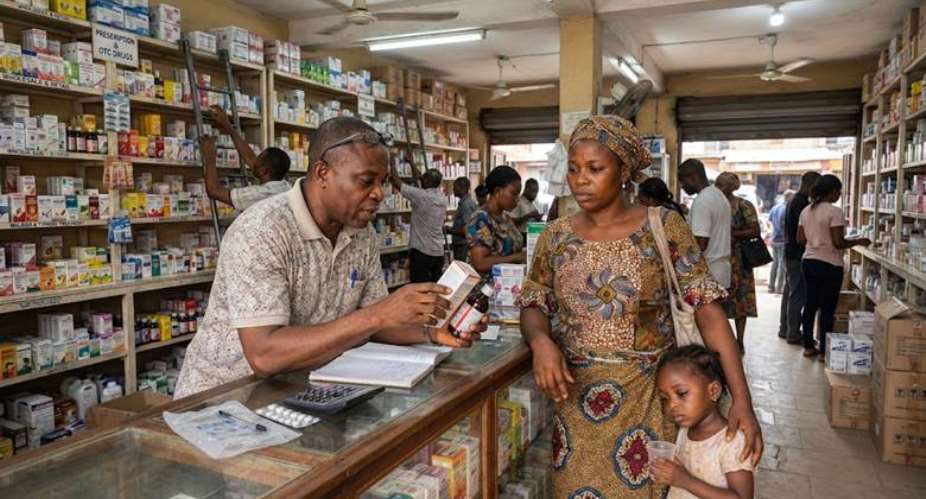
The reported sealing of 261 illegal or non-compliant medicine outlets in the Federal Capital Territory (FCT) by the Pharmacy Council of Nigeria (PCN) is a development that deserves commendation. At a time when self-medication, drug abuse, counterfeit products and questionable pharmaceutical practices are becoming increasingly difficult to ignore, a decisive regulatory intervention is not only welcome but necessary. The operation has once again drawn attention to the dangers of quackery, the proliferation of unlicensed medicine outlets and the urgent need to protect Nigerians from preventable health complications arising from inappropriate medication.
Medicines are supposed to heal, relieve suffering and save lives. However, when they fall into the hands of unqualified persons or are sold under conditions that compromise their quality, safety and effectiveness, they become instruments of harm. This is why the regulation of pharmaceutical practice should never be treated as an unnecessary bureaucratic exercise. It is a fundamental responsibility of government and a vital safeguard for public health. Unfortunately, many Nigerians patronize illegal medicine outlets without knowing that they are doing so. In some neighbourhoods, drug shops operate openly, displaying medicines in attractive packaging and offering advice that sounds convincing to unsuspecting customers. The appearance of a shop, the familiarity of its owner or the confidence with which a seller recommends a drug can easily create a false sense of security. Yet, behind such appearances may be an unqualified operator with little or no knowledge of drug interactions, dosage requirements, contraindications or the consequences of administering certain medicines to vulnerable patients.
The greatest danger of quack medicine is that the victim may not immediately recognise the harm. A patient who purchases a counterfeit antibiotic, for instance, may believe that he or she is treating an infection, only to experience worsening symptoms because the drug contains little, no or the wrong active ingredient. In other instances, medicines may have been improperly stored, exposed to excessive heat or humidity, or passed their expiry dates, rendering them ineffective or potentially harmful.
The consequences can be devastating. Poorly administered medication can trigger severe allergic reactions, organ damage, poisoning, treatment failure and, in extreme cases, death. Inappropriate antibiotic use is particularly troubling because it contributes to antimicrobial resistance, a growing global health threat in which microorganisms develop the ability to withstand medicines designed to destroy them. When antibiotics are used indiscriminately, taken in wrong doses or sold without proper clinical guidance, infections that should ordinarily be treatable might become increasingly difficult and expensive to manage.
Children, pregnant women, older people and individuals living with chronic illnesses are especially vulnerable. A child given the wrong dose of a medicine could suffer serious complications. A pregnant woman taking an inappropriate drug could expose herself and her unborn baby to avoidable risks. Someone living with hypertension or diabetes can unknowingly purchase ineffective medication, allowing a condition that should be controlled to deteriorate. The danger is not simply that a medicine could be fake, it is also that a genuine medicine can become dangerous when used incorrectly.
This makes the PCN's reported enforcement action particularly important. Regulatory authorities cannot afford to look away while unqualified individuals turn medicine sales into an unregulated business. Sealing outlets that operate illegally or violate professional and safety standards sends a strong message that pharmaceutical practice is not an activity anybody can undertake merely because there is money to be made. The law must be respected, and public safety must take precedence over commercial interests.
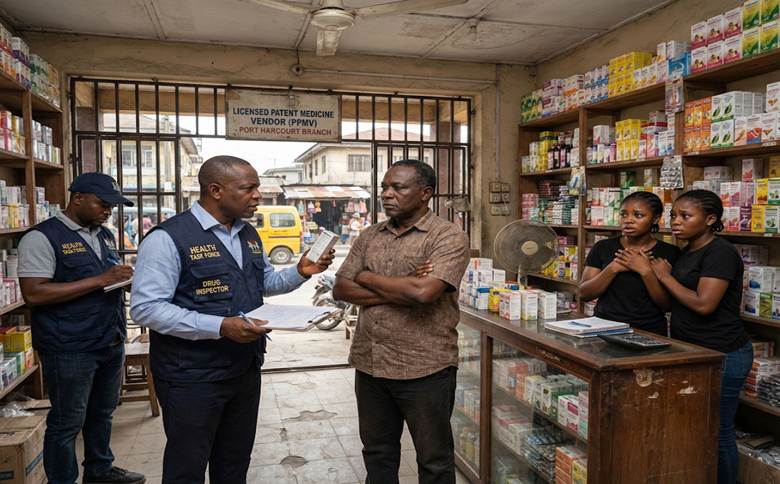
Nevertheless, enforcement alone will not solve the problem. Nigerians patronize questionable medicine outlets for different reasons, including proximity, convenience, ignorance and, most importantly, the cost of healthcare. In communities where a registered pharmacy is far away or where genuine medicines are expensive, residents could naturally gravitate towards informal sellers who promise quick relief at cheaper prices. Some people cannot afford consultation fees, transportation costs and the price of prescribed medicines, particularly when they are battling several economic pressures at once.
Government must therefore recognise that the proliferation of quack medicine outlets is partly a regulatory challenge and partly an access-to-healthcare challenge. Shutting down illegal shops without addressing the conditions that encourage their patronage could leave underserved communities with fewer options, pushing some residents towards hidden operators or unregulated online vendors.
The public, on its part, must become more conscious and deliberate about where medicines are purchased. The safest starting point is to obtain medicines from licensed pharmacies and authorised medicine vendors whose operations are recognised by the appropriate regulatory authorities. Consumers should not hesitate to ask whether an outlet is licensed and whether a qualified pharmacist or appropriately authorised personnel is available to provide professional guidance. Such questions are not signs of disrespect, they are reasonable precautions for protecting one's health.
People should also avoid purchasing medicines from roadside hawkers, market stalls, vehicles, social media vendors or other informal sources where the authenticity, storage conditions and traceability of products cannot be guaranteed. Attractive packaging and unusually cheap prices should not be mistaken for proof of quality. A medicine that costs considerably less than its normal market price may be tempting, but the potential consequences of consuming a counterfeit or improperly handled product could far outweigh whatever money is saved.
Consumers should pay attention to the packaging, product name, batch number, manufacturing and expiry dates, registration details and any visible signs of tampering. Where there is suspicion about a product, it should not be used until the concern is properly addressed by a qualified professional or the relevant regulatory authority. Patients should avoid self-prescribing antibiotics, mixing medicines based on advice from friends, or repeatedly using drugs to suppress symptoms without finding out what is causing them.
Government agencies must intensify public education so that Nigerians understand that medicine safety is not the exclusive concern of pharmacists and regulators. It is everybody's responsibility. The National Agency for Food and Drug Administration and Control (NAFDAC), PCN, state health authorities and professional associations should collaborate on sustained public awareness campaigns using radio, television, social media, community meetings and local languages. Citizens should know how to identify authorised outlets, report suspicious products and verify medicines through available regulatory channels.
Authorities must also strengthen surveillance across the pharmaceutical supply chain, from importation and manufacturing to distribution, storage and retail. Regular inspections, intelligence-led enforcement, effective tracking systems and appropriate sanctions against offenders are essential. Those who deliberately manufacture, distribute or sell counterfeit medicines should face consequences strong enough to discourage repetition. At the same time, enforcement should be transparent, consistent and free from selective application or extortion.
The government must equally confront the issue of affordability. Genuine medicines should not become luxury items available only to wealthy Nigerians. Strengthening local pharmaceutical manufacturing, supporting manufacturers that meet quality standards, improving procurement systems, reducing avoidable distribution costs and expanding health insurance coverage could help make essential medicines more affordable. Public hospitals and primary healthcare centres should be adequately stocked with essential drugs so that citizens do not have to resort to questionable sources when prescribed medicines are unavailable in government facilities.
In addition, the authorities should expand the reach of legitimate pharmacies and appropriately regulated patent and proprietary medicine vendors, especially in rural and underserved communities. Rather than merely eliminating illegal outlets, the regulatory system should encourage compliant businesses to operate in locations where access is limited, while ensuring that the medicines they are permitted to sell, the services they provide and the professionals supervising them meet established standards.
Ultimately, the sealing of 261 illegal or non-compliant outlets in the FCT is a welcome idea any day. It is a reminder that public health must never be sacrificed on the altar of profit, ignorance or weak oversight. Yes. The campaign against quack medicines must be sustained, nationwide and accompanied by practical reforms that address affordability, availability, public awareness and professional accountability.
Nigerians deserve medicines that are safe, effective, genuine and affordable. They deserve a pharmaceutical system in which seeking treatment does not expose them to more danger. Regulatory agencies must remain vigilant, healthcare professionals must uphold their ethics, medicine sellers must operate within the law, and government must ensure that poverty does not force citizens to gamble with their lives. A crackdown that achieves these objectives will be more than an enforcement exercise: it will be a meaningful investment in the health, dignity and survival of the Nigerian people.


 'Prove I took even fuel coupon!' - NDC Vice Chair aspirant Woyome dares critics
 Asankragua market fire destroys 'ashawo' joint
 Ghana's nuclear power transition to create jobs, support industrial growth – Dr ...
 Dr. Bryan Acheampong faults 2027 budget for lacking job creation target
 'We needs fairness, not partisan favouritism’ – Dr. Kojo Asante criticises Vande...
 Roads Minister urges city authorities to regulate cattle movement on highways
 MPs’ absence from chamber partly due to committee work, constituency duties – Ak...
 Failure to punish absentee MPs fuels parliamentary absenteeism – Dr. Osae Kwapon...
 November 23: Cedi sells at GHS12.60 on forex market, GHS11.81 on BoG interbank
 Ghana Air Force receives second Airbus ACH160 helicopter under four-aircraft dea...


