




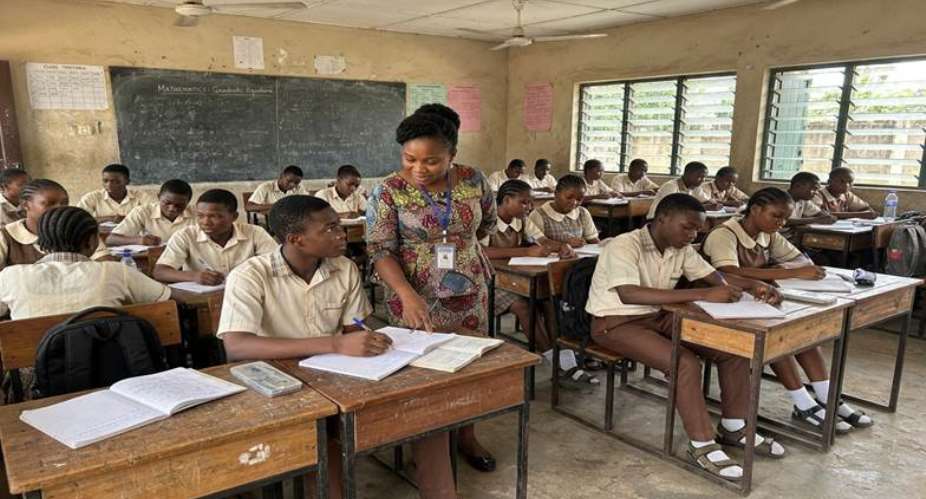
Nigeria is a country that prides itself on its enormous human and natural resources, celebrates its self-rule, boasts of its democratic credentials and talks endlessly about development. Yet, unfortunately, millions of its children are denied the opportunity to sit in the classroom and acquire the education necessary to build a meaningful future. Even more disturbing is the sight of young children roaming the streets, hawking sachet water, biscuits, groundnuts, fruits and other petty commodities, sometimes in the scorching sun and at some other times in the heavy rain, while their contemporaries are sitting in classrooms learning how to read, write and prepare for adulthood.
This is not merely an unfortunate social spectacle. It is a national disgrace, a violation of children's rights and an indictment of successive Nigerian governments. It raises the uncomfortable but necessary question: while government declares it, in reality, how free and compulsory is education in Nigeria?
On paper, the answer appears straightforward. Education is meant to be free and compulsory at the basic level. In practice, however, the experience of millions of Nigerian children suggests that this constitutional and legislative promise remains more of a political declaration than a reality.
The figures are alarming. UNICEF's 2024 assessment of the Nigerian education crisis, drew on figures from the Universal Basic Education Commission and identified approximately 10.2 million primary-school-age children and another 8.1 million junior-secondary-school-age children as being out of school. That is an estimated 18.3 million children. Although different surveys and subsequent assessments have produced varying estimates, the scale of exclusion is beyond dispute. UNICEF's 2025 reports also continued to identify millions of Nigerian children as being outside the education system. Behind these statistics are real human beings: boys and girls whose childhoods are being sacrificed on the altar of political exigency, whose potential is being heartlessly wasted and whose future opportunities are being determined by circumstances over which they have absolutely no control. The truth is that every child outside school represents a missed opportunity for the individual and a loss to the country.
The problem is particularly worrying because it is visible everywhere. In the big cities, in towns and in rural villages, children of school age can always be seen selling goods at motor parks, at bus stops, in the markets, traffic intersections and along busy highways. Some weave dangerously between moving vehicles, knocking on car windows and appealing to motorists to purchase their wares. Others carry heavy trays on their heads, sometimes for hours, exposed to accidents, harassment, exploitation and other dangers. One cannot help wondering where their parents are, why these children are not in school and what the relevant government authorities are doing about their predicament.
The practice is often dismissed as an ordinary consequence of poverty or as a familiar feature of Nigerian street life. That attitude is part of the problem. Child hawking during school hours is not an innocent economic activity. It is child labour when it exposes children to inappropriate work, exploitation and conditions that interfere with their education, development, health or safety. Depending on the circumstances, it is also a form of child abuse and neglect. A child who should be learning in a classroom should not be forced, by any stretch of the imagination, to negotiate the hazards of a busy highway just to earn money for the family.
A child hawking on a major road could be knocked down by a vehicle. A girl selling goods in an isolated location could become a victim of sexual abuse. A boy carrying heavy loads could suffer physical injuries. Both boys and girls may be exposed to criminal elements, trafficking, drug abuse and other forms of exploitation. The psychological consequences of such an existence should not be underestimated. Instead of enjoying the protection, recreation and learning opportunities associated with childhood, these children are compelled to assume responsibilities that belong to adults.
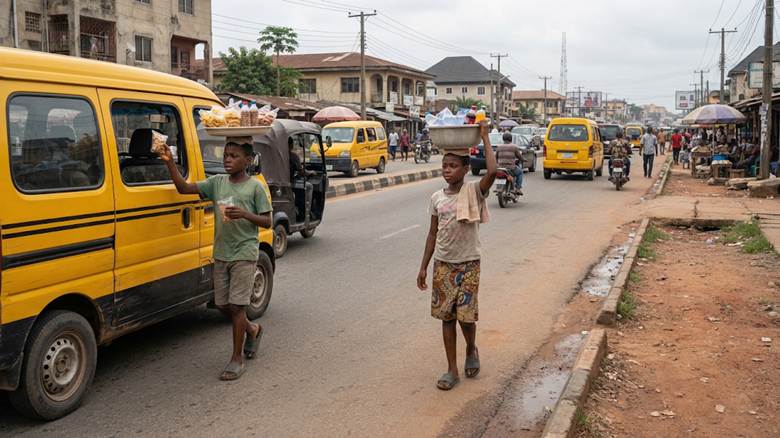
The tragedy is that many of these children are not necessarily orphans or abandoned children. Some have parents who are alive, healthy and capable of working. Some are sent out deliberately to supplement household income, while others are made to hawk because their parents believe that contributing to the family's daily survival is more important than attending school. In certain households, children are expected to return home with a stipulated amount of money. Failure to meet the target could attract punishment, verbal abuse or even physical assault.
And this is where parental responsibility becomes a critical part of the discussion. Although poverty is real, it would be unfair to pretend that every parent who sends a child out to hawk does so out of malice. The harsh economic circumstances confronting millions of Nigerian families cannot be ignored. Unemployment, inflation, rising food prices, inadequate wages and the high cost of living have pushed many households into desperate situations.
Still, poverty cannot become a permanent justification for denying children their rights. Parents have a legal, moral and social responsibility to provide for their children, protect them from exploitation and ensure that they receive good education. Having children is not simply about bringing them into the world, it is about accepting the responsibility of preparing them for life. A child is not a household employee, a commercial asset or an instrument for generating income.
There must also be a distinction between responsible parental involvement in a child's development and the exploitation of that child for economic purposes. While children can learn useful domestic and practical skills through appropriate activities, such activities must never come at the expense of their education, health, safety and childhood. But the Nigerian government cannot place the entire blame on parents. The government itself has a much greater responsibility to create an environment in which parents can afford to send their children to school.
What does free education mean when a family cannot afford the cost of school uniforms, books, writing materials, transportation and other incidental expenses? What does compulsory education mean when schools are too far away, classrooms overcrowded, teachers unavailable and the facilities are unsuitable for learning? A school system that is free only in name is not genuinely free. Similarly, a government cannot credibly insist that education is compulsory while it is failing to provide the facilities and practical support necessary to make attendance compulsive.
Nigeria created laws to protect its children. The Child Rights Act of 2003 is one of the most important legislative instruments in this regard. It established the best interests of the child as a primary consideration and provides for children's rights to dignity, survival, development, parental care and education. Section 15 of the Act recognises the right of every child to free, compulsory and universal basic education. Section 28 prohibits forced or exploitative labour and other forms of inappropriate employment of children. Section 30 specifically prohibits dealing in children for purposes that include hawking and begging for alms. These provisions demonstrate that the law recognises the dangers associated with the exploitation of children.
The Compulsory, Free Universal Basic Education Act of 2004 reinforces this position. It places an obligation on every government in Nigeria to provide free, compulsory and universal basic education for children of primary and junior secondary school age. It also places a responsibility on parents to ensure that their children or wards attend and complete primary and junior secondary education. The Constitution of the Federal Republic of Nigeria also provides important protections. Section 17(3) (f) directs the state to protect children and young persons against exploitation, moral and material neglect. Section 18 requires government to pursue equal and adequate educational opportunities and to strive to eradicate illiteracy through free and compulsory universal primary education.
Nigeria is also bound by international child-protection commitments, including the United Nations Convention on the Rights of the Child and the African Charter on the Rights and Welfare of the Child. Clearly, the problem is not the absence of legislation. It is the enormous gulf between what the laws prescribe and what happens on our streets every day. Although all 36 states have now domesticated the Child Rights Act in some form, implementation and enforcement remain uneven. The existence of legislation means very little if those responsible for enforcing it keep looking the other way.
This is where the National Assembly and the various state Houses of Assembly must be called to account. What exactly are these elected representatives doing about the millions of children whose childhoods are being destroyed by street hawking, exploitation and exclusion from education? Why has the persistent sight of children selling goods on highways and at busy intersections not provoked a sustained national legislative response?
Perhaps, it would be inaccurate to suggest that the legislature has done absolutely nothing. Laws have been enacted, committees established and budgets approved. But legislation without effective oversight, enforcement and measurable results is little more than an exercise in political formalities. The Senate and the House of Representatives must move beyond occasional debates and expressions of concern. They should demand regular reports from the Federal Ministry of Education, the Universal Basic Education Commission, the Ministry of Labour and relevant child-protection agencies. They should investigate why millions of children remain outside the education system, establish how much money is being released and actually spent on basic education, and identify those responsible for the failure to implement existing programmes.
State legislators have an equally important responsibility. They should conduct public hearings, monitor local education authorities, demand accountability from state education ministries and ensure that child-protection agencies are adequately funded. Where existing laws are inadequate, they should strengthen them. Where laws are being ignored, they should insist on enforcement. Most importantly, legislators must recognise that this is not an issue that can be resolved through political speeches or the occasional distribution of exercise books. It requires sustained legislative attention and political commitment.
First, it must establish a credible, comprehensive and regularly updated national register of out-of-school children. Without accurate information about where these children live, why they are not attending school and what circumstances keep them away, government interventions will remain largely ineffective. Every local government should know the number of school-age children within its jurisdiction and be held accountable for improving enrolment and attendance.
Second, education must genuinely become affordable. Free tuition should be accompanied by the provision of essential learning materials, adequate classrooms, toilets, drinking water and qualified teachers. Poor and vulnerable families should receive targeted support, including school feeding, transportation assistance and conditional cash transfers where necessary. Such measures would reduce the economic pressure that drives parents to send children out to earn money.
Third, the government must strengthen the enforcement of child-protection legislation. Local government officials, social welfare departments, the police and relevant labour inspectors should work together to identify children being exploited on streets and highways. Children rescued from these circumstances should not simply be chased away from traffic intersections. They must be properly assessed, protected, reunited with their families where appropriate and supported to return to school. Parents or other adults who deliberately exploit children must face the consequences prescribed by law, with due regard for the circumstances and best interests of the child.
Fourth, poverty must be confronted as a major contributor to educational exclusion. Governments should expand social protection, create employment opportunities, improve household incomes and provide assistance to families that genuinely cannot afford their children's education. It is contradictory to demand that poor parents send their children to school without addressing the economic conditions that make this difficult.
Fifth, traditional rulers, religious and community leaders, civil society groups and the media must become active partners in the campaign. Communities should no longer regard child hawking during school hours as normal or acceptable. Every child belongs in a safe learning environment, irrespective of family background, religion, ethnicity or economic circumstances. Finally, government must invest in the quality and safety of education. There is little point returning children to classrooms if those classrooms cannot provide a meaningful learning environment. Teachers must be recruited, properly trained, motivated and paid regularly. Schools in conflict-affected communities must be protected, while special attention should be given to girls, children with disabilities, internally displaced children and those living in remote rural communities.
There is also a need for a national campaign to change public attitudes. Nigerians must understand that educating a child is not merely a favour bestowed by government or a privilege reserved for families that can afford it. It is an investment in the country's future and a fundamental responsibility of the state and society. A nation that allows its children to hawk on highways while politicians travel in air-conditioned vehicles cannot honestly claim to be prioritizing human development. A country that watches its children risk their lives at traffic intersections while public officials make elaborate speeches about economic transformation must examine its conscience.
The measure of a government's commitment to education should not be the number of schools it commissions, the number of educational policies it announces or the amount of money it claims to have budgeted. It should be measured by the number of children who are actually in school, the quality of education they receive and the level of protection they enjoy.
The Nigerian child deserves better. No child should have to choose between education and survival. No parent should be forced by poverty to turn a child into a breadwinner. And no government should be permitted to treat the systematic exclusion and exploitation of children as an ordinary feature of national life. The Senate, the House of Representatives, state legislatures and the executive arms of government at every level must wake up to this responsibility. The relevant laws are there. The national and international obligations are clear. What is missing is the determination to translate them into action.
The children hawking on our highways today are not simply statistics. They are future teachers, doctors, engineers, entrepreneurs, public servants and leaders. They are the human capital upon which tomorrow's Nigeria must depend. Every day they spend on the streets instead of in classrooms is another day stolen from their future. Every government that fails to protect them shares responsibility for that loss. The question, therefore, is no longer whether education in Nigeria is supposed to be free and compulsory. The question is why, after decades of promises, millions of Nigerian children are still being denied this basic right. Until the government can provide a convincing answer backed by measurable action, the claim that education is free and compulsory in Nigeria will remain one of the country's most painful national contradictions.

 'Prove I took even fuel coupon!' - NDC Vice Chair aspirant Woyome dares critics
 Asankragua market fire destroys 'ashawo' joint
 Ghana's nuclear power transition to create jobs, support industrial growth – Dr ...
 Dr. Bryan Acheampong faults 2027 budget for lacking job creation target
 'We needs fairness, not partisan favouritism’ – Dr. Kojo Asante criticises Vande...
 Roads Minister urges city authorities to regulate cattle movement on highways
 MPs’ absence from chamber partly due to committee work, constituency duties – Ak...
 Failure to punish absentee MPs fuels parliamentary absenteeism – Dr. Osae Kwapon...
 November 23: Cedi sells at GHS12.60 on forex market, GHS11.81 on BoG interbank
 Ghana Air Force receives second Airbus ACH160 helicopter under four-aircraft dea...


