




There are freedoms we must never take for granted. Media freedom is undoubtedly one of them. It is not a gift bestowed by the state, a privilege granted by political parties or something that depends on the goodwill of those in power. It is a fundamental democratic right belonging to every individual – the right to know, to question, to think, to speak and to form independent conclusions about the world in which they live.
Today, in the era of sweeping technological change, digital platforms, artificial intelligence, global communications and changing geopolitical realities, we must confront a simple yet fundamental question: how can we ensure that darkness never descends upon the media again – whether in Serbia, elsewhere in Europe or anywhere in the world?
For me, this is far more than a political, legal or economic question. It is a profoundly personal one. I speak as someone who, even under the one-party system of the former Yugoslavia, believed that private initiative, entrepreneurship and open communication had the power to transform society. At a time when the state controlled virtually all major media outlets, I resolved to carve out space for something new: private media, alternative perspectives, a marketplace of ideas and the right of citizens to hear more than a single voice.
The founding of BK Television marked a historic breakthrough in the development of private broadcasting across the post-communist world. It was more than a commercial undertaking. It was a declaration of principle: that the media need not remain instruments of state authority or political power. They could be independent, creative, entrepreneurial in spirit and answerable to the citizens they served.
That experience lies at the very heart of my conviction that Europe must embark on a renewed debate about media freedom and put in place a modern legislative framework that safeguards journalists, media organisations and the public's right to truthful, objective and pluralistic information.
1. Media freedom – a mirror of society's democratic maturity
History has taught us that authoritarian regimes have invariably sought to control information first, and public opinion thereafter. Control of the media has always been one of the primary instruments of political domination.
Yet today, pressure on the media extends far beyond overt censorship, publication bans or the shutdown of newsrooms. It has grown considerably more sophisticated, frequently operating through mechanisms that are not immediately apparent to the public.
Political and economic power centres can exert influence over the media through advertising, ownership arrangements, financial dependence, selective access to information, litigation, tax inspections, pressure on journalists and their families, as well as orchestrated smear campaigns.
A particularly insidious danger arises when a society has, at least on paper, a multitude of media outlets – television channels, news websites, newspapers and social media platforms – yet their genuine editorial independence remains open to question.
Democracy cannot be reduced to the mere holding of elections. It requires open public debate, access to diverse information sources, the freedom to subject government decisions to critical scrutiny and protection for those who expose wrongdoing and abuses of power.
Media freedom must therefore be safeguarded not merely through constitutional guarantees and international declarations, but through enforceable legislation, sustainable economic mechanisms and institutions that are genuinely independent.
2. Journalism must become a protected and respected profession
Journalists are among the essential pillars of democratic society. They investigate, question, verify facts, expose wrongdoing and help citizens make sense of the events shaping their lives today and the world they will inhabit tomorrow.
Yet we are confronted with a troubling paradox: we entrust journalists with the task of defending the public interest, while all too often failing to provide them with even the most basic economic, social and professional security.
A journalist dependent on political goodwill, precarious earnings, the whims of media proprietors or pressure from advertisers can scarcely exercise genuine professional independence. Economic insecurity does more than undermine an individual journalist's livelihood; it can directly compromise editorial autonomy and erode the quality of information available to the public.
We must therefore put in place a system that ensures journalists can work in dignified conditions, pursue professional development and enjoy adequate social protection and personal security. Particular consideration must be given to young journalists, investigative journalism, the development of digital skills and those reporting from war zones, crisis areas and other high-risk environments.
There is also a clear need to initiate a serious expert debate on tailored pension and insurance arrangements, including the possibility of granting enhanced pensionable service to certain categories of media professionals who face demonstrably heightened occupational risks over prolonged periods.
The legislative and economic measures required to put these objectives into practice should be set out in dedicated regulations and supported by appropriate institutional mechanisms, as I explain in the next section.
Free journalism cannot be built on the economic insecurity of the very people who produce it.
3. A new legislative and institutional framework to safeguard media freedom and the economic independence of journalism
One of the essential prerequisites for advancing media freedom is putting in place a comprehensive legislative and institutional framework that simultaneously guarantees editorial independence, upholds the professional integrity of journalists and underpins the economic viability of the media sector.
With this in mind, I propose launching an initiative in Serbia to enact two complementary pieces of legislation: the Law on Media Rights and Incentives for Media Employees and the Law on the Protection of Media Freedom and the Prevention of Political and Financial Pressure on Journalists.
The first would create the conditions for high-quality, professional and independent media to survive and thrive, free from political and financial pressure. The second would put in place clear legal mechanisms to prevent and penalise all forms of undue influence on journalists and newsrooms.
These legislative measures should address four closely interconnected areas, each deserving particular attention.
First – economic and social security for media professionals.
Targeted tax incentives and appropriate VAT arrangements for print and electronic media should be considered, subject to clearly defined, transparent and consistently applied criteria designed to prevent preferential treatment of particular media owners or politically favoured newsrooms. Tax relief must never become a reward for political loyalty, but should instead serve to foster a professional, pluralistic and competitive media market.
At the same time, the state should introduce support mechanisms for low-paid journalists, including the possibility of co-financing pension and health insurance contributions. Particular emphasis should be placed on creating employment opportunities for young journalists, developing paid internship schemes, funding investigative journalism through scholarships and ensuring access to continuing professional development, especially in digital media and new technologies. Journalists working in war zones and crisis areas should also benefit from additional social protection and personal safety measures, commensurate with the risks they face.
Second – protecting journalists against political and financial pressure.
No politician, public official, business figure, advertiser or lobbyist should be entitled to interfere with a media outlet's editorial policy through financial coercion, pressure or other improper forms of influence. Legislation must clearly define and penalise financial coercion and attempts to bribe journalists, pressure on advertisers to withdraw support over editorial content, the misuse of state institutions through selective tax inspections and administrative audits, threats, intimidation and physical assaults against journalists, and the abuse of legal proceedings to drain newsrooms financially.
Particular attention must also be given to preventing orchestrated campaigns to manipulate public opinion and the deliberate spread of fabricated information. At the same time, the law must define unlawful conduct with precision, draw a clear distinction between improper pressure and legitimate criticism, and guarantee proportionate penalties, the right to a fair trial and independent judicial oversight. Journalists' right to refuse unlawful or unethical assignments, the confidentiality of journalistic sources and the freedom of editorial decision-making must be expressly enshrined in law and protected.
Crucially, these safeguards must not themselves become open to abuse, allowing legal mechanisms intended to protect media freedom to be turned into instruments of censorship or restrictions on legitimate criticism.
Third – creating an independent body to safeguard media freedom.
I propose the creation of an independent body dedicated to safeguarding media freedom, whose members would be free from political influence and beholden neither to the government nor to political parties or major media and corporate groups. Its membership should bring together a broad range of professional expertise, including representatives of journalists' associations, media specialists, legal practitioners, academics and human rights organisations.
Its remit would encompass monitoring political and economic pressures on the media, offering legal and institutional support to journalists facing threats and intimidation, examining the transparency of government advertising and the distribution of public funds within the limits of its statutory authority, and publishing regular reports on the state of media freedom. Its mandate would also extend to cooperating with European and international bodies and reporting suspected breaches of the law to the relevant authorities where there are reasonable grounds for suspicion.
Under no circumstances should this body be empowered to dictate what journalists may write, which opinions they may express or which media outlets may operate. Its role must be confined to defending the rights, editorial independence and professional integrity of the media and those who work for them. Securing its genuine independence and institutional credibility will require clear and precise rules governing transparent appointments, the length and conditions of members' terms of office, stable and independent funding, and effective mechanisms for public accountability and oversight of the legality of its operations.
Fourth – establishing a Fund for Independent Journalism.
Media freedom cannot be sustained in the long run without economic independence. I therefore propose setting up a Fund for Independent Journalism dedicated to providing support for investigative reporting, local media, high-quality analysis, media innovation and projects of particular public interest.
The Fund could draw its resources from public budget allocations, international grants, European funding programmes and other lawful sources. Decisions about how the money is distributed must rest not with political offices, but with independent commissions operating through open calls for proposals, clearly established criteria and fully transparent procedures. Every recipient would be required to disclose publicly how the grants were spent, while independent audits would verify that funds were used for their intended purpose and allocated lawfully.
The Fund must never become another conduit for politically motivated media financing. Its purpose must be the very opposite: to reduce journalism's dependence on political and economic power centres and foster an environment in which professionalism, quality and the public interest come first.
These legislative and institutional proposals are not intended to create a privileged media sector, but to establish a level, transparent and sustainable playing field for free, professional and accountable media. Their implementation should ensure that protecting media freedom is more than a commitment on paper – that it becomes a genuine and effective safeguard of democratic society.
4. Serbia can spearhead a new European policy on media freedom
This initiative need not remain confined to Serbia alone. Europe's democratic identity rests on freedom of expression, human rights, the rule of law and pluralism. Yet the challenges of our time demonstrate that even the most advanced democracies are not immune to political, economic and technological pressures on the media.
The European Union has already put in place a substantial legal framework to safeguard media freedom and pluralism, notably the European Media Freedom Act (EMFA)[2], formally Regulation (EU) 2024/1083. The regulation entered into force on 7 May 2024, with most of its provisions applying from 8 August 2025. It marks an important step forward in protecting editorial independence, media pluralism and transparency across the media market.
Serbia should continue aligning its legislation with European standards, while also putting forward complementary initiatives focused on the social and economic protection of journalists.
I call for an initiative to adopt a European Charter on the Economic and Professional Rights of Journalists, encompassing:
- minimum social security standards for media workers;
- protection of journalists from political and economic coercion;
- transparency in state advertising;
- independent funds to support investigative journalism;
- protection of journalistic sources and professional autonomy;
- dedicated safety mechanisms for journalists working in crisis areas and war zones;
- safeguards for media pluralism and the independence of public service broadcasters.
Such an initiative could bring together EU member states, candidate countries, the Council of Europe, the European Parliament and international journalists' organisations in a concerted effort. With the European Media Freedom Act already forming part of the EU's legal framework, the proposed European Charter on the Economic and Professional Rights of Journalists would not seek to replace it, but to complement it, placing particular emphasis on strengthening journalists' social, economic and professional rights.
Serbia need not always wait for others to come forward with solutions. It can be an active contributor and trailblazer in shaping new European standards for protecting media freedom.
5. The digital age brings new freedoms, but also new responsibilities
Today, virtually anyone can become a creator and distributor of information. Social networks allow news to reach millions of people in a matter of seconds. Artificial intelligence is transforming the very foundations of how media content is produced, distributed and analysed. These advances offer immense opportunities, but also bring new dangers.
Fake news, manipulated images and videos, fabricated interviews, automated campaigns and deepfakes can seriously erode public confidence in the media and democratic institutions.
Modern media legislation must therefore also encompass the digital dimension of freedom of information. It must draw clear distinctions between professional journalism, personal opinion, satire, commercial content and deliberate, organised manipulation of information.
Yet the fight against disinformation must never become a pretext for imposing political control over the internet or curtailing legitimate criticism of those in power. Citizens must be able to see who is behind a particular piece of media content, who funds it and whether artificial intelligence was used in its creation, where such labelling is relevant to understanding its origins and authenticity.
Technology must serve people, not become a means of manipulating them.
6. Free media must also be responsible media
Freedom of the media does not mean freedom from responsibility. Independent journalism demands professional ethics, rigorous fact-checking, the right of reply, respect for privacy and the protection of every person's dignity.
Giving everyone a voice is not enough. We must foster a society in which facts are clearly distinguished from manipulation, reasoned arguments from insults and legitimate criticism from orchestrated public vilification.
That is why I advocate stronger media self-regulation, independent press councils, professional codes of ethics and education in media literacy.
The state must protect freedom, but it must never prescribe what constitutes the truth. Truth emerges through open debate, verifiable facts and responsible journalism.
7. Our responsibility to future generations
When I embarked on my private media ventures, I believed that free initiative, private enterprise and open communication would become the bedrock of a new society. I believed that the generations to come would enjoy greater opportunities, wider access to information and more freedom than their predecessors.
Today, all these decades later, I am more convinced than ever that we must renew our struggle for these values with even greater resolve.
I do not want my generation to leave behind a society in which journalists must choose between the truth and their livelihoods, media owners are forced to choose between editorial independence and the survival of their businesses, or citizens are fed only the information that suits particular political or economic power centres.
I want young people to live in a society where they can freely establish their own media outlets, launch television or radio stations, news websites or digital platforms, to investigate, criticise and question – without fear of reprisals. That is the society we want to build.
I therefore propose launching a wide-ranging public and expert debate in Serbia on two interconnected pieces of legislation: the Law on Media Rights and Incentives for Media Employees and the Law on the Protection of Media Freedom and the Prevention of Political and Financial Pressure on Journalists.
These proposals should be put before journalists' associations, universities, media organisations, chambers of commerce, civil society and the relevant state institutions, allowing them to be examined and shaped through broad consultation and an open, transparent legislative process.
I also urge European institutions to lend their support to this initiative and join Serbia in raising the standards of protection for media freedom.
In closing, I want to deliver a simple yet powerful message: Never again media darkness!
We must never again allow any single power centre to dictate what citizens are permitted to know, what journalists are allowed to publish and what information must be concealed from the public.
Free media are not the enemy of the state. They are its vital check, its conscience and one of the foremost pillars of democratic progress.
Free media mean free citizens. Free citizens mean a free society. And a free society is the greatest legacy we can leave to future generations.
The time has come to defend media freedom not merely in words, but in practice – through legislation, independent institutions, economic security and European values.
Never again media darkness – neither in Serbia nor in Europe!
About the author:
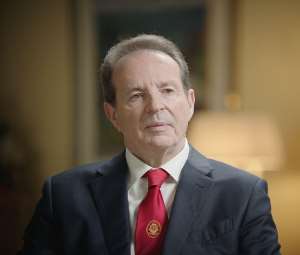
Bogoljub J. Karić, born in 1954 in Peć (Peja), graduated in geography from the University of Priština and obtained a master's degree in economics from the University of Niš. Together with his family, he established the company "Braća Karić" and, over more than four decades, built an international business group spanning telecommunications, construction, finance, education, media and trade.
Karić is a member of the IFIMES Advisory Board, President of the Nikola Tesla International Committee and actively participates in United Nations initiatives, including UN Global Marketplace and AI for Good. In 2024, he was nominated for the Nobel Peace Prize. His business and social activities are based on entrepreneurship, innovation, investment in knowledge, philanthropy and the promotion of international and regional economic cooperation.
 'Prove I took even fuel coupon!' - NDC Vice Chair aspirant Woyome dares critics
 Asankragua market fire destroys 'ashawo' joint
 Ghana's nuclear power transition to create jobs, support industrial growth – Dr ...
 Dr. Bryan Acheampong faults 2027 budget for lacking job creation target
 'We needs fairness, not partisan favouritism’ – Dr. Kojo Asante criticises Vande...
 Roads Minister urges city authorities to regulate cattle movement on highways
 MPs’ absence from chamber partly due to committee work, constituency duties – Ak...
 Failure to punish absentee MPs fuels parliamentary absenteeism – Dr. Osae Kwapon...
 November 23: Cedi sells at GHS12.60 on forex market, GHS11.81 on BoG interbank
 Ghana Air Force receives second Airbus ACH160 helicopter under four-aircraft dea...


