




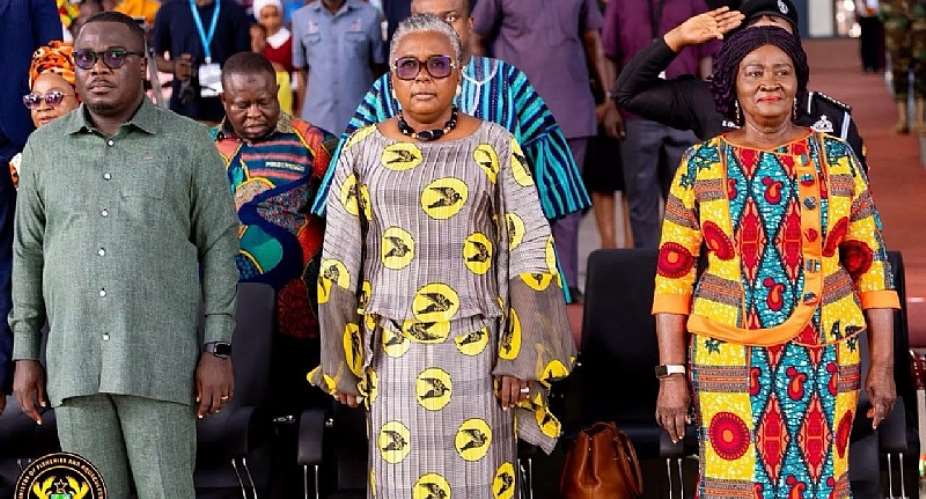
The Vice President of Ghana, Professor Naana Jane Opoku-Agyemang, has called for stronger community participation, effective regulation and enforcement to protect Ghana’s inland fisheries from growing environmental and human-induced threats.
She said the sustainability of inland water bodies, particularly the Volta Lake, was increasingly threatened by pollution from illegal mining, poor waste management, climate change and destructive fishing practices.
The Vice President made the call at the climax of the three-day World Fisheries and Aquaculture celebrations, which coincided with the 2026 National Fisheries Day at the University of Energy and Natural Resources (UENR), Sunyani.
The celebration was held on the theme: “Sustaining Inland Fisheries for Food Security, Decent Jobs and a Resilient Blue Economy.”
Professor Opoku-Agyemang said generations of communities had depended on the Volta Lake and other inland water bodies for their livelihoods, making their protection essential to national food security, employment and economic development.
She said addressing the challenges confronting the sector required collective responsibility, with communities playing an active role in protecting fisheries resources.
The Vice President identified the Fisheries and Aquaculture Act, 2025, and the National Inland Fisheries Management Plan as important instruments for strengthening conservation, regulation and sustainable management of the country's inland fisheries.
She also underscored the need to complement conservation efforts with investments in fisheries infrastructure to improve the livelihoods of fishing communities and reduce post-harvest losses.
In that regard, she said the Government was pursuing plans to develop Yeji and Buipe into integrated fishing villages, equipped with improved landing sites, cold storage facilities, processing centres and organised markets.
She announced the government's plans to establish modern fish markets in Dambai and Accra to improve fish handling, minimise post-harvest losses and enhance the financial security of fish traders, particularly women.
Professor Opoku-Agyemang further stressed the importance of incorporating traditional knowledge into fisheries policies and interventions, noting that traditional authorities had valuable experience and insights that could complement scientific research.
She urged policymakers to engage traditional authorities and fishing communities in decisions affecting their livelihoods and the management of local water bodies.
The Minister for Fisheries and Aquaculture, Emelia Arthur, also highlighted the importance of strengthening the role of communities in fisheries management.
She emphasised community participation in monitoring, reporting and discouraging illegal, unreported and unregulated (IUU) fishing activities as essential to protecting inland fisheries resources.

 Intellectual property law remains untapped opportunity for lawyers – Dr Olaga
 Rent Control Commissioner has full backing of government – Presidential Staffer
 Bawumia congratulates Black Challenge on historic World Cup triumph
 Amin Adam seeking political capital with borrowing claims – Appiah Dankwah
 Jaman South MCE defends DRIP equipment, alleges NPP MP declined fuel support
 Govt prepares to relaunch GIFMIS, seeks auditors' input on system redesign
 Mahama orders massive cleanup, beautification of Accra ahead of Ghana's 70th ind...
 Housing Minister backs Rent Control effort to curb high charges following UG hos...
 'Prove I took even fuel coupon!' - NDC Vice Chair aspirant Woyome dares critics
 Asankragua market fire destroys 'ashawo' joint


