




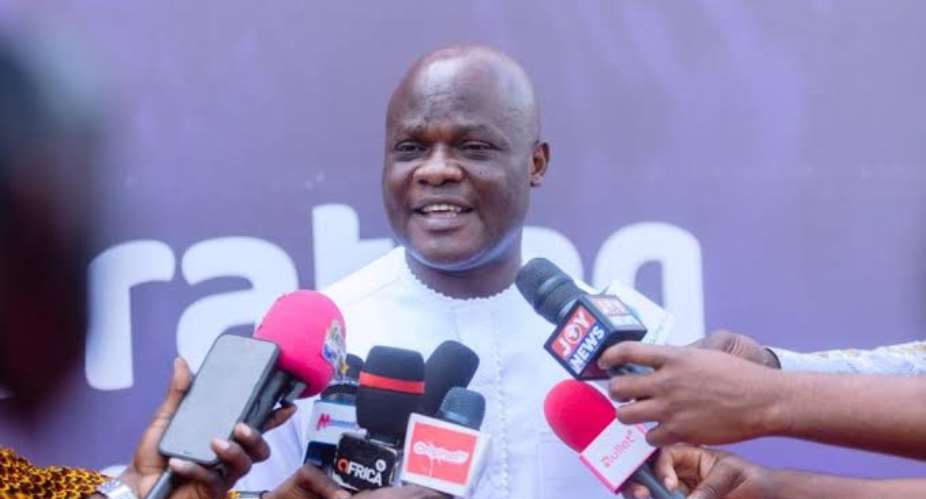
The Minister of Works, Housing and Water Resources, Ahmed Ibrahim, has endorsed the Rent Control Department's efforts to address concerns over accommodation costs, particularly the fees charged by university hostels.
He has urged stakeholders to allow Acting Rent Commissioner Frederick Opoku to perform his duties and expose shortcomings in the rental sector as part of efforts to introduce reforms.
Speaking to journalists on the sidelines of the Banda District Farmers' Day celebration last Friday, Mr Ibrahim, who is also the Member of Parliament for Banda, disclosed that he had instructed the ministry's Chief Director and his deputy to provide the Commissioner with the necessary support.
"When people came to me and said I should stop him, I called him and said, go ahead. If I did not support him, by now I would have stopped him," he said.
The minister said the government remained committed to addressing challenges in the rental and housing sectors and would not prevent the Commissioner from carrying out his responsibilities despite criticism of his approach to regulating accommodation charges.
Years of institutional neglect
Mr Ibrahim said the Rent Control Department had experienced prolonged neglect, resulting in shortages of logistics, personnel and funding, alongside weaknesses in the laws governing its operations.
He explained that resolving disputes over student accommodation fees, including concerns surrounding hostels at the University of Ghana (UG), required a comprehensive review of the country's rental and housing systems.
According to him, the government had directed the Ghana Tertiary Education Commission (GTEC) and the Rent Control Department to collaborate on the matter, while the relevant ministers would work together on the policy and legislative measures required.
Housing shortage fuels high accommodation costs
The minister cautioned against placing the blame entirely on hostel operators, arguing that Ghana's housing deficit and inadequate supply of accommodation had contributed significantly to the high cost of renting.
He estimated the country's housing deficit at between two and three million units, saying the shortage had created conditions in which some property owners and accommodation providers could exploit the high demand for available facilities.
On student accommodation, Mr Ibrahim explained that some universities entered into build, operate and transfer arrangements with private developers, providing land for the construction and management of hostel facilities before transferring ownership to the institutions after an agreed period.
He noted that developers needed to recoup their investments and generate profits within the period they were permitted to operate the facilities, a consideration he said should form part of discussions on hostel charges.
Minister proposes pension funds for hostel development
Mr Ibrahim also proposed the use of pension funds as a possible source of long-term financing for student accommodation projects.
He said Ghana's pension funds had accumulated approximately GH¢120 billion and suggested that the government engage pension fund managers on the possibility of investing part of the resources in hostel infrastructure.
He explained that revenue generated from students' rental payments could provide a means of recovering the investments made in constructing the facilities.
The minister maintained that addressing accommodation challenges would require careful assessment, stakeholder engagement and consultations before any major policy decisions were taken.
 Intellectual property law remains untapped opportunity for lawyers – Dr Olaga
 Rent Control Commissioner has full backing of government – Presidential Staffer
 Bawumia congratulates Black Challenge on historic World Cup triumph
 Amin Adam seeking political capital with borrowing claims – Appiah Dankwah
 Jaman South MCE defends DRIP equipment, alleges NPP MP declined fuel support
 Govt prepares to relaunch GIFMIS, seeks auditors' input on system redesign
 Mahama orders massive cleanup, beautification of Accra ahead of Ghana's 70th ind...
 Housing Minister backs Rent Control effort to curb high charges following UG hos...
 'Prove I took even fuel coupon!' - NDC Vice Chair aspirant Woyome dares critics
 Asankragua market fire destroys 'ashawo' joint


