




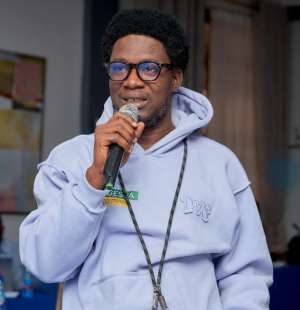
When the UN climate conference opens, thousands of ministers, diplomats, scientists and journalists converge on the venue. Ghanaian journalist Mahmud Mohammed-Nurudeen has done much of his COP reporting from home.
According to a WAJESHA feature published on 22 November 2026, he has followed seven conferences this way, from COP25 in Madrid to COP31 in Antalya, without attending in person.
Method over presence
His working tools are official documents, livestreams, press conferences, interviews, research reports and successive drafts of negotiating texts. The discipline he describes is simple: identify the original source, read what the document actually says, and separate a proposal from an agreement. In his words, a draft is not a decision, a pledge is not money delivered, and a launch is not proof a programme works.
A record across seven COPs
COP25-COP26: reporting linked Indigenous food systems research and farmers' struggles to read changing rainfall to the wider negotiations.
COP27: he examined which countries sent the largest delegations and profiled community-led adaptation initiatives, noting that registered participants are not the same as government-funded travellers.
COP28: he compared African delegation sizes (Nigeria 1,411, Ghana 618), reported on countries with no delegates, and covered calls for climate-resilient infrastructure.
COP29: he covered Africa's climate finance needs, the carbon market standards agreement, the US$300 billion annual finance commitment, and an analysis of how Ghanaian media covered the conference.
COP30: heat, health and energy: the global initiative on extreme heat and cooling, the Belém Health Action Plan, and calls for a just energy transition.
COP31: a draft proposing at least US$120 billion annually for adaptation by 2035, a revised draft that dropped explicit fossil fuel language, and reports on women's climate risk and methane reduction.
Honest about the limits
The feature does not oversell remote reporting. He acknowledges that reporters on site can approach delegates, observe corridors and follow informal conversations. Remote reporters risk leaning too heavily on official channels and recycled press releases. His answer is transparency about what can be verified and persistence in seeking independent voices.
Why this matters for Ghana and West Africa
Climate negotiations shape finance for adaptation, carbon market rules, energy investment and support for loss and damage. These affect farmers, cities, health systems and water security in Ghana. Newsrooms that cannot afford travel should not leave these decisions uncovered. A good model is to follow primary documents, test claims with independent experts, and keep tracking pledges after the delegates go home.
Lessons for newsrooms
Treat negotiating texts as the primary source, and track bracketed language.
Ask whether money is pledged, approved or delivered.
Link every international decision to a local consequence.
Disclose what you could and could not verify.
The conference may be far away. The consequences are not.
Mustapha Bature Sallama
Medical/ Science Communicator,
Private Investigator, Criminal Investigation and Intelligence Analysis,
International Conflict Management and Peacebuilding. (USIP)
[email protected]
+233555275880
References
WAJESHA, "Thousands travel to COP. One Ghanaian journalist follows the negotiations from home," 22 Nov 2026
WAJESHA, "COP31 draft proposes at least $120 billion annually for climate adaptation by 2035," Nov 2026
Mohammed-Nurudeen's COP25-COP31 reports, as cited in the WAJESHA feature

 Ghana's nuclear power transition to create jobs, support industrial growth – Dr ...
 Dr. Bryan Acheampong faults 2027 budget for lacking job creation target
 'We needs fairness, not partisan favouritism’ – Dr. Kojo Asante criticises Vande...
 Roads Minister urges city authorities to regulate cattle movement on highways
 MPs’ absence from chamber partly due to committee work, constituency duties – Ak...
 Failure to punish absentee MPs fuels parliamentary absenteeism – Dr. Osae Kwapon...
 November 23: Cedi sells at GHS12.60 on forex market, GHS11.81 on BoG interbank
 Over 41% of Ghanaian women aged 15–49 have suffered partner violence – Gender Mi...
 Prof Kwaku Azar questions legal basis for GTEC's nationwide PhD admissions freez...
 The New Economy Programme will keep NPP in opposition for very long time — Maham...


