




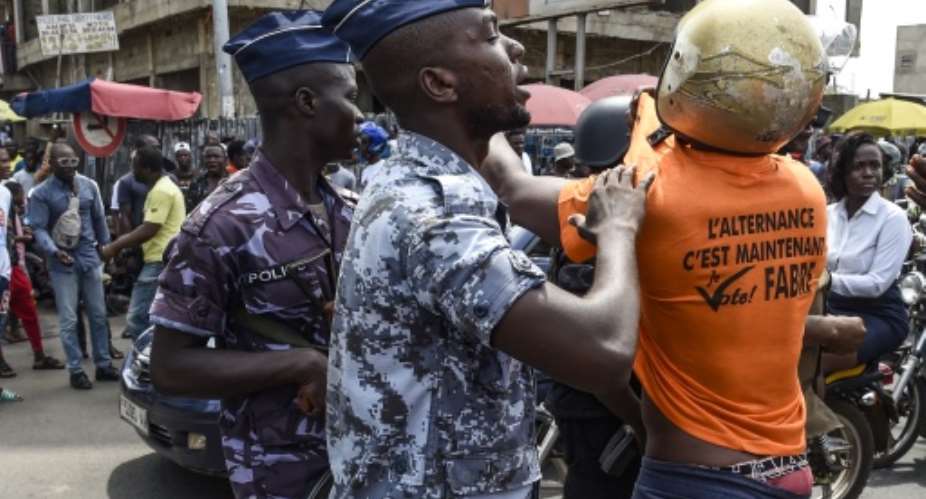
With its protests dispersed, its rallies sparsely attended and weakened by divisions, Togo's opposition is struggling to mobilise in the face of national leader Faure Gnassingbe's entrenched rule.
Gnassingbe has been in power in the small west African coastal nation since 2005, when he became president, succeeding his father who had governed the country for nearly four decades.
Following a 2024 constitutional reform denounced by opposition parties, the newly created post of president of the council of ministers has allowed him to retain power, getting around term limits.
In June 2025 in the capital Lome, street protests against the reform were crushed within days.
Civil groups reported seven deaths, while prosecutors said five people had died "by drowning".
"There is a climate of fear in the country," said Brigitte Adjamagbo-Johnson, one of the most prominent opposition figures.
"That fear must be exorcised."
Another veteran opposition leader, Jean-Pierre Fabre, said Gnassingbe "believes neither in the rule of law nor in democracy.
"He believes only in violence and force to maintain himself in power indefinitely."
Opposition and civil society rallies drew tens of thousands of supporters in 2017 but have shrunk in recent months to a few hundred.
Togolese political scientist Madi Djabakate said social media use had contributed to lower attendance.
"Many people prefer to follow events from home rather than risk being beaten or arrested for attending protests," he told AFP.
Fear is compounded by the "systematic banning of marches", according to Nathaniel Olympio, spokesman for the Hands Off My Constitution coalition of political parties and civil society groups.
"Rallies themselves are sometimes subjected to harassment and intimidation," he added.
Divided opposition
Beyond state repression, many observers also point to infighting within the opposition.
It unanimously rejects the 2024 constitution but struggles to speak with one voice.
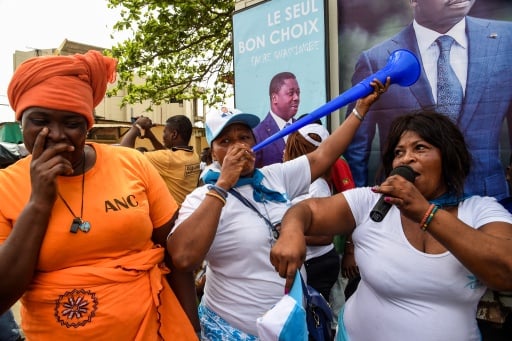 Under a 2024 constitutional reform, Gnassingbe cirumvented term limits to remain in power in a newly created role. By PIUS UTOMI EKPEI (AFP/File)
"The opposition itself is the reason young people no longer come out. It only thinks about its own interests," said Afi Afoudagan, a 28-year-old bank employee.
Kossivi Dossou, in his thirties, recalled being wounded during the 2017 protests.
"As long as they cannot stay united and speak with one voice, the struggle will achieve nothing," he said.
In July 2024, Olympio publicly apologised to the Togolese people for the opposition's "divisions".
"We have learned lessons from our own experience. We recognised our mistakes and apologised to the Togolese people," he said.
In late August, the main opposition groups launched a united front against the new constitution, their first such display of unity since the 2017 protests.
The authorities, for their part, say the constitution is intended to reduce the concentration of power in a single individual and transfer greater authority to parliament.
Political scientist Djabakate said that "if the opposition were truly free to organise and carry out its activities without obstruction or abuse, we could then assess what it is really capable of achieving."


 Over 41% of Ghanaian women aged 15–49 have suffered partner violence – Gender Mi...
 Prof Kwaku Azar questions legal basis for GTEC's nationwide PhD admissions freez...
 EU rejects COP31 draft decision over failure to tackle fossil fuels
 Soldiers reclaim 50 hectares of galamsey-degraded Tano-Nimiri Forest Reserve
 The New Economy Programme will keep NPP in opposition for very long time — Maham...
 Korle Bu patient regains normal urination, good erections three weeks after peni...
 Africa disappointed with COP31 outcome over failure to deliver adaptation financ...
 COP31 president apologises to Zanetor after interrupting Africa’s statement
 Ajumako-Besease two teens arrested for alleged GH¢38,000 romance scam
 Retired senior military officer in court over alleged GH¢1 million recruitment s...


