




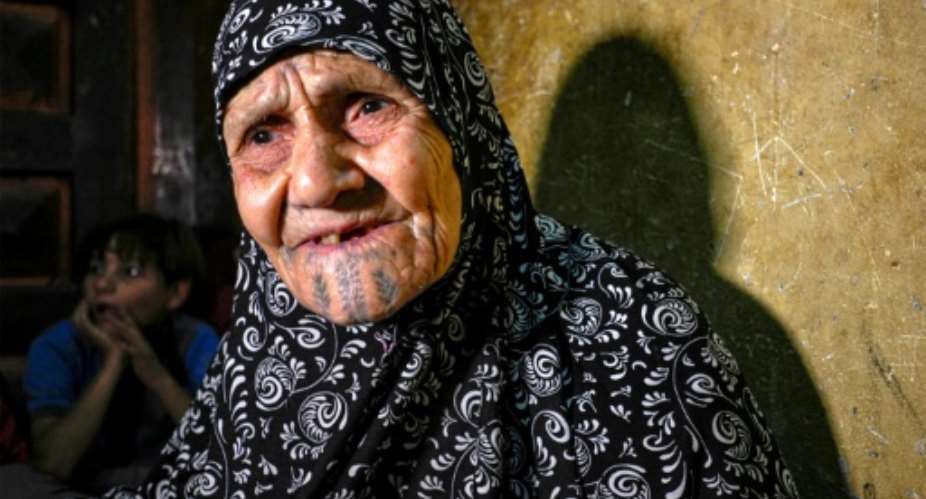
Shamma Abu Hussein is possibly the last person in her village of refugees to have lived in historic Palestine. Living in Egypt, she has watched three generations of her family grow up in legal limbo.
She was among the hundreds of thousands who fled or were expelled during the creation of the State of Israel in 1948, whose descendants number in the millions.
Now she fears that the effects of the Gaza war and rhetoric from Israeli ministers calling for Gazans to be expelled means history is repeating itself.
"After all the suffering they've endured," the 90-year-old said, "they now want to uproot them from their homes."
"I remember what I went through," she told AFP from a low-slung brick house in Geziret Fadel, a village tucked among the fields and irrigation canals of Egypt's Sharqiya province, about an hour northeast of Cairo.
She was recalling her family's flight from Beersheba, now in southern Israel, where they lived before fleeing the hostilities that accompanied Israel's creation, which Palestinians remember as the Nakba, or catastrophe.
One evening, as flames lit up the sky, elders rushed the children onto camels and into the desert, where Abu Hussein's family trudged for days without food or water until reaching Egypt, losing her mother along the way.
The settlement where they eventually found refuge has grown into a community of around 4,000 Palestinians.
Many have spent their entire lives in Egypt, yet they say they face bureaucratic hurdles to access education, healthcare and other public services because they are treated as foreigners rather than citizens.
Generations in limbo
Inside her home, the wiry Abu Hussein sat on a worn sofa, a faded Bedouin tattoo tracing her chin.
Around her, dozens of grandchildren and great-grandchildren crowded the doorway and walls, filling in names and dates blurred by nearly a century of life.
Outside stretched a maze of narrow alleys and unfinished houses, with open sewers running through the village's dirt lanes.
Residents spoke less about returning to their ancestral home than about education, employment and stability.
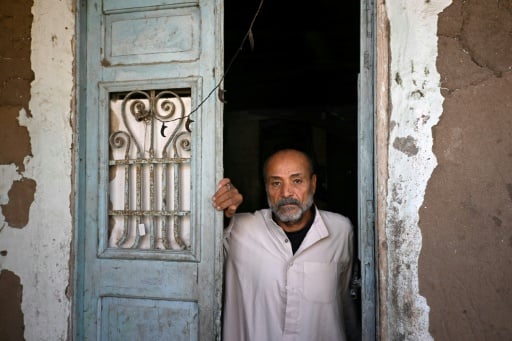 "I was born in Egypt. My father was born in Egypt. My children were born in Egypt," says Selmi Soliman al-Namouli. By Khaled DESOUKI (AFP)
"I was born in Egypt. My father was born in Egypt. My children were born in Egypt," said Selmi Soliman al-Namouli, a 63-year-old agricultural labourer and father of 10.
"But when it comes to paperwork, I am treated as a foreigner."
Namouli said residency renewals, paid for in US dollars, school fees and other administrative costs placed such a heavy burden on his family that he could not afford to send his bright daughter, Asmaa, to university.
His nephew, Farid Khaled al-Namouli, 25, also gave up on higher education.
"When I reached preparatory school, I started to love education and wanted to continue," he said. "But I kept running into obstacles with the paperwork."
He left school and found work in a clothing shop in the village, where many residents never completed their education.
'Ongoing Nakba'
The Namoulis are far from alone, according to Lubnah Shomali of the Palestinian refugee rights organisation BADIL, who said Palestinians across Egypt face similar challenges.
Researchers estimate that around 50,000 Palestinians displaced by earlier conflicts were living in Egypt before the latest Gaza war. Since the conflict began, more than 100,000 more have arrived.
The UN agency for Palestinian refugees, UNWRA, counts 3.5 million registered in Jordan, Syria and Lebanon.
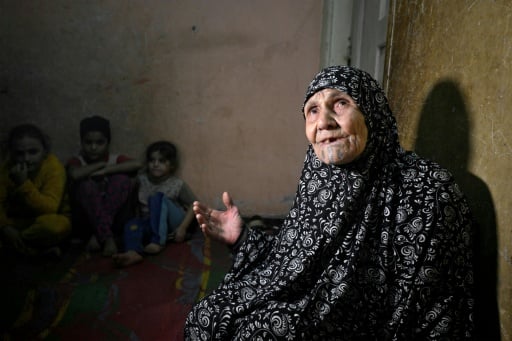 Researchers estimate around 50,000 Palestinians were living in Egypt before the latest Gaza war. Since the conflict began, more than 100,000 more have arrived. By Khaled DESOUKI (AFP)
The Gaza war has revived fears of another Nakba, but Shomali said Palestinians were already living through one.
"The most apt description of the situation for Palestinians is an ongoing Nakba because the displacement continues," she told AFP, adding that generations of Palestinians have been trapped in a "coercive environment" that limits access to education, healthcare and other basic rights.
Egyptian officials have repeatedly said that Egypt has provided medical care and education to Palestinian refugees and has opposed any attempt to permanently displace them from their land.
Palestinians in Egypt once enjoyed access to education and employment largely on a par with Egyptian citizens under former president Gamal Abdel Nasser.
But after Egypt's 1978 peace treaty with Israel and the assassination of culture minister Yusuf Sibai by members of the Palestinian militant group Abu Nidal, the regulations were tightened.
Right of return
Moreover, unlike in Jordan, Syria and Lebanon, where UNRWA offers schooling, the agency has never operated in Egypt, said Dawn Chatty, an emeritus professor of anthropology and forced migration at the University of Oxford.
"Education is what gave Palestinians hope," Chatty told AFP.
"It allowed many refugees elsewhere in the region to find work abroad and support their families through remittances. But in Egypt, that did not happen."
Successive Egyptian governments have also rejected naturalising Palestinians, arguing it could undermine their right of return, a position Shomali disputed.
The Egyptian foreign ministry did not respond to an AFP request for comment.
Despite the life she built in Egypt, Abu Hussein has never abandoned the idea of returning home.
"We had a good life back home," she said, "If everyone here goes back, I'll go with them".

 Drone strikes hit homes, UN building in Sudan's capital
 South Korean education minister resigns over AI-driven exam cheating scandal
 Climate deal collapses in chaotic end to COP31
 How eight 'A's WASSCE graduate from Wesley Girls killed by speeding motorcycle w...
 GTEC freezes new PhD admissions nationwide pending audit of doctoral programmes
 NATO faces sovereignty dilemma as militaries rely on private tech, AI
 Afenyo-Markin demands answers over poor water quality in Central Region
 Mahama says Mayweather’s Ghana visit will boost tourism, boxing
 Police to develop human rights manual to strengthen professionalism and public t...
 How Korle Bu surgeons fixed back man's penis cut off whiles attempting to sit on...


