




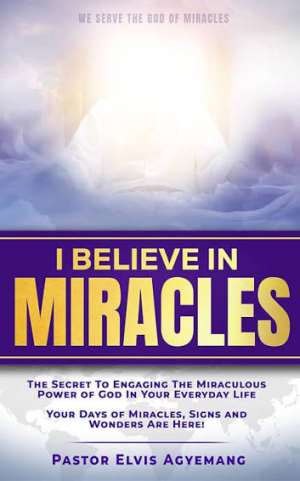
There is an old saying that if you want to hide something from the black man, put it in a book. Pastor Elvis Agyemang opens his new book with that line and then turns it on us. We read to pass exams, he says, but rarely to change our lives. I felt that one. So I sat down with this 500-page book, and I want to share what stayed with me, whether you believe in God, doubt Him, or have stopped asking.
The first thing the book does is surprise you. Before it talks about dramatic healings, it points at the ordinary. Your heart has beaten all your life without servicing. The sea keeps to its boundary. Your kidneys work quietly until the day they don't, and only then do you understand what a gift it was to use the bathroom freely. The pastor's point is that we have become so used to wonders that we no longer call them wonders. Whatever your faith, that is hard to argue with. Ask any nurse.
From there he makes his main claim. The first and greatest miracle, he says, is being born again, which means believing that Jesus took your place on the cross and was raised from the dead. Everything else flows from that. This is not a demand that you pretend to believe anything. He invites you to ask honest questions, and he borrows the one Gideon asked in the Bible: if God is with us, where are all His miracles? I find that refreshing. Faith that cannot survive a question is not worth much.
What moved me most is not in the miracle chapters at all. It is in the chapter where he tells his own story. He grew up in a poor Ghanaian family. He writes of being sent out of class over school fees, and of hiding under a tree until closing time so his mother would not worry. He tells of being stopped from singing in the church choir because his shirt collar was torn. There were days when the family's food was tea shared from a big basin. He says the pain did something unexpected to him: it grew compassion. Today the ministry he leads lists classroom blocks for schools, medical equipment for Korle-Bu Teaching Hospital, boreholes for communities, relief items for flood victims in Mepe, and a home for addicts and ex-convicts. I cannot audit every project. But the direction of the story matters. A boy who knew hunger now builds boreholes. That is the kind of fruit Jesus told us to look for.
Here is the part I wish every church would read twice. The pastor warns about false miracle workers, and his test is simple: who are they pointing to? A true servant points to Jesus. A false one points to himself, his system, or his own brand. He even says a miracle should never make the worker the object of worship. If you are a believer, use that test on every preacher you follow, including this one. If you are not a believer, let it protect you from being fooled by showmen.
He is also honest about failure. He tells of a young man with cancer whose chemotherapy he paid for over a year. The young man died just before the final treatment. The pastor does not hide this. He says it forced him to examine his leadership, and he concluded that he had been giving out money when he should also have been leading people into prayer and the Word. You may agree or disagree with the lesson. But a man who publishes his own painful loss deserves to be heard more than one who only publishes successes.
Then there is a chapter I think the whole country needs, titled "Wisdom Is a Miracle." He says refusing what harms you is itself a miracle. Do not smoke. Do not go to work late and call it anointing. Do not pray over your pen and skip your studies. Treat your wife with care. God, he says, often answers prayer through the sensible thing we were too proud to do. Many of us have been praying for what a little discipline would have fixed.
Now let me be fair and say where I would add a word of caution, because honest writing requires it. The book carries many testimonies of healing, and some are striking. I cannot verify them, and neither can you from a page, so test everything. Be careful when anyone tells a grieving person that their suffering is a sign of coming greatness. Sometimes pain is simply pain, and the right response is to sit with the person. And on health, please hear this plainly: if you are on medication, do not stop it without your doctor's advice. The pastor himself writes that medicine is part of God's mercy through human intelligence. Faith and the hospital are not enemies. As for giving, the book rightly quotes the Bible that it must be cheerful and never forced. Give freely, never under pressure.
So where does this leave you, dear reader? If you are a Christian who has grown tired, ask Gideon's question again, sincerely, and keep asking. If you do not believe, I am not asking you to swallow a testimony. I am asking you to look at the heartbeat you did not start, the breath you did not buy, and wonder who is behind it. Then read the Gospel of John in one quiet sitting. Talk to Jesus in plain words, even if you are unsure He is listening: "Jesus, if You are real, I want to know You. Forgive me, and come into my life." Then find a church where Christ is lifted up and the Bible is open.
Miracles may not look the way you expect. But the One who works them has not changed, and He has not stopped loving us.

 2.8million households adopt food coping strategies – GSS
 Half of Ghanaian households spend over 75% of expenditure on food – GSS
 Lands Minister Buah sues two Ellembelle residents for GH¢2m over alleged defamat...
 Traditional Council tells CWSA to hand over Asesewa water system by December 1
 How IGP special team helped Police arrest two suspects over viral Asaokore robbe...
 28 Krachi East assembly members file vote of no confidence to remove MCE
 Lawyer challenges Haruna Iddrisu's two-year BECE ban at Accra High Court
 Oti Region NADMO staff raise concerns over alleged selective payment of salary a...
 Mahama announces plans to open Ghana embassy in Barbados in 2027
 Customers' deposits have not been compromised — BoG allays fears after banks cyb...


