




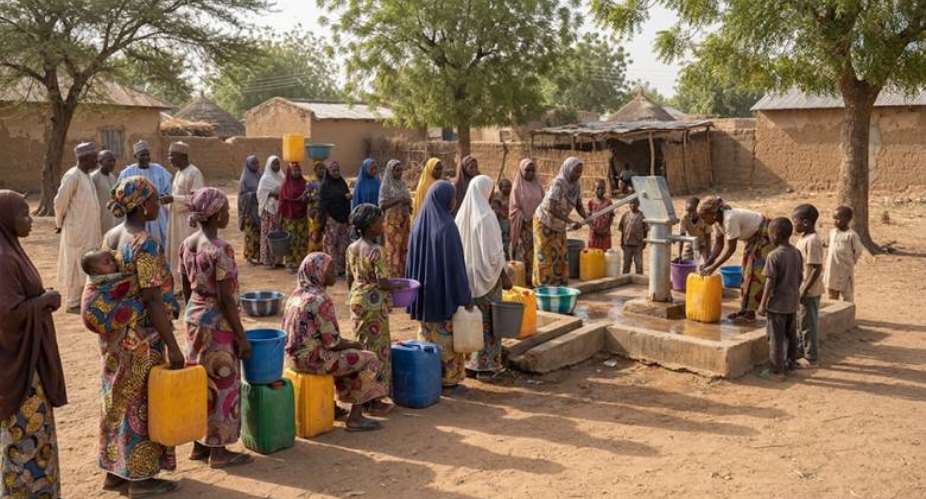
There was a time in Nigeria when access to clean drinking water was regarded as one of the basic responsibilities of government. In the major cities, households could depend, to varying degrees, on a public water supply system managed by government-owned Water Boards and Water Corporations. Water was treated at government waterworks, pumped through networks of public pipes and delivered to homes, institutions and businesses. Consumers paid water rates or bills for the service, while government maintained the infrastructure and took responsibility for ensuring that the water was safe for human consumption. It was not a perfect system, and there were communities that did not enjoy regular supplies, but the underlying principle was clear: the provision of potable water was a public responsibility, and government had established institutions specifically to discharge that responsibility.
Today, that arrangement has largely disappeared from the everyday experience of millions of Nigerians. In Lagos, Ibadan, Kano, Kaduna, Enugu, Owerri, Aba, Port Harcourt, Abeokuta, Benin City and several other urban centres, the sight of a functioning public water network supplying households has become increasingly uncommon. Many families now depend on boreholes, private water vendors, water tankers, wells and sachet water. Those who can afford to drill boreholes and install pumping equipment do so, while poorer households buy water in containers, often without knowing whether or not it has been properly treated.
It is intriguing how a country which once considered public water supply an essential government service arrived at this situation. But more importantly is: “Can Nigeria restore the days government took the responsibility of supplying clean water to its citizens, and what would it take to do so?”
The history of public water supply in Nigeria goes back to the colonial period. The first organised water schemes were established in a number of important towns, including Lagos and Calabar. The Calabar scheme was particularly significant because it dated back to the nineteenth century, while modern public water supply developed in Lagos in the early twentieth century. Other towns, including Ibadan, Abeokuta, Enugu, Kano and Ijebu-Ode, subsequently acquired public waterworks as the colonial administration and later regional governments expanded urban infrastructure.
In the early years, responsibility for water supply rested with government Public Works Departments and local administrative authorities. The regional governments that emerged in the 1950s assumed greater responsibility for financing and constructing water schemes. Water rates were collected to support the operation and maintenance of these facilities, although the arrangements differed from one locality to another.
An important institutional development took place in 1966 when the former Western Region established what later became the first Water Corporation in Nigeria. Public water-supply undertakings, together with their staff, assets and liabilities, were transferred into the new corporation. This marked a move away from water supply being treated simply as another department of government works towards specialised public utilities with a defined responsibility for developing, operating and managing water schemes. The other regions and, subsequently, the newly created states adopted similar arrangements.
By the 1970s, Water Boards and Water Corporations had become familiar features of state administration. The Kaduna State Water Board, for example, was established in 1971, while Cross River State's Water Board became autonomous in 1975. Oyo State's water-supply institutions also developed from the Western Region's earlier arrangement, with the Water Corporation of Oyo State established under the 1977 reorganization of the state's public water services.
The creation of these institutions coincided with a period of considerable public investment. The oil boom of the 1970s provided government with resources to construct dams, treatment plants, pumping stations and distribution networks. The Federal Government also became more directly involved in water resources development in 1976, with the establishment of the Federal Ministry of Water Resources and the River Basin Development Authorities.
In Oyo State, the history of the waterworks illustrates what was possible. Eleyele Waterworks, commissioned in 1942, provided the original major supply scheme for Ibadan. The Asejire Waterworks, commissioned in 1972 and subsequently expanded, significantly increased the city's water-production capacity. Other schemes served towns such as Ogbomoso, Oyo, Eruwa, Shaki and Iseyin. Similar developments took place in other parts of the country, giving many urban communities access to treated public water.
The Water Boards were therefore not merely bureaucratic offices. They represented an organised public utility system. They had engineers, chemists, laboratory personnel, technicians, plant operators, commercial departments and field workers. Their responsibility extended from the abstraction of raw water from rivers, dams and reservoirs to treatment, pumping, distribution, billing and maintenance.
So what happened?
The decline was gradual, and there was no single national decision abolishing the Water Boards. Rather, several economic, political, administrative and technical developments combined to weaken the institutions and undermine their ability to deliver services. The economic difficulties that followed the oil boom were an important turning point. As government revenues came under pressure in the 1980s, public investment and maintenance expenditure became increasingly difficult to sustain. Waterworks that had been constructed during periods of relative prosperity required continuous funding for electricity, treatment chemicals, spare parts, staff, repairs and replacement of ageing infrastructure. When these expenses were not adequately funded, maintenance kept being postponed, equipment deteriorated and production capacity declined.
The problem became compounded by the rapid growth of Nigerian cities. Urban populations increased, new residential areas emerged and demand for water expanded, but the distribution networks were not extended at the same rate. In some places, the treatment plants could no longer meet demand. In others, water could be produced but could not be distributed effectively because of damaged or inadequate pipelines.
Political interference and weak financial management also contributed. Many Water Corporations were expected to operate as commercial public utilities, but they remained heavily dependent on government decisions concerning appointments, budgets, staffing and tariffs. Water rates were frequently too low to cover the actual cost of production and distribution, while collection was often inefficient. In some cases, governments were reluctant to permit realistic tariffs, even when the money was needed to maintain the system. The result was a cycle of inadequate revenue, deteriorating facilities and increasing dependence on government subventions. That situation was further complicated by irregular electricity supply. Water treatment and distribution depended heavily on pumping, and the cost of operating generators when public electricity was unavailable can be substantial. A waterworks may have a functioning treatment plant and adequate raw water but still be unable to deliver sufficient quantities to consumers because it cannot afford the energy required to pump the water.
Another problem was the gradual loss of institutional capacity. Experienced engineers, technicians and other skilled personnel retired or left without adequate replacement. Some water corporations became overstaffed in administrative departments but lacked sufficient technical personnel in the field. In other cases, the institutions were subjected to repeated restructuring without the necessary investment in equipment, staff development and operational management.
The World Bank's assessment of Nigeria's urban water sector identified many of these difficulties, including poor maintenance, weak financial performance, political interference, limited institutional capacity and inadequate coordination between federal and state governments. The result was a system in which public utilities struggled to recover operating costs and depended heavily on state governments to finance their deficits.
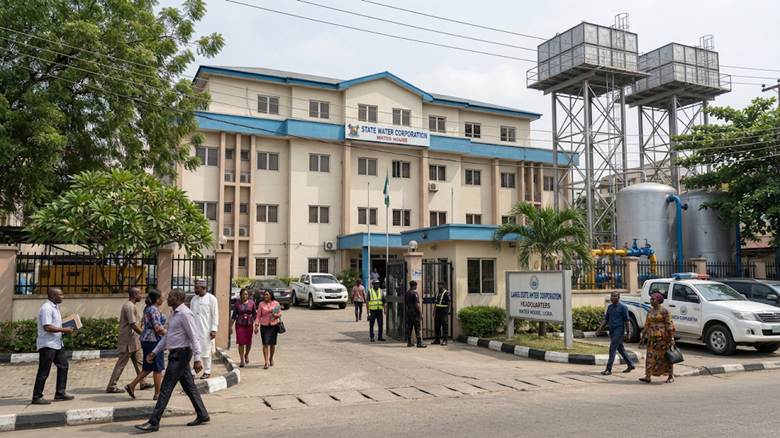
It is important, however, to correct a common impression that the Water Boards themselves were abolished. They were not. The Federal Government's own water-resources policy documentation records that the 36 states and the Federal Capital Territory have Water Boards, Water Corporations or equivalent public utilities responsible for managing public water-supply undertakings. What has largely disappeared in many places is their ability to provide a reliable service, and not necessarily their legal existence.
In some states, the original institutions have continued to retain their names. In others, they have been reorganized or renamed as Water Corporations, Water Supply Agencies or Water and Sewerage Corporations. Some remain active, some operate intermittently, and others have facilities that are largely dormant. The institutional structure survives, but its effectiveness varies considerably. The regional picture is particularly revealing because the decline was not uniform across the country. Some states have continued investing in their water utilities, others have undertaken rehabilitation programmes, and several have struggled to keep existing facilities operational.
In the South-West, Lagos, Oyo, Ogun, Osun, Ondo and Ekiti inherited or developed substantial public water infrastructure. Lagos has the Lagos Water Corporation, while Oyo retains its Water Corporation and its network of waterworks. Yet the existence of these institutions has not translated into dependable piped water for most urban households. The 2025 civil society investigation titled Dry Taps: A Damning Verdict on the State of Water Utilities in Nigeria, which examined facilities in Lagos, Oyo, Edo, Enugu, Kogi and Kano, reported that major waterworks in the six states were operating intermittently and substantially below installed capacity. It also highlighted neglected smaller facilities and low worker morale. These findings illustrate that the problem was not confined to one geographical region.
In the North-West, Kaduna provided an example of a state that retained a clearly defined Water Board structure. Established in 1971, the Kaduna State Water Board was subsequently re-established under a 2004 law. It has a decentralized structure and responsibility for managing waterworks and supplying consumers with treated water. Kano and other states also have established public water-supply institutions. Nevertheless, the existence of these structures has not removed the problems of inadequate production, distribution losses, population growth and financial sustainability.
In the North-East, the challenges are particularly complicated by the effects of insecurity, displacement, difficult geography and the cost of maintaining infrastructure across widely dispersed settlements. Public water schemes exist, but access to reliable services is uneven. In parts of the region, boreholes and community water points have become essential alternatives to conventional piped supply.
The North-Central region faces a different combination of challenges. Rapid urbanization, expanding settlements, pressure on existing water resources and inadequate distribution networks affect cities such as Jos, Makurdi, Ilorin, Minna and Lafia. The Federal Capital Territory has a comparatively developed central water infrastructure, but population growth and the expansion of satellite settlements have created substantial demands on the system. A water supply programme that concentrates only on the central districts of Abuja cannot meet the needs of the wider metropolitan area.
In the South-East, cities like Enugu, Awka, Onitsha, Aba and Owerri have public water-supply institutions and schemes, but many households continue to depend on privately owned boreholes and commercial water suppliers. The problem is particularly significant in rapidly expanding urban settlements, where private groundwater extraction has grown faster than the development of public distribution networks. The 2025 investigation of water utilities in Enugu also identified serious operational and maintenance difficulties.
In the South-South, Port Harcourt, Calabar, Uyo, Benin City, Warri and Yenagoa have different water-supply histories and infrastructure conditions. The region has considerable surface-water resources, but water availability does not automatically translate into safe drinking water. Raw water must be properly treated, distribution networks must be maintained and contamination must be prevented. In coastal and riverine communities, flooding, salinity, difficult terrain and the cost of extending pipelines present additional challenges. Cross River State, for instance, has one of the country's oldest public water-supply institutions, with the Cross River State Water Board tracing its institutional history to 1975.
These regional experiences demonstrate that Nigeria does not suffer from the complete absence of water institutions. It suffers from a combination of weak utilities, inadequate investment, poor maintenance, fragmented responsibilities and insufficient accountability. The national figures underline the seriousness of the situation. The 2021 Water, Sanitation and Hygiene National Outcome Routine Mapping exercise, conducted with the Federal Ministry of Water Resources, the National Bureau of Statistics, UNICEF and other partners, identified approximately 1,395 waterworks connected to urban water utilities across the country. Of these, 951, or 67%, were non-functional, while another 157 were only partially functional. Only 16 states had fully functional urban water utilities among the 28 states and the Federal Capital Territory with identified urban utilities.
The same survey found that only about 444,171 of approximately 1.2 million urban water connections were active. The combined installed capacity of the waterworks was about 8.06 million cubic meters daily, but actual operating capacity was approximately 1.98 million cubic meters, representing only about 25% utilisation. It also found evidence of contamination in a significant proportion of sampled public water taps. And, of-course, these were not simply statistics about neglected infrastructure. They describe a public service that failed to reach much of the population it was established to serve.
There is, however, an important distinction to make when discussing access to water. A household that obtains water from a protected borehole or an improved community water point may be classified as having access to basic drinking water, even if it has no connection to a public water network. Consequently, improvements in general drinking-water access should not be confused with the restoration of government-operated piped water services. The 2024 Nigeria Demographic and Health Survey, whose final report was disseminated in 2025, estimated that 88% of the urban household population had at least basic drinking-water service, compared with 56 per cent in rural areas. The figures varied substantially by geopolitical zone and state. This is useful evidence of the urban-rural divide, but it does not mean that 88% of urban Nigerians receive reliable treated water through government pipes. Many obtain water from private boreholes and other improved sources.
The rural situation deserves particular attention. Historically, the Water Boards concentrated much of their investment in major towns and metropolitan centres. Smaller communities were frequently left to local governments, community water committees and occasional intervention programmes. In many villages, boreholes were constructed through government projects or development partners, only to become unusable when the pumps broke down, solar equipment failed or funds for maintenance could not be found.
A World Bank assessment of Nigeria's water sector documented the scale of this sustainability problem, reporting that a substantial proportion of rural water points and small schemes were non-functional. It also identified poor siting, inadequate construction, weak community management and insufficient provision for operation and maintenance as recurring problems. It is, therefore, not enough to restore urban Water Boards and leave rural communities to fend for themselves. A national water restoration programme must address both urban and rural supply, while it recognises that the technical and institutional arrangements required in a large city are different from those needed in a small village.
The first step towards restoring public water supply must be a comprehensive national audit of existing water infrastructure. Before governments embark on another round of ambitious construction projects, they should establish exactly what they already own and what condition those assets are in. Every state should publish an inventory of its dams, reservoirs, treatment plants, pumping stations, transmission mains, distribution pipes, public standpipes, laboratories, vehicles and other operational equipment. The audit should establish which facilities can be restored through relatively modest repairs, which require major rehabilitation and which have become beyond economic repair. It should also establish the actual production capacity of each waterworks, the quantity currently being produced, the number of consumers connected to the network and the cost of restoring regular supply.
This exercise is important because Nigeria has already invested enormous public resources in water infrastructure. There is little justification for repeatedly commissioning new projects while existing facilities remain abandoned or operate far below their designed capacity.
The second step should be the deliberate restoration of the state Water Corporations as professionally managed public utilities. Their legal and operational independence must be strengthened. Appointments to their governing boards should be based on professional competence, not political patronage. Their managing directors, engineers, financial controllers and other senior personnel should be appointed through transparent processes and assessed against clearly defined performance targets. Water Corporations must also be given the authority to manage their operations, recruit and retain qualified technical personnel, collect revenue and plan maintenance. Government should provide the necessary policy direction and capital investment without treating the corporations as ordinary political departments. This does not mean removing government ownership or responsibility. On the contrary, it means making government ownership more effective.
Third, there must be a realistic and sustainable financing arrangement. Water is an essential social service, and the objective should be to make it affordable to ordinary Nigerians. However, a public utility cannot survive indefinitely if it is expected to supply water without collecting enough revenue to maintain its facilities. A fair tariff structure should therefore be introduced, with a basic affordable lifeline allowance for low-income households and higher charges for consumers who use larger quantities of water. Public institutions, commercial establishments and industrial consumers should pay appropriate rates. Poor households should be protected through targeted subsidies rather than force the entire utility to operate at a financial loss.
Water metering is essential to this arrangement. Consumers should be billed according to measured consumption wherever practical, while public standpipes and community water points should have transparent arrangements for access and payment. The objective is not to commercialize water to the extent that poor citizens are excluded. It is to establish a system in which the consumer pays a reasonable amount, government provides the necessary capital support, and the utility has sufficient resources to keep water flowing.
Fourth, Nigeria must invest in modernizing its treatment and distribution infrastructure. Many existing waterworks were designed decades ago and require substantial rehabilitation. Treatment plants need modern equipment, reliable chemical supplies and properly equipped laboratories. Distribution networks need to be mapped, inspected and repaired. Old and leaking pipes must be replaced, while illegal connections and unauthorised tapping of public pipelines must be addressed. The country should also take advantage of renewable energy. Solar-powered pumping systems, particularly for smaller waterworks and rural schemes, could reduce dependence on expensive diesel generators and unreliable electricity. Larger treatment plants may require a combination of grid electricity, solar installations and efficient backup systems.
Fifth, water quality must become a central performance responsibility. Producing water is not the same as producing safe drinking water. Every state Water Corporation should operate or have access to accredited laboratories capable of regularly testing raw water, treated water and samples collected from distribution networks. Testing should cover microbiological contamination, chemical pollutants and other relevant safety indicators.
The results should be published regularly and made accessible to consumers. Where contamination is detected, the responsible utility should be required to take corrective action and inform the public. Independent regulators should be empowered to enforce drinking-water standards, inspect facilities and penalize persistent non-compliance.
Sixth, the country needs a more coherent relationship between federal, state and local governments. The Federal Government should concentrate on national water policy, technical standards, hydrological information, major water-resource infrastructure, financing support and independent performance monitoring. State governments should remain principally responsible for urban water utilities and the delivery of services through their Water Corporations. Local governments should have properly funded and technically supported responsibilities for rural water supply and community-level facilities.
The River Basin Development Authorities should also be better integrated into the national water-supply strategy. Their responsibilities for managing water resources and developing major infrastructure should be linked more directly to the needs of state and local water utilities. Dams and reservoirs should not be viewed exclusively as irrigation or flood-control assets where they can also support carefully planned municipal water supply.
Seventh, rural water supply requires a different but equally serious institutional commitment. Each local government should have a properly functioning water and sanitation department with qualified personnel, an identifiable budget and a register of community water facilities. Rural communities should participate in the planning and supervision of their water schemes, but they should not be expected to finance major repairs that are beyond their capacity. Community water committees should be supported with technical assistance, training and access to maintenance funds. State governments should establish mobile maintenance teams capable of responding to breakdowns across rural districts. Solar-powered boreholes, small treatment plants, protected springs, rainwater harvesting and gravity-fed systems should be considered according to local geography and water availability.
In places where groundwater is unsuitable or insufficient, surface-water schemes and small regional distribution networks should be developed. The objective should be to ensure that every community has a dependable source of safe water within reasonable reach. There are already programmes from which Nigeria can learn. The National Urban Water Sector Reform Projects, supported by the World Bank, introduced institutional and operational reforms in selected states, including Enugu, Kaduna and Ogun. The subsequent phases expanded the reform agenda. The African Development Bank has also supported urban water reform initiatives, including projects covering Akure, Ibadan, Jalingo and Port Harcourt.
The Sustainable Urban and Rural Water Supply, Sanitation and Hygiene Programme, popularly known as SURWASH, represents another attempt to strengthen water institutions and expand services. The programme was designed to support participating states in improving access to water, sanitation and hygiene services. However, the implementation difficulties reported by the World Bank and the Federal Government demonstrate that access to development finance alone does not guarantee results. States must demonstrate the institutional capacity, budgetary commitment and administrative discipline required to execute projects.
A June 2025 report on the programme highlighted delays in state-level procurement, inadequate understanding of programme procedures and slow disbursement. This should serve as a warning against launching another large national water initiative without first strengthening the institutions expected to implement it. Nigeria should consider establishing a National Water Supply Restoration Programme with a clear ten-year framework. The programme should have measurable targets, annual performance assessments and publicly available state-by-state progress reports.
Its first phase should concentrate on rehabilitating existing waterworks and restoring production. Its second phase should focus on repairing and extending distribution networks, reconnecting households and introducing effective metering and billing systems. Its third phase should expand services into underserved urban settlements, small towns and rural communities.
Federal financial assistance should be tied to independently verified results. States that demonstrate genuine commitment, maintain transparent accounts and achieve agreed performance targets should qualify for additional support. Funds should not simply be released because a project has been announced or a contract awarded.
There must also be a clear system of public accountability. Every Water Corporation should publish an annual report showing how much water it produced, how much it distributed, how many households it served, how much revenue it collected, how much government support it received and what it spent on maintenance and capital investment. Citizens should be able to report broken pipelines, leaking mains, irregular supply and suspected contamination through accessible complaint systems. Public hearings should allow consumers to question utility managers about the quality and cost of services.
The private sector also has a role to play, but its participation should complement rather than displace government's fundamental responsibility. Private companies can provide engineering services, equipment, maintenance, technology, financing and specialist operational support. Public-private partnerships may be appropriate for particular projects where the arrangements are transparent, properly regulated and demonstrably beneficial to consumers. However, Nigeria should be cautious about assuming that privatization alone would solve the problem. Water is an essential public-health service, and any arrangement that allows private commercial interests to take precedence over affordability, universal access and quality control would undermine the purpose of reform. Government must retain the responsibility for ensuring that every citizen can obtain safe drinking water.
There is also a need to change the way Nigerians think about public water infrastructure. A government that constructs a waterworks and commissions it with a ceremony has not necessarily delivered a successful project. The real test is whether the facility is still working five, ten or twenty years later, whether water reaches consumers every day and whether the water is safe to drink. This requires a shift from the politics of project commissioning to the discipline of service delivery. Politicians may find it more attractive to announce a new dam or treatment plant than to spend money replacing kilometres of old pipes. Yet the latter may produce a more immediate improvement in the lives of ordinary citizens.
The economic and public-health benefits of restoring government water supply are considerable. Households would spend less money buying water from private vendors. Families would be less exposed to contaminated wells and poorly regulated water sources. Hospitals, schools, markets and public institutions would have more dependable supplies. Women and children, who often bear the greatest burden of fetching water, would have more time for education, employment and other productive activities. Reliable public water supply would also support industrial development. Businesses that currently spend substantial sums drilling boreholes, purchasing water and maintaining private treatment systems could redirect some of those resources into productive investment. A dependable water network would make urban centres more attractive for manufacturing, hospitality, healthcare and other economic activities.
The environmental implications are equally important. The uncontrolled proliferation of private boreholes places increasing pressure on groundwater resources in some urban areas. A properly managed public system could reduce unnecessary groundwater abstraction, provided that it is supported by sound resource planning and environmental monitoring. Ultimately, restoring the days of the Water Board does not mean returning to the exact administrative and technological arrangements of the 1970s. Nigeria's population has grown enormously, its cities have expanded, and the demands placed on water resources have changed. The country needs modern water utilities equipped with contemporary technology, professional management, reliable financing and transparent regulation.
But the principle that inspired the old Water Boards remains relevant: government must accept responsibility for ensuring that its citizens have access to safe and affordable water. It is difficult to justify a situation in which a household in a major Nigerian city must spend a substantial proportion of its income buying water when public dams, reservoirs, treatment plants and distribution networks were constructed with taxpayers' money for the very purpose of supplying that household. The infrastructure has not entirely vanished. The institutions have not all disappeared. The technical knowledge is available, and the country has sufficient water resources in many parts to support a much more extensive public supply system. What has been missing is the sustained political commitment, institutional discipline and financial investment required to make the system work.
The restoration of the Water Boards should therefore become a national development priority, not another political slogan. State governments should be challenged to explain the condition of their waterworks, publish realistic restoration plans and commit annual budgets to keeping them operational. The Federal Government should provide the policy framework, technical support and financing incentives to ensure that no state is left behind.
Nigeria once demonstrated that government could organise and operate public water-supply systems in its major towns and cities. There is no compelling reason why a country with considerably greater technical knowledge and institutional experience should be unable to do so today. The goal should be simple but ambitious: to make the day when a Nigerian household turns on its tap and receives clean, treated, affordable water a normal everyday experience again, rather than a memory of a more functional period in the country's history. That is what restoring the days of the Water Board should mean.


 GSA secures High Court backing, recovers GHS400,000 outstanding rent
 Boankra logistics terminal 85% complete as GSA advances infrastructure agenda
 Copyright laws must be amended to address AI, digital content challenges – Copyr...
 Mahama urges regulators to simplify business permit processes
 President Mahama urges ECOWAS to stop the rhetorics, remove trade barriers
 Ghana's democracy is for sale as money floods party elections — Ho West MP
 Meet Diamond Lucas, 12-year-old UCC undergraduate student pursuing BSc degree in...
 GRA uncovers widespread tax non-compliance at West Hills Mall, 16 businesses inv...
 Education Minister directs GTEC, Rent Control to address rising tertiary hostel ...
 Over 1,200 bags of suspected smuggled rice, sugar intercepted in Tatale


